
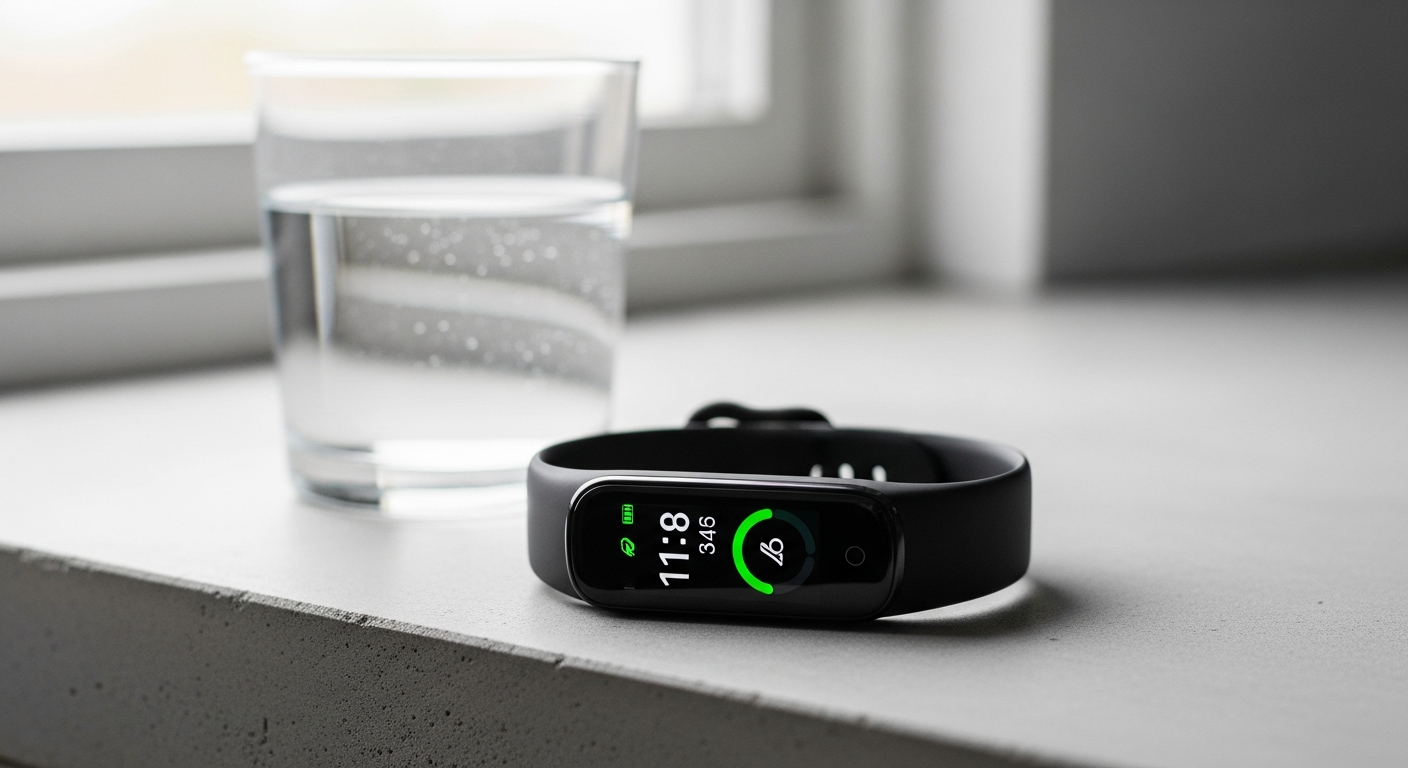
Ever wondered what those cool gadgets on people's wrists are and what they do? A fitness tracker is like a tiny personal assistant that helps you understand your daily activity and health.
1. What exactly is a fitness tracker?
A fitness tracker is a wearable device, usually worn on your wrist, that monitors various aspects of your physical activity and health. It collects data throughout your day to give you insights into your movement, sleep, and even your heart.
Think of it as a smart watch, but focused specifically on your well-being. It uses tiny sensors to gather information and then displays it on its screen or sends it to an app on your phone.
2. How does a fitness tracker measure steps?
Fitness trackers measure steps using a tiny sensor called an "accelerometer." This sensor detects motion and changes in your speed. When you walk, your arm swings and your body moves in a specific way.
The accelerometer recognizes these unique movements as steps. More advanced trackers might also use a "gyroscope" to understand your orientation and rotation, making step counting even more accurate.
3. What is heart rate monitoring on a tracker?
Heart rate monitoring measures how many times your heart beats per minute. Most trackers use a technology called "photoplethysmography," or PPG. This involves shining a green LED light onto your skin.
Blood absorbs green light, so as your heart pumps blood through your wrist, the amount of light reflected back changes. The tracker detects these changes and calculates your heart rate. This helps you understand your effort during exercise and your resting heart rate.
Basic Tracker
- Tracks Steps
- Monitors Sleep
- Estimates Calories
- Long Battery Life
Advanced Tracker
- All Basic Features
- GPS for Routes
- Heart Rate Monitoring
- Workout Modes
- Smartphone Notifications
4. Can a fitness tracker track sleep?
Yes, many fitness trackers can track your sleep. They use the same accelerometer sensor that counts steps to detect your body's movements while you're asleep. When you're still, it assumes you're in a deeper sleep phase.
By analyzing your movement patterns throughout the night, the tracker can estimate how long you slept, how restless you were, and even differentiate between light, deep, and sometimes REM sleep. This data helps you understand your sleep quality.
5. How does GPS work on some trackers?
GPS stands for Global Positioning System. Trackers with built-in GPS use signals from satellites orbiting Earth to pinpoint your exact location. This is especially useful for outdoor activities like running or cycling.
When you exercise outdoors, GPS allows your tracker to accurately record your route, distance traveled, and pace. This information is then displayed on a map in your tracker's app, showing you exactly where you went.
6. Do I need a smartphone for a fitness tracker?
While many fitness trackers can work independently for basic tracking, a smartphone is usually needed to get the most out of them. The tracker connects to a companion app on your phone, often wirelessly using Bluetooth.
The app is where you can see detailed graphs of your activity, sleep, and heart rate data over time. You can also adjust settings, receive notifications, and update your tracker's software through your smartphone.
7. How do fitness trackers count calories burned?
Fitness trackers estimate calories burned using a combination of your personal information and activity data. They take into account your age, gender, height, and weight (which you enter into the app).
Then, they combine this with data from their sensors, like steps taken, distance covered, heart rate, and duration of activity. Using complex algorithms, the tracker calculates an estimate of the calories your body has used.
Tracker Data Flow
1. Sensors Collect Data
Accelerometer, Heart Rate, GPS
2. Tracker Processes
Converts raw data into metrics
3. Syncs to Smartphone App
Via Bluetooth connection
4. View Insights
Graphs, trends, and progress
8. What is the battery life like for most trackers?
Battery life for fitness trackers can vary widely depending on the model and features. Simpler trackers that focus on basic step and sleep tracking might last anywhere from 5 to 10 days on a single charge.
More advanced trackers with features like GPS, continuous heart rate monitoring, and bright color screens will typically have shorter battery lives, often needing to be charged every 1 to 3 days. Always check the specifications for the model you're interested in.
9. Are fitness trackers waterproof?
Most fitness trackers today are at least "water resistant," meaning they can handle splashes, rain, and sweat. Many are also suitable for showering and swimming.
However, "waterproof" levels vary. Look for a rating like "5 ATM" or "50 meters," which usually means it's safe for swimming. Always check the specific water resistance rating of your tracker before taking it into the pool or ocean.
10. What are the basic features of a fitness tracker?
The most common and basic features you'll find on almost all fitness trackers include step counting, distance traveled, and an estimate of calories burned. They also typically monitor your sleep patterns.
Many basic models also include an optical heart rate sensor. All trackers will connect to a smartphone app to display your data. Some might also show basic notifications from your phone, like incoming calls or messages.