
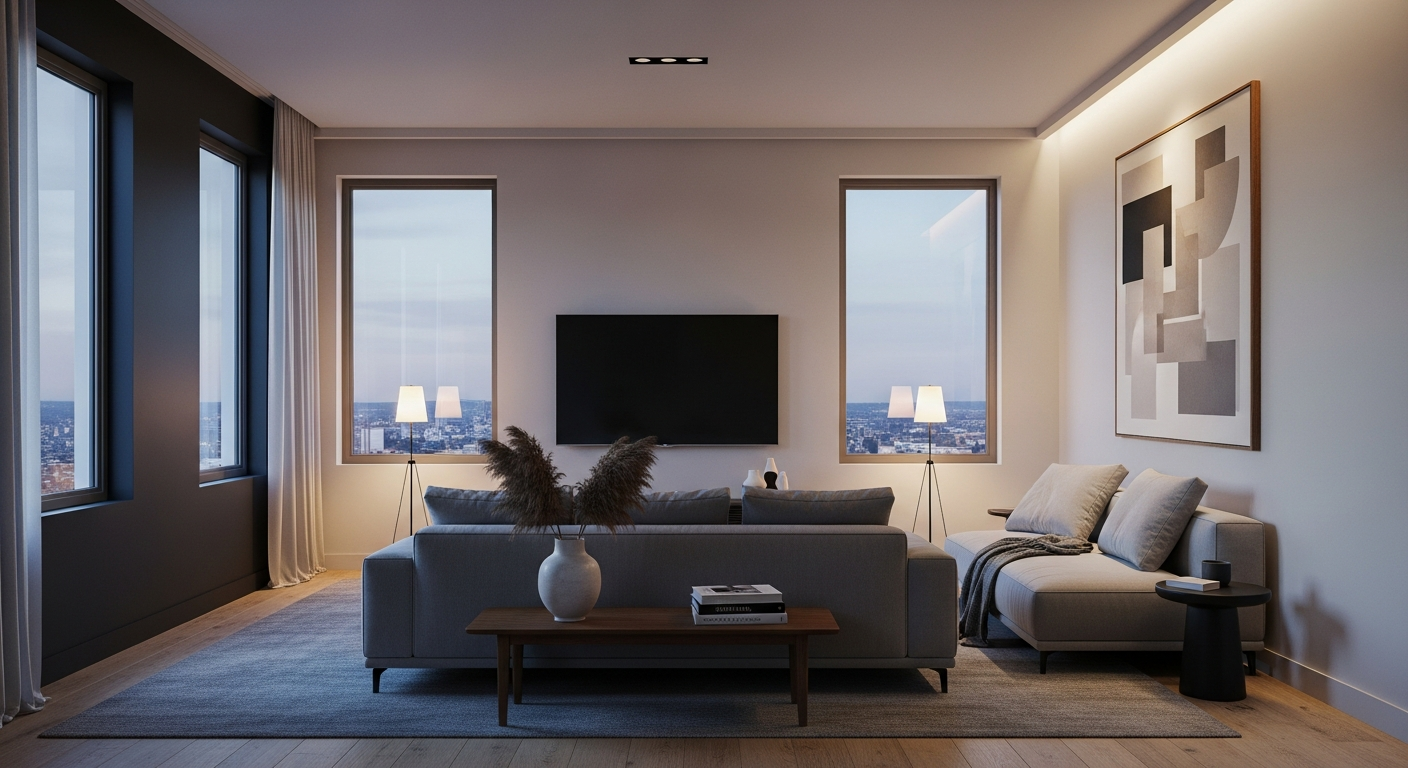
Ever wondered about those "smart" homes you hear about? A smart home uses technology to make your life easier and your home more efficient. It's like having a helpful assistant built right into your house!
1. What is a smart home?
A smart home is a house equipped with devices that can connect to each other and to the internet. These devices can be controlled remotely, often through a smartphone, voice commands, or even automatically based on your routines. Think of it as your home being able to "think" and respond to your needs.
Instead of manually turning off lights or adjusting the thermostat, a smart home lets you manage these things with a few taps on your phone or a simple voice command. It brings convenience, comfort, and sometimes even savings right to your fingertips.
2. How do smart home devices communicate?
Smart devices talk to each other and to you using different wireless languages. Wi-Fi is common, connecting devices directly to your home internet router. Bluetooth is for short-range connections, like pairing your phone to a smart speaker nearby.
Other popular languages include Zigbee and Z-Wave. These are specially designed for smart home devices, using less power and creating a "mesh network." This means devices can relay messages through each other, extending the range and reliability of your smart home system.
3. What are the main benefits of a smart home?
The biggest benefits are convenience and comfort. Imagine adjusting your thermostat from your office, or having lights turn on automatically when you arrive home. Smart homes simplify daily tasks, giving you more time for what matters.
Beyond convenience, smart homes can enhance security with smart cameras and locks, and potentially save energy by optimizing heating, cooling, and lighting. They also offer peace of mind, letting you check on your home from anywhere.
Traditional Home
- Manual controls for lights, thermostat, etc.
- Limited remote access
- Separate systems for security, entertainment
- Less energy optimization
Smart Home
- Automated or voice-controlled devices
- Remote control via smartphone/tablet
- Integrated systems working together
- Potential for energy savings
4. Do I need a central hub for my smart home?
Not always, but often yes. A central hub, sometimes called a smart home controller or gateway, acts like a translator and conductor for your devices. It allows devices using different wireless languages (like Zigbee and Z-Wave) to work together seamlessly.
Some devices can connect directly to your Wi-Fi and be controlled by their own app, or through a smart speaker like Amazon Echo or Google Nest. However, a dedicated hub can offer more advanced automation, better reliability, and a single app to control everything.
5. What are some common smart home devices?
You're probably familiar with many! Smart speakers (like Alexa or Google Assistant) are popular entry points, allowing voice control over music and other devices. Smart lights can change color, dim, and be controlled remotely.
Other common devices include smart thermostats (like Nest or Ecobee) that learn your preferences, smart plugs that turn any appliance into a smart one, and smart door locks for keyless entry and remote access. Security cameras and video doorbells are also very popular.
6. Is setting up a smart home difficult for beginners?
Starting small is usually quite easy! Most modern smart devices are designed for simple setup, often involving just plugging them in, downloading an app, and following a few on-screen steps. Many devices even have QR codes you can scan for quick pairing.
The complexity increases if you want many devices from different brands to work together perfectly. However, even then, many apps and hubs offer user-friendly interfaces to create "routines" or "scenes" that automate multiple actions with a single command.
7. How much does it cost to start a smart home?
You can start very affordably! A single smart light bulb or smart plug might cost as little as $15-$30. A smart speaker can be around $50. You don't need to buy everything at once; you can slowly add devices as your budget allows and your needs grow.
More advanced systems, like a full security setup with multiple cameras or a comprehensive lighting system for your whole house, will naturally cost more. However, the modular nature of smart home tech means you can scale your investment over time.
Smart Home Setup Flow
1. Choose a Device
(e.g., Smart Light Bulb)2. Plug In & Power On
(Easy physical setup)3. Download App
(Manufacturer's app)4. Connect to Wi-Fi
(Follow in-app steps)5. Control & Automate!
(Enjoy your smart home)8. Are smart homes secure and private?
Security and privacy are very important considerations. Smart devices, like any internet-connected technology, can be vulnerable if not properly secured. It's crucial to use strong, unique passwords for your Wi-Fi and all smart home accounts.
Always buy from reputable brands that prioritize security updates. Be mindful of the data devices collect and how it's used; read privacy policies. Regularly updating device software also helps protect against new threats and ensures your home stays safe.
9. Can smart homes save energy?
Yes, absolutely! Smart thermostats can learn your schedule and adjust heating/cooling when you're away, saving energy without you lifting a finger. Smart lighting can be set to turn off when rooms are empty or dim automatically based on natural light.
Smart plugs can cut power to "vampire" devices that still draw electricity when off. By giving you better control and automation over energy-consuming aspects of your home, smart technology helps reduce waste and potentially lower your utility bills.
10. What's the future of smart home technology?
The future is exciting! We'll see even more seamless integration, where devices from different brands work together effortlessly, thanks to new standards like Matter. Artificial intelligence will make homes even smarter, anticipating your needs before you even think of them.
Expect more personalized experiences, enhanced health monitoring (like smart beds or air quality sensors), and greater energy efficiency. Homes will become truly intuitive, adapting to your lifestyle and providing even more comfort, security, and convenience.