
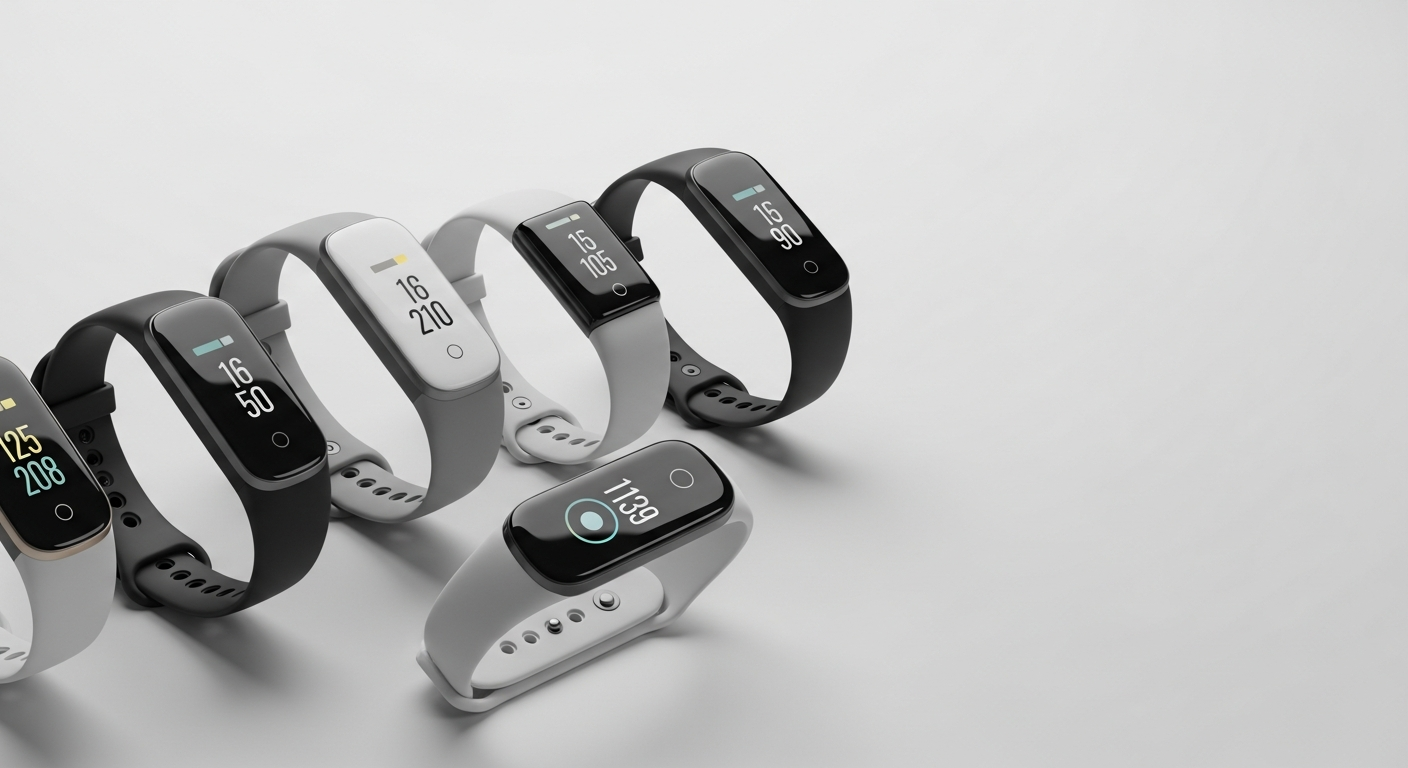
Ever wondered about those gadgets people wear on their wrists that track steps or show messages? You're not alone! This guide will break down what fitness trackers and smartwatches are, and help you decide if one is right for you in 2026.
1. What is a fitness tracker?
A fitness tracker is a small, wearable device, usually worn on your wrist, designed to monitor your physical activity and health metrics. Think of it as a digital health diary that automatically records things like how many steps you take, your heart rate, and how well you sleep. Its main job is to help you stay active and understand your body better.
2. What is a smartwatch?
A smartwatch is essentially a mini-computer for your wrist. It does everything a fitness tracker does, but also connects to your smartphone to show notifications, make calls, send texts, and even run apps. It's like having a simplified version of your phone conveniently available on your arm.
3. Are fitness trackers and smartwatches the same thing?
No, they are not exactly the same, though they share some features. Think of a fitness tracker as a specialized tool focused purely on health and exercise. A smartwatch is more of a general-purpose gadget that includes fitness tracking as one of its many functions, alongside communication and app capabilities.
Fitness Tracker
- Focuses on health & fitness data
- Tracks steps, heart rate, sleep
- Often simpler, longer battery life
- Usually less expensive
Smartwatch
- Health tracking + phone features
- Notifications, calls, apps, payments
- More complex, shorter battery life
- Generally more expensive
4. What are the main benefits of using a fitness tracker?
Fitness trackers help you become more aware of your daily activity. They can motivate you to move more by showing your step count, encourage better sleep habits by tracking your sleep patterns, and help you monitor your heart rate during workouts. This data can be very useful for setting and achieving personal health goals.
5. What are the main benefits of using a smartwatch?
Smartwatches offer convenience by bringing essential smartphone functions to your wrist. You can check messages, answer calls, or see calendar alerts without pulling out your phone. They also provide advanced fitness tracking, contactless payments, and the ability to use various apps directly from your wrist, making your daily life smoother.
6. Who should consider buying a fitness tracker?
If your main goal is to improve your health, become more active, or better understand your body's metrics like sleep and heart rate, a fitness tracker is a great choice. It's perfect for anyone looking for simple, focused health monitoring without the added complexity and cost of a full smartwatch.
7. Who should consider buying a smartwatch?
A smartwatch is ideal for tech-savvy individuals who want to stay connected and productive without constantly reaching for their phone. If you value convenience, enjoy using apps on your wrist, and want a device that combines comprehensive health tracking with advanced communication and smart features, a smartwatch is for you.
Choosing Your Wearable
Start Here:
What's your main goal?
If Health & Fitness:
Do you need basic tracking or advanced data?
If Connectivity & Apps:
Do you want phone features on your wrist?
Decision:
Fitness Tracker for simple health, Smartwatch for all-in-one tech.
8. Can I use a fitness tracker without a smartphone?
Most fitness trackers can record basic data like steps and heart rate independently for a while. However, to see your detailed progress, change settings, or update the device, you'll usually need to sync it with a smartphone app. Some advanced trackers have screens that show more data directly, but a phone connection is generally needed for full functionality.
9. Do these devices require a monthly subscription?
No, the devices themselves do not typically require a monthly subscription to function. You buy the device, and it works. However, some brands offer optional premium subscriptions that unlock advanced features, deeper insights, or personalized coaching within their companion apps. These are extra and not necessary for basic use.
10. How accurate are the readings from these devices?
Modern fitness trackers and smartwatches are quite accurate for general fitness and health monitoring, especially for steps and heart rate in typical daily activities. However, they are not medical devices. While useful for trends and motivation, their readings should not be used for diagnosing medical conditions or replacing professional medical advice. Accuracy can vary by activity and device quality.