
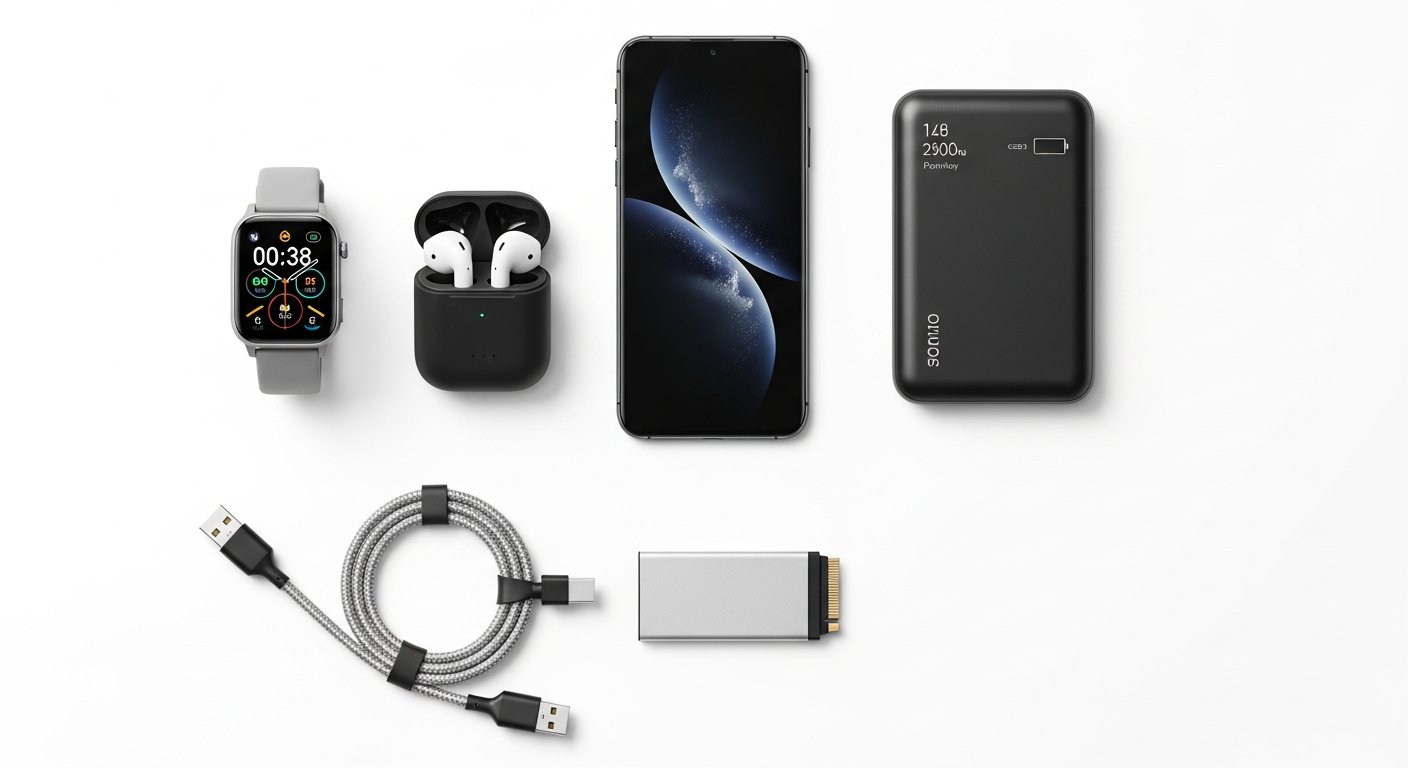
Ever wondered about those cool gadgets people wear on their wrists? They're called fitness trackers and smartwatches, and they can do a lot more than just tell time.
This guide will break down what these devices are, what they do, and why you might want one, all in simple terms.
1. What is a fitness tracker?
A fitness tracker is a small, wearable device, usually worn on your wrist, designed to monitor your physical activity and health metrics. Think of it as a tiny personal coach that keeps an eye on how much you move, sleep, and even your heart rate throughout the day.
2. What is a smartwatch?
A smartwatch is like a mini-smartphone for your wrist. It tells time, but also connects to your phone to show notifications, make calls, send messages, and run apps. Many smartwatches also include fitness tracking features, making them a versatile all-in-one device.
3. Are they the same thing?
Not exactly, but they often overlap! Fitness trackers focus almost entirely on health and activity monitoring. Smartwatches are broader, offering phone-like features alongside their health tracking capabilities. Think of a fitness tracker as a specialized tool and a smartwatch as a multi-tool.
Fitness Tracker
- Focus: Health & Activity
- Key Features: Steps, Heart Rate, Sleep
- Battery Life: Often longer
- Price: Generally lower
Smartwatch
- Focus: Connectivity & Apps
- Key Features: Notifications, Calls, Apps, Fitness
- Battery Life: Often shorter
- Price: Generally higher
4. Why would I want one?
People get these devices for various reasons. You might want to get more active, understand your sleep patterns, or simply have a convenient way to check notifications without pulling out your phone. They offer insights into your daily habits that you might not notice otherwise.
5. What can they track?
Most devices track steps taken, distance walked, calories burned, and your heart rate. Many also monitor sleep quality, different types of exercise (like running or swimming), and even stress levels. Advanced models can track blood oxygen or generate an ECG (heart rhythm reading).
6. Do I need a smartphone to use them?
For most smartwatches and many fitness trackers, yes, a smartphone is needed. The device connects to an app on your phone to set it up, sync your data, and view detailed reports. Some basic fitness trackers can work standalone, but their features are limited without a phone connection.
7. Are they hard to use?
Not at all! Most modern fitness trackers and smartwatches are designed to be very user-friendly. They usually have simple touchscreens or a few buttons. The companion apps on your phone are also made to be intuitive, showing your data in easy-to-understand charts and summaries.
Using Your Tracker/Smartwatch
Charge & Wear
Keep it charged and wear it on your wrist.
Connect to Phone
Pair with your smartphone via Bluetooth.
Set Goals
Use the app to set daily activity targets.
Check Data
View progress on the device or in the app.
8. What's the main benefit of owning one?
The biggest benefit is awareness. These devices give you a clear, objective look at your daily activity and health patterns. This information can motivate you to make small, positive changes, like walking a bit more or trying to get better sleep, leading to a healthier lifestyle.
9. Can they really improve my health?
Yes, indirectly! While the device itself doesn't make you healthier, the data it provides can empower you. By seeing your activity levels, sleep quality, and heart rate, you can identify areas for improvement. This awareness, combined with setting goals, often encourages people to adopt healthier habits over time.
10. Where do I start looking for one?
First, decide if you want a dedicated fitness tracker or a more versatile smartwatch. Then, consider your budget and the features most important to you (e.g., long battery life, specific sport tracking, call answering). Popular brands like Fitbit, Apple, Samsung, and Garmin offer a wide range of options for beginners.