
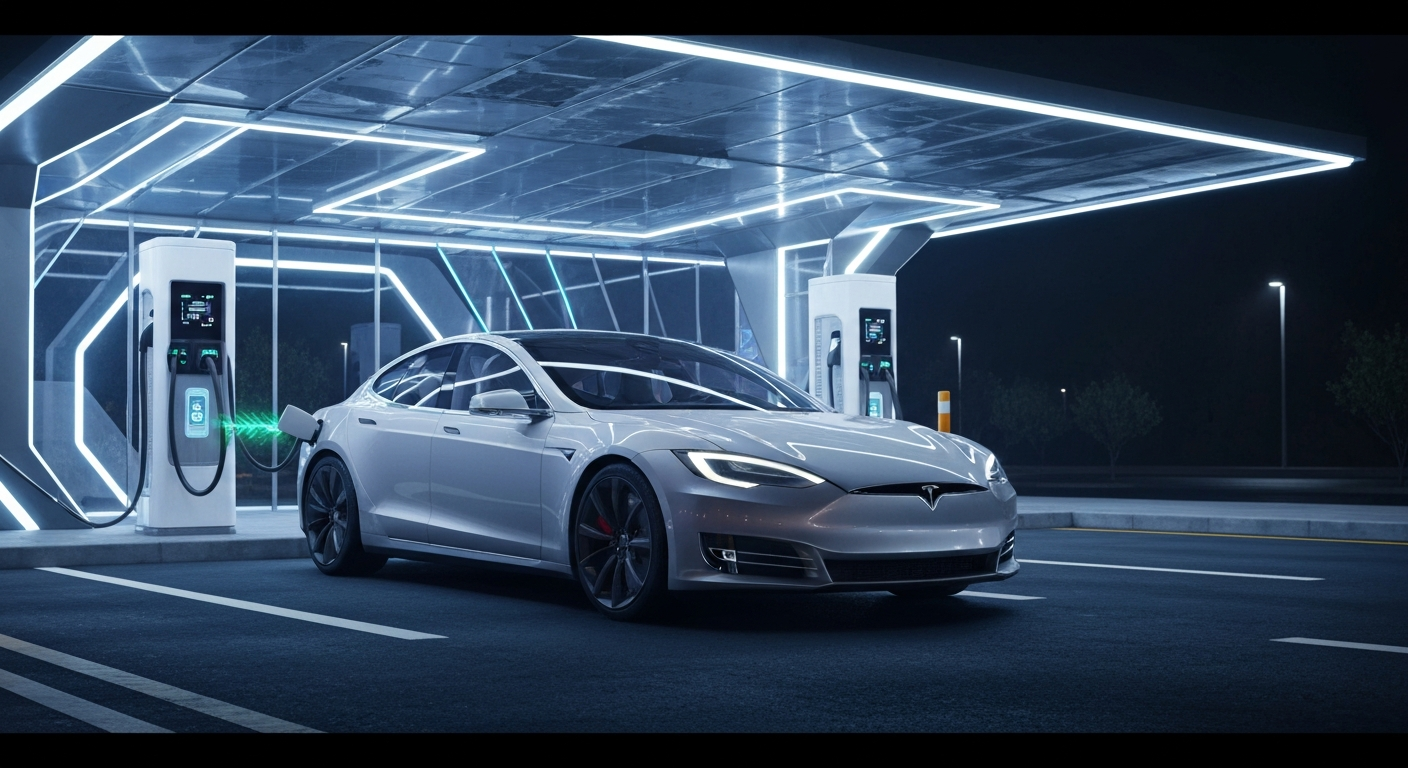
Welcome to the world of electric cars! These vehicles are becoming more and more common, offering a new way to get around without using gasoline.
1. What is an electric car?
An electric car, often called an EV, is a vehicle that runs on electricity instead of gasoline. It uses an electric motor for power, which gets its energy from a large battery pack. You plug it in to charge, much like you charge your phone.
2. How is an EV different from a gasoline car?
The biggest difference is the power source. Gasoline cars have an engine that burns fuel, while EVs have an electric motor that uses electricity. EVs produce zero tailpipe emissions, meaning they don't release pollutants into the air like gasoline cars do.
3. What are the main components of an electric car?
The core parts are the electric motor, the battery pack, an inverter, and a charging port. The motor turns electricity into movement. The battery stores the electricity. The inverter changes the battery's power into a form the motor can use. The charging port is where you plug in the car.
Gasoline Car
- Engine burns fuel
- Fuel tank stores gasoline
- Exhaust pipe releases emissions
- Refuel at gas stations
Electric Car
- Electric motor uses electricity
- Battery pack stores electricity
- Zero tailpipe emissions
- Recharge at charging stations or home
4. How does an electric motor propel a car?
When you press the accelerator pedal, electricity flows from the battery to the electric motor. The motor then creates a magnetic force that spins a shaft, which is connected to the wheels. This spinning motion is what makes the car move forward.
5. What is regenerative braking?
Regenerative braking is a clever feature that helps charge the battery while you slow down. Instead of just wasting energy as heat when you brake, the electric motor acts like a generator. It captures some of the car's motion energy and converts it back into electricity, sending it to the battery.
6. Are there different types of electric vehicles?
Yes, there are a few main types. The most common are Battery Electric Vehicles (BEVs), which run purely on electricity. Then there are Hybrid Electric Vehicles (HEVs) and Plug-in Hybrid Electric Vehicles (PHEVs), which combine electric power with a gasoline engine in different ways.
7. What is a hybrid electric vehicle?
A hybrid electric vehicle (HEV) has both a gasoline engine and an electric motor. It uses the electric motor for some driving, especially at low speeds, and the gasoline engine for others. The battery in an HEV charges itself through the engine and regenerative braking; you don't plug it in.
How a BEV Works
- Plug into Charger
Electricity flows into the car. - Battery Stores Energy
The large battery pack holds the electricity. - Accelerator Pressed
Electricity goes to the motor. - Motor Powers Wheels
Car moves, no gasoline needed. - Braking Recovers Energy
Regenerative braking recharges battery.
8. What is a plug-in hybrid electric vehicle (PHEV)?
A PHEV is similar to a regular hybrid but with a larger battery and a charging port. This means you can plug it in to charge its battery, allowing it to drive on electric power alone for a significant distance before the gasoline engine kicks in. It offers the flexibility of both electric and gasoline driving.
9. What is a battery electric vehicle (BEV)?
A BEV is what most people think of as a "pure" electric car. It runs entirely on electricity, with no gasoline engine at all. BEVs have large battery packs that provide all the power for the electric motor, and they must be plugged in to recharge. They produce zero tailpipe emissions.
10. Do electric cars have transmissions?
Most electric cars do not have a traditional multi-gear transmission like gasoline cars. Their electric motors deliver power smoothly across a wide range of speeds, so they usually only need a simple single-speed gearbox. This makes driving an EV feel very smooth and direct.