
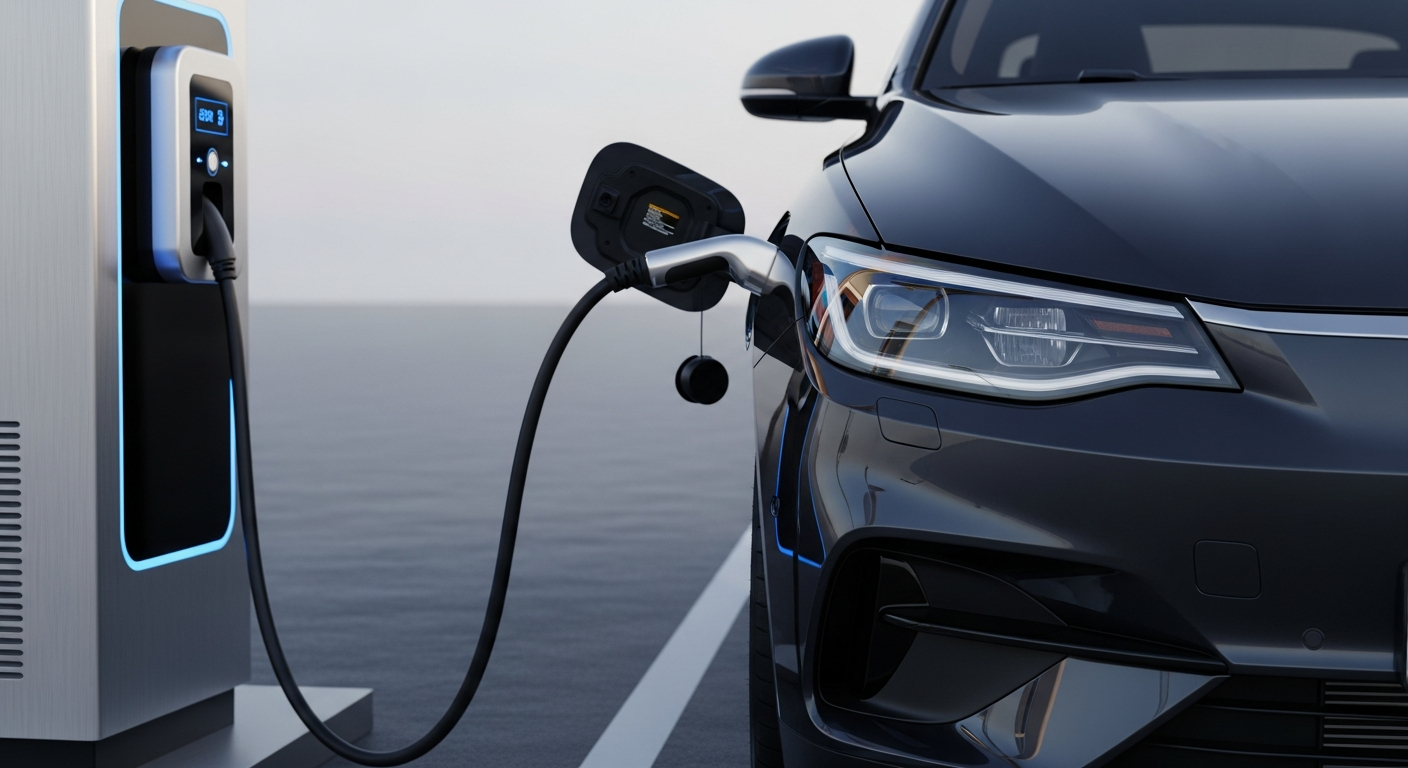
Electric cars are becoming more common on our roads, but many people still have questions about them. This guide will answer your basic questions about electric vehicles (EVs) in simple terms.
1. What is an EV?
An EV, or Electric Vehicle, is a car that runs partly or entirely on electricity. Instead of burning gasoline or diesel fuel, EVs use electric motors powered by batteries. These batteries are charged by plugging the car into an electrical outlet, much like you charge your phone.
2. How is an EV different from a gas car?
The biggest difference is how they move. Gas cars have an internal combustion engine that burns fuel to create power. EVs have electric motors that use electricity from a battery. This means EVs produce no tailpipe emissions, making them much cleaner for the air we breathe.
3. What are the main types of electric cars?
There are three main types. Battery Electric Vehicles (BEVs) run only on electricity and have no gas engine. Plug-in Hybrid Electric Vehicles (PHEVs) have both an electric motor/battery and a gas engine, allowing them to run on either. Hybrid Electric Vehicles (HEVs) also use both but cannot be plugged in; their battery charges from the gas engine and braking.
Battery Electric Vehicle (BEV)
- Only runs on electricity
- No tailpipe emissions
- Needs charging stations
- Quieter ride
Plug-in Hybrid Electric Vehicle (PHEV)
- Runs on electricity AND gasoline
- Can be plugged in to charge
- Lower emissions than gas cars
- Good for longer trips
4. How does an electric car battery work?
An EV battery is like a giant version of the battery in your laptop or phone. It stores electrical energy. When you drive, this stored energy is sent to the electric motor, which turns the wheels. When the battery runs low, you plug the car in to recharge it, refilling its energy storage.
5. What is regenerative braking?
Regenerative braking is a clever feature that helps EVs save energy. When you lift your foot off the accelerator or press the brake pedal, the electric motor reverses its function. Instead of using electricity to move the car, it acts like a generator, converting the car's motion back into electricity and sending it to recharge the battery. This makes the car more efficient.
6. Do electric cars have engines?
Pure electric cars (BEVs) do not have a traditional "engine" that burns fuel. Instead, they have one or more electric motors. These motors are simpler, smaller, and more efficient than gasoline engines. Plug-in hybrids (PHEVs) and regular hybrids (HEVs) have both an electric motor and a gasoline engine.
7. How do electric cars accelerate so fast?
Electric motors deliver instant power. Unlike gas engines that need to rev up, electric motors provide maximum torque (the twisting force that makes wheels turn) from a standstill. This means EVs can accelerate very quickly and smoothly, often feeling much faster than their gasoline counterparts, especially from a stop.
EV Acceleration Flow
8. Are electric cars quiet?
Yes, electric cars are famously quiet. Since there's no gasoline engine burning fuel, you won't hear the typical engine rumble or roar. At low speeds, you might hear a slight hum, and at higher speeds, wind and tire noise become more noticeable. This quietness is often a pleasant surprise for new EV drivers.
9. What is the range of an electric car?
The "range" is how far an EV can travel on a single full charge. It varies greatly depending on the car model, battery size, driving conditions, and even weather. Many modern EVs offer ranges between 200 to 300 miles (320 to 480 kilometers) or more, which is plenty for most daily driving needs.
10. How long do electric cars last?
Electric cars are built to last. The electric motors have fewer moving parts than gas engines, meaning less wear and tear. While the battery's capacity might slowly decrease over many years, most EV batteries are designed to last for 8 to 10 years or 100,000 to 150,000 miles (160,000 to 240,000 kilometers) and often come with long warranties. The car's overall lifespan can be much longer.