
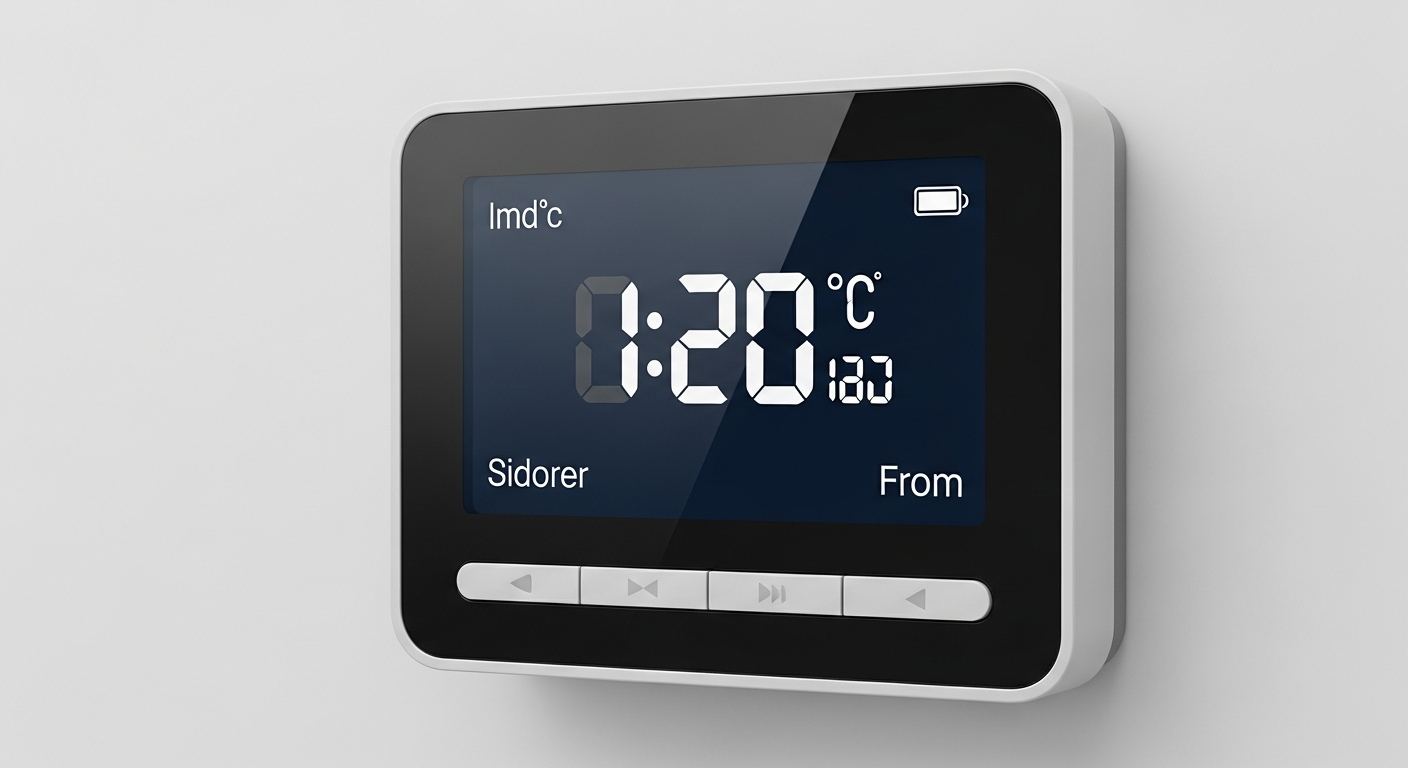
A smart thermostat is a modern device that helps you control your home's temperature more easily and efficiently. It connects to the internet, allowing you to manage your heating and cooling from anywhere.
1. What is a smart thermostat?
A smart thermostat is like a regular thermostat but with advanced features and an internet connection. It lets you control your home's heating and cooling system (HVAC) using a smartphone app, even when you're not home. It also offers smart functions that can save energy.
Unlike old-fashioned thermostats, smart versions can learn your preferences, sense when you're home or away, and even integrate with other smart devices in your house. This makes managing your home's comfort much more convenient.
2. How does a smart thermostat learn my preferences?
Smart thermostats learn by observing your adjustments over time. When you change the temperature, it remembers your patterns for different times of day and days of the week. Some models use sensors to detect if you're home or away, adjusting automatically.
They can also use your phone's location (called "geofencing") to know when you're approaching home, so it can start heating or cooling before you arrive. This creates a personalized schedule that optimizes comfort and energy use without constant manual input.
3. Can I control my thermostat from outside my home?
Yes, absolutely! This is one of the biggest benefits of a smart thermostat. As long as your thermostat is connected to your home's Wi-Fi and you have internet access on your smartphone, you can control it from anywhere in the world.
You simply use a dedicated app on your phone or tablet to adjust the temperature, change schedules, or turn your system on or off. This is perfect for coming home to a comfortable house or saving energy if you forget to adjust it before leaving.
Traditional Thermostat
- Set manually at the wall
- No remote control
- Doesn't learn your habits
- Basic, fixed scheduling
- Less energy insight
Smart Thermostat
- Control via app, voice, or wall
- Remote access from anywhere
- Learns and adapts to your routine
- Advanced, flexible scheduling
- Detailed energy reports
4. What are the main benefits of a smart thermostat?
The main benefits include increased comfort, energy savings, and convenience. You can enjoy a perfectly comfortable home without constantly fiddling with settings, as it learns your preferences and adjusts automatically. Remote control means you can always come home to the right temperature.
Smart thermostats also provide insights into your energy usage, helping you understand and reduce your bills. They can even detect when you're away and save energy without you lifting a finger.
5. Is a smart thermostat difficult to install?
For many homes, installing a smart thermostat is a straightforward DIY (Do-It-Yourself) project that takes about 30 minutes. Most come with clear instructions and online video guides. You typically just need basic tools like a screwdriver.
However, some older homes might require a "C-wire" for continuous power, which might make installation a bit more complex. If you're unsure or uncomfortable with electrical wiring, it's always best to hire a professional electrician or HVAC technician to ensure proper installation.
6. Do smart thermostats save money on energy bills?
Yes, smart thermostats are designed to save you money on energy bills. By learning your schedule and preferences, they avoid heating or cooling an empty house. Features like "away" modes, geofencing, and energy reports help optimize your system's run time.
They can also adjust based on local weather forecasts or detect open windows, preventing wasted energy. Over time, these smart adjustments can lead to significant savings on your heating and cooling costs, often paying for themselves within a few years.
7. What features should I look for in a smart thermostat?
Look for remote control via a user-friendly app, learning capabilities that adapt to your schedule, and sensors for occupancy detection. Compatibility with your existing HVAC system is crucial, especially regarding the need for a C-wire.
Other useful features include energy reporting to track usage, voice assistant integration (like Amazon Alexa or Google Assistant), and multi-zone control if you have multiple heating/cooling areas. A clear display and easy-to-use interface are also important for daily interaction.
How a Smart Thermostat Works
8. Do they work with all types of HVAC systems?
Most smart thermostats are compatible with common low-voltage heating and cooling systems found in many homes. This includes central air conditioners, furnaces, and heat pumps. However, there are some exceptions.
They may not work with high-voltage systems (like electric baseboard heaters), millivolt systems (often found in gas fireplaces or older wall heaters), or proprietary communication systems. Always check the product specifications and your HVAC system's wiring requirements (especially for a C-wire) before purchasing to ensure compatibility.
9. Can smart thermostats integrate with other smart home devices?
Yes, many smart thermostats are designed to integrate seamlessly with other smart home devices and platforms. They can often connect with popular voice assistants like Amazon Alexa and Google Assistant, allowing you to change the temperature with voice commands.
Some can also work with smart lighting systems, security cameras, and door sensors to create automated routines. For example, your thermostat could turn off the AC when your smart lock detects you've left the house, enhancing both convenience and energy efficiency.
10. What are popular smart thermostat brands for new users?
For new users, popular and user-friendly smart thermostat brands include Google Nest, Ecobee, and Honeywell Home. These brands are known for their intuitive apps, straightforward installation processes, and reliable performance.
Google Nest thermostats, like the Nest Learning Thermostat, are famous for their learning capabilities and sleek design. Ecobee models often feature remote sensors to detect temperature and occupancy in different rooms. Honeywell Home offers a range of options, from basic Wi-Fi models to advanced smart thermostats, catering to various needs and budgets.