
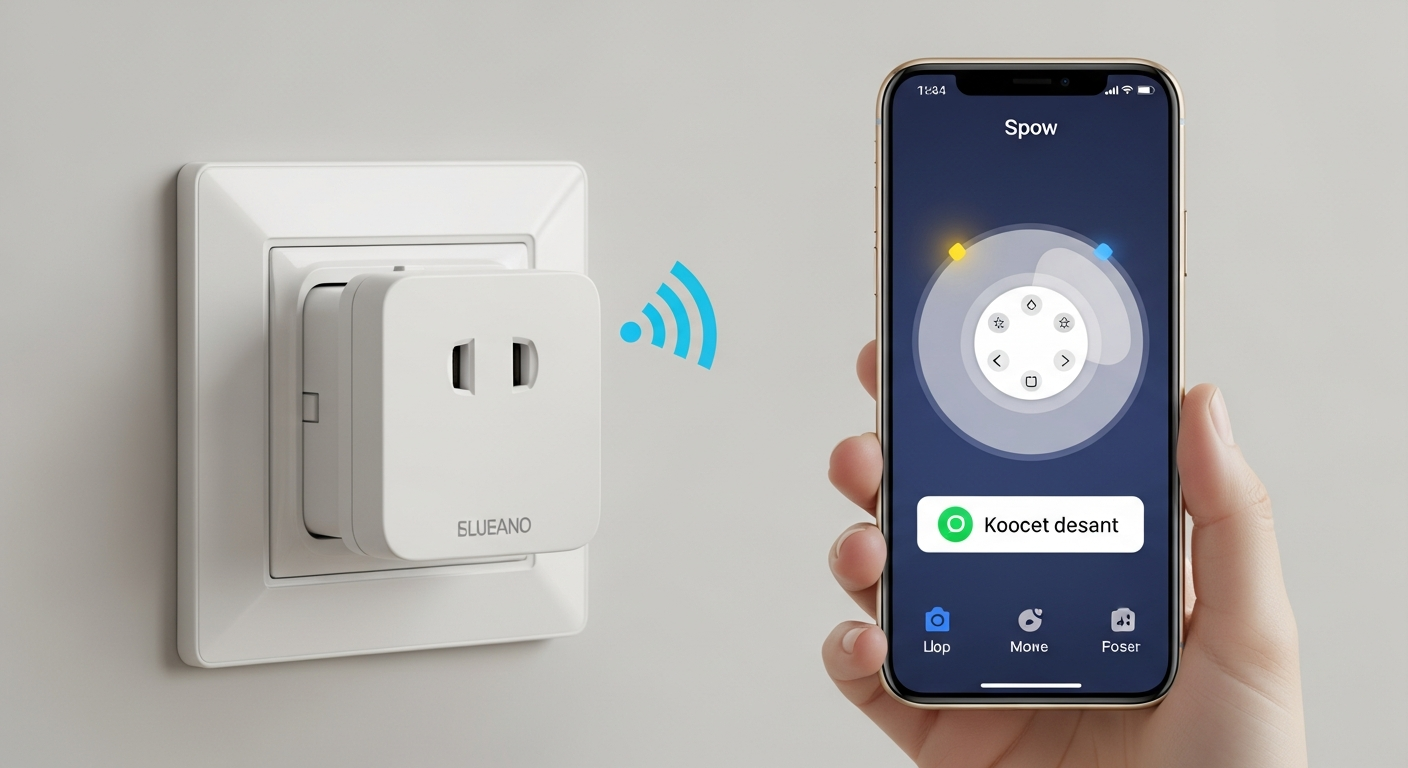
Ever wish you could turn off a light from your phone or schedule your coffee maker to start brewing before you even wake up? Smart plugs make these everyday wishes a reality!
This guide will help you understand what smart plugs are and how you can use them to make your home smarter and your life a little easier.
1. What exactly is a smart plug?
A smart plug is a small device that plugs into a standard wall outlet. You then plug your regular appliance, like a lamp or a fan, into the smart plug. It essentially turns any ordinary electrical device into a "smart" device that you can control with your smartphone or voice commands.
2. How do smart plugs work?
Smart plugs connect to your home's Wi-Fi network. Once connected, they act as a bridge between your appliance and your smartphone app. When you tap a button on your phone, the app sends a signal through your Wi-Fi to the smart plug, telling it to turn the power on or off to the connected appliance.
3. What can I plug into a smart plug?
You can plug almost any appliance that uses a standard electrical plug into a smart plug. This includes lamps, fans, coffee makers, slow cookers, holiday lights, humidifiers, and even hair straighteners. Just be sure the appliance doesn't exceed the smart plug's maximum power rating, which is usually listed on the plug itself.
Great for Smart Plugs
- Lamps & Lights
- Fans & Heaters (small)
- Coffee Makers
- Phone Chargers
- Holiday Decorations
- Small Appliances
Not Recommended
- Large Appliances (fridges, washers)
- Medical Equipment
- Devices needing constant power
- High-power tools
- Appliances with complex settings
- Anything exceeding plug's limit
4. Are smart plugs easy to set up?
Yes, setting up smart plugs is generally very easy. Most plugs require you to download a specific app to your smartphone. You then plug in the smart plug, open the app, and follow simple on-screen instructions to connect it to your home Wi-Fi. It usually takes just a few minutes.
5. Can I control smart plugs remotely?
Absolutely! One of the biggest benefits of smart plugs is remote control. As long as your smart plug is connected to Wi-Fi and your phone has internet access (Wi-Fi or cellular data), you can turn appliances on or off from anywhere in the world. This is perfect for peace of mind or arriving home to a pre-heated room.
6. Do smart plugs use a lot of electricity?
No, smart plugs themselves use very little electricity. They consume a tiny amount of power to maintain their Wi-Fi connection, similar to a small night light. The electricity consumption comes from the appliance plugged into it, not the smart plug itself. Some even monitor the power usage of connected devices.
7. Can smart plugs be used outdoors?
Yes, but you need to purchase smart plugs specifically designed for outdoor use. Outdoor smart plugs are built to withstand different weather conditions like rain, snow, and extreme temperatures. They typically have a more robust, waterproof casing. Never use an indoor smart plug outside.
Smart Plug Setup Flow
- Plug Smart Plug into Wall Outlet
- Download & Open Smart Plug App
- Connect Phone to Home Wi-Fi
- Follow App Instructions to Pair Plug
- Plug Appliance into Smart Plug
- Control Appliance via App or Voice
8. What are some creative uses for smart plugs?
Beyond basic on/off, smart plugs offer many creative uses. You can schedule lights to turn on and off while you're away to deter burglars, automatically start your slow cooker before you get home, or even schedule your electric blanket to warm up before you get into bed. They're great for holiday lights too!
9. Do I need a hub for smart plugs?
Most modern smart plugs do not require a separate hub. They connect directly to your home's Wi-Fi network. However, some brands or older models might use a different technology (like Zigbee or Z-Wave) that does require a hub to communicate with your home network. Always check the product description.
10. Are smart plugs safe for all appliances?
Smart plugs are safe for most common household appliances, especially those with simple on/off functions. However, avoid using them with high-power appliances like large refrigerators, washing machines, or electric water heaters, as these can exceed the plug's maximum wattage. Always check the smart plug's specifications and the appliance's power requirements.