
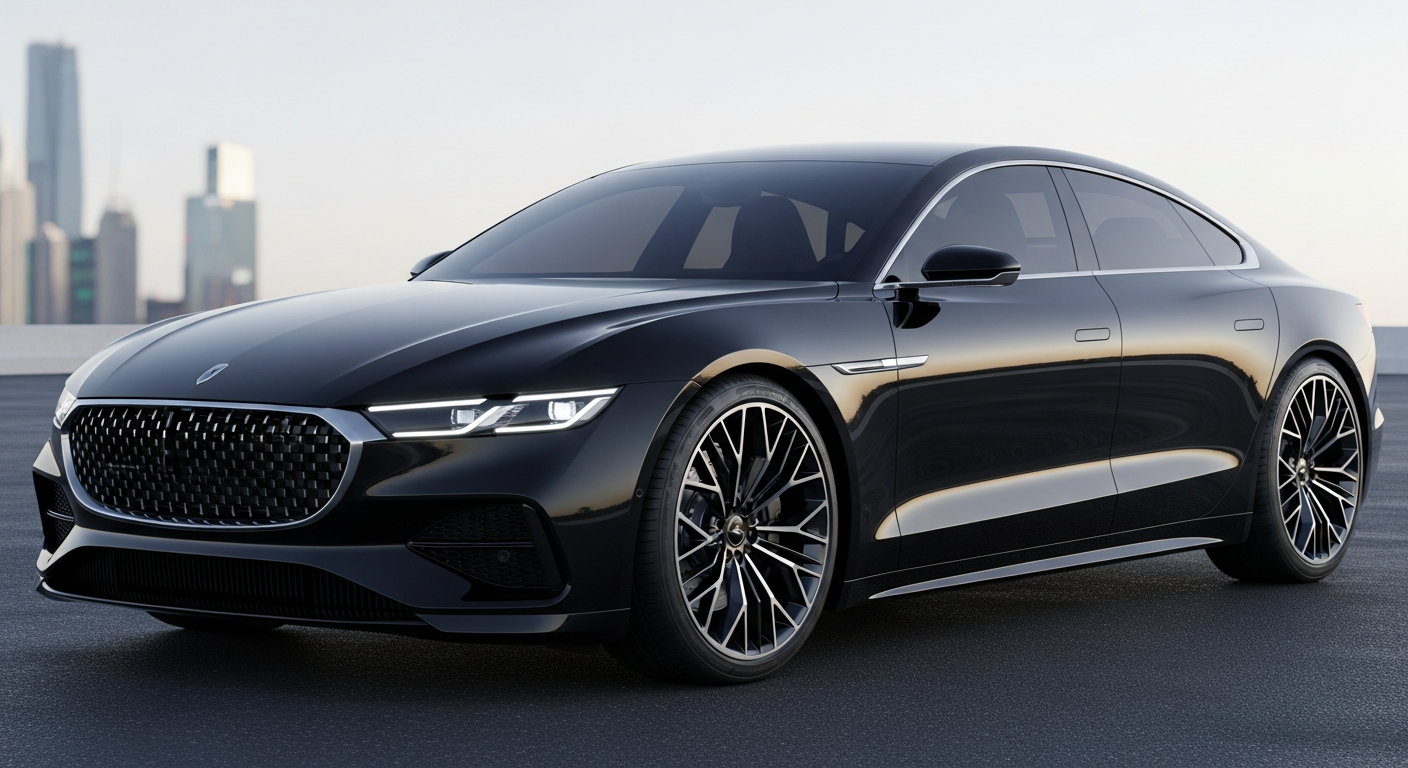
Self-driving cars are an exciting technology that allows vehicles to operate with little to no human input. This article will help you understand what these cars can do and what to expect from them.
1. What exactly is a 'self-driving car'?
A self-driving car, also known as an autonomous vehicle, is a car that can drive itself without a human needing to steer, accelerate, or brake. It uses a combination of sensors, cameras, radar, and computers to navigate roads and react to its surroundings.
Think of it like having an invisible, super-attentive co-pilot who can see everything around the car, understand traffic rules, and make driving decisions. The goal is to make travel safer and more convenient.
2. Are there different levels of self-driving technology?
Yes, self-driving technology is categorized into six levels, from Level 0 (no automation) to Level 5 (full automation). These levels help us understand how much the car can do on its own and how much attention the human driver still needs to pay.
It's important to know these levels because a "self-driving" car at Level 2 is very different from one at Level 5. Most cars on the road today have features from Level 1 or Level 2.
3. What is Level 1 and Level 2 autonomous driving?
Level 1 means the car can help with *one* driving task at a time, like keeping a set speed (cruise control) or staying in its lane (lane keeping assist). The driver must always be ready to take over.
Level 2 means the car can help with *two* driving tasks at the same time, like adaptive cruise control (keeping speed and distance from the car ahead) and lane centering. The driver still needs to supervise and be ready to take control at any moment.
Level 1: Driver Assistance
- One task at a time: Helps with steering OR speed.
- Examples: Adaptive Cruise Control, Lane Keeping Assist.
- Driver role: Full supervision, always ready to take over.
- Environment: Works on highways or clear roads.
Level 2: Partial Automation
- Multiple tasks: Helps with steering AND speed simultaneously.
- Examples: Traffic Jam Assist, Highway Driving Assist.
- Driver role: Active supervision, hands on wheel, eyes on road.
- Environment: Often limited to specific road types.
4. Are any cars fully self-driving (Level 5) available today?
No, fully self-driving (Level 5) cars are not available for purchase by the general public in 2026. Level 5 means the car can handle all driving tasks in all conditions, without any human intervention ever being needed.
While some companies are testing Level 4 vehicles in limited areas (meaning they can drive themselves fully under specific conditions), true Level 5 autonomy is still in development. It's a complex challenge that requires extensive testing and regulatory approval.
5. How do self-driving cars 'see' the road?
Self-driving cars "see" the road using a combination of advanced sensors, much like how humans use their eyes and ears. These sensors gather information about the car's surroundings, including other vehicles, pedestrians, traffic signs, and road markings.
This data is then processed by powerful onboard computers. The computer creates a real-time 3D map of the environment, allowing the car to understand where it is, what's around it, and how to safely navigate.
6. What role do sensors and cameras play in autonomous vehicles?
Cameras act like the car's eyes, detecting traffic lights, lane lines, and identifying objects. Radar sensors use radio waves to measure distance and speed, even in bad weather. Lidar sensors use lasers to create detailed 3D maps of the surroundings.
Ultrasonic sensors, similar to those used for parking assistance, detect nearby objects. All this information is fused together by the car's computer to provide a complete picture, allowing the car to make informed driving decisions.
7. Is it safe to trust a car to drive itself?
For the levels of automation available today (Level 1 and 2), you should not fully trust the car to drive itself. The driver must remain attentive and ready to take control at all times.
For higher levels of automation (Level 3 and above), which are still in testing or limited deployment, the goal is to be safer than human drivers. However, these systems are still being refined, and safety is the paramount concern for developers and regulators before widespread release.
How Self-Driving Cars Make Decisions
8. What are the benefits of self-driving cars?
One major benefit is improved safety. Most accidents are caused by human error, and autonomous cars could significantly reduce these. They don't get distracted, tired, or drive under the influence.
Other benefits include reduced traffic congestion, as cars could communicate and drive more efficiently. They could also offer greater mobility for people who cannot drive, like the elderly or those with disabilities, and free up commute time for other activities.
9. What are the challenges or risks of autonomous vehicles?
Significant challenges include dealing with unpredictable weather, complex urban environments, and unexpected human behavior. The technology needs to be incredibly robust to handle every possible scenario safely.
Other risks involve cybersecurity (preventing hacking), ethical dilemmas (how a car should react in unavoidable accident situations), and public acceptance. Legal and regulatory frameworks also need to catch up with the technology's rapid development.
10. When can we expect to see fully self-driving cars on the road?
While some Level 4 autonomous services exist in very limited areas (like robotaxis in specific cities), widespread availability of Level 5 fully self-driving cars for personal ownership is still years away. Experts predict it could be another 5-15 years, possibly longer.
The journey to full autonomy requires overcoming immense technical, regulatory, and societal hurdles. We will likely see a gradual rollout, with more advanced Level 3 and Level 4 features becoming available in controlled environments first.