
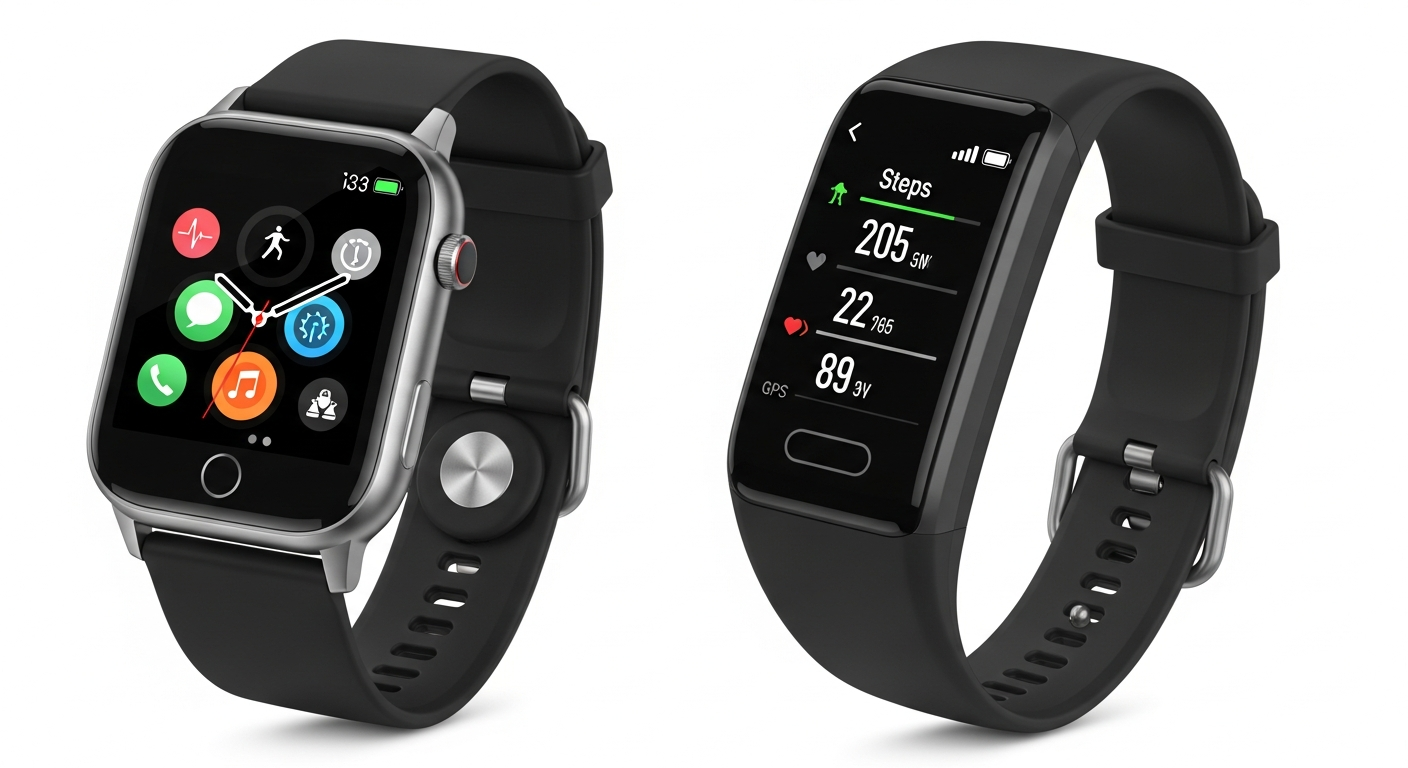
Thinking about getting a wearable device but confused by all the options? It's easy to mix up smartwatches and fitness trackers because they both go on your wrist and track some health info.
Let's break down what makes each one unique so you can pick the perfect gadget for your needs.
1. What is the primary function of a fitness tracker?
A fitness tracker's main job is to help you monitor your physical activity and health. It counts your steps, tracks how far you walk, estimates calories burned, and monitors your heart rate. Some also track sleep patterns, giving you insights into your rest quality.
2. What does a smartwatch do that a fitness tracker doesn't?
A smartwatch is like a mini-smartphone on your wrist. Beyond fitness tracking, it can show you notifications from your phone, let you answer calls, send texts, and even make contactless payments. You can also install various apps directly onto a smartwatch for more functions.
3. Can a fitness tracker make calls or send messages?
Generally, no. Most fitness trackers are designed to be simpler devices. They can often display notifications for incoming calls or messages from your phone, but you typically cannot answer calls or reply to messages directly from the tracker itself. Their focus is on health data.
Smartwatch
- Full phone notifications
- Answer calls/texts
- Install apps
- GPS navigation
- Contactless payments
Fitness Tracker
- Step counting
- Heart rate monitoring
- Sleep tracking
- Calorie burn estimates
- Basic notifications
4. Do smartwatches track fitness just as well as trackers?
Yes, many modern smartwatches offer very advanced fitness tracking features, often matching or even exceeding dedicated fitness trackers. They can track steps, heart rate, sleep, and even advanced metrics like blood oxygen or ECG. Some even have built-in GPS for accurate outdoor activity tracking.
5. Which device usually has a longer battery life?
Fitness trackers typically have a much longer battery life. Because they have fewer advanced features and smaller screens, they can often last for several days, sometimes even weeks, on a single charge. Smartwatches, with their powerful processors and vibrant displays, usually need charging every 1-3 days.
6. Is one generally more expensive than the other?
Yes, smartwatches are generally more expensive than fitness trackers. Their advanced technology, larger screens, and ability to run apps contribute to a higher price point. Fitness trackers are usually more budget-friendly, making them an accessible option for basic health monitoring.
7. Which device is better for receiving phone notifications?
Smartwatches are significantly better for receiving and interacting with phone notifications. They display full message previews, allow you to respond directly (often with voice or a tiny keyboard), and manage alerts. Fitness trackers usually show basic alerts like "New Message" or "Incoming Call" without much interaction.
Choosing Your Wearable
Start Here: What's your main goal?
A. Just tracking steps/heart rate?
Go for a Fitness Tracker
B. Want phone calls, apps, payments?
Go for a Smartwatch
8. Can I install apps on a fitness tracker?
No, you generally cannot install new apps on a fitness tracker. They come with pre-set functions and features. Smartwatches, on the other hand, have their own app stores, allowing you to download and customize your device with various applications, just like a smartphone.
9. Which is more suitable for someone focused only on exercise?
For someone focused purely on exercise and basic health monitoring, a fitness tracker is often more suitable. They are typically lighter, less distracting, and provide all the essential data like steps, heart rate, and sleep without the added complexity or cost of a smartwatch.
10. Which device offers more customization options?
Smartwatches offer significantly more customization options. You can change watch faces, download new apps, swap out bands for different styles, and even personalize settings for various functions. Fitness trackers usually have limited customization, mostly restricted to changing bands and basic display options.