
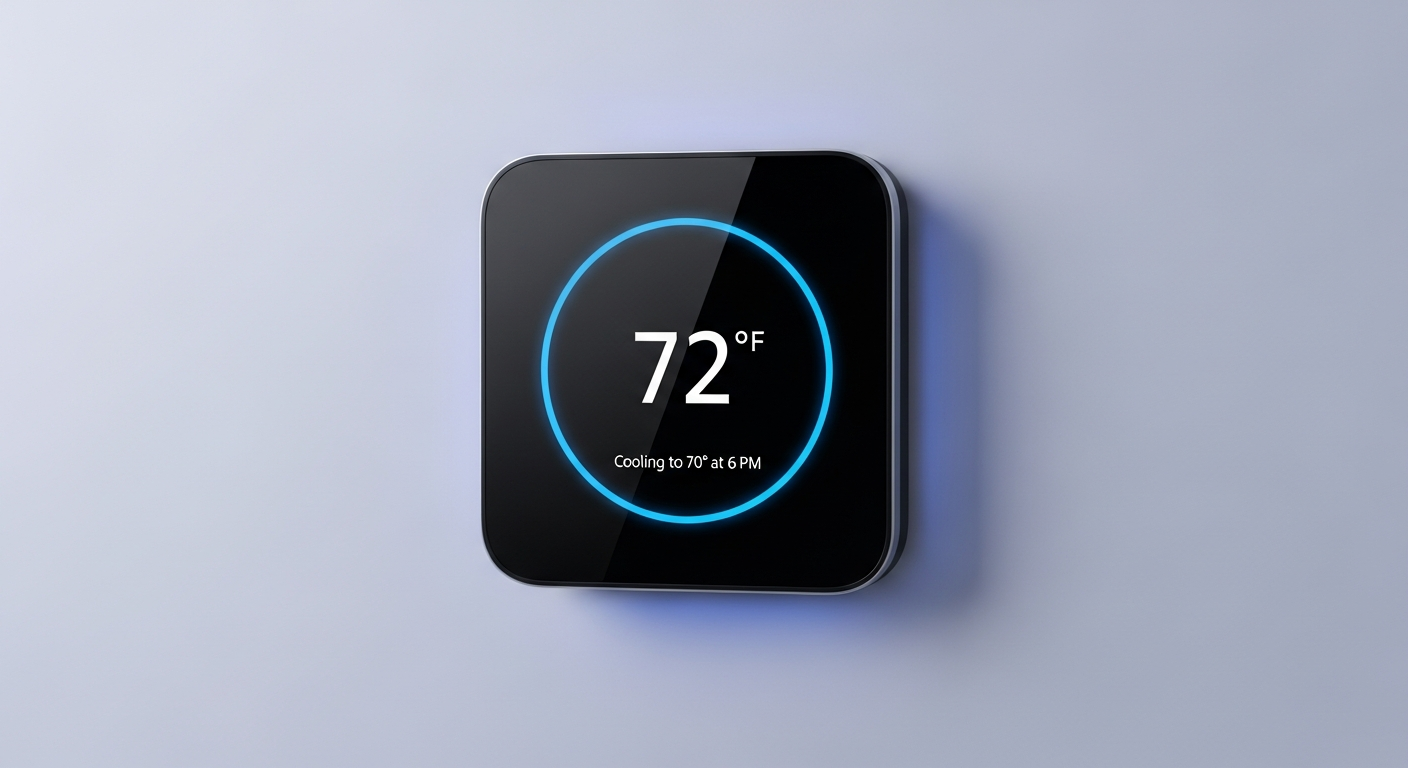
Ever wondered if there's a smarter way to manage your home's temperature? Smart thermostats offer modern convenience and potential savings on your energy bills. Let's explore how these clever devices work and what they can do for you.
1. What is a smart thermostat?
A smart thermostat is a device that controls your home's heating and cooling system, just like a regular thermostat. The "smart" part means it can connect to the internet, allowing you to control it remotely from your phone or computer. It also has advanced features like learning your schedule and sensing when you're home.
2. How do smart thermostats differ from traditional ones?
Traditional thermostats are usually manual; you set the temperature directly on the device. Smart thermostats, however, offer much more. They can be programmed for different times, adjusted from anywhere, and even make decisions on their own based on your habits or the weather. Think of it as upgrading from a basic light switch to a smart light system.
3. Can a smart thermostat really lower my energy bills?
Yes, many users find that smart thermostats help reduce energy costs. They do this by making your heating and cooling more efficient. For example, they can turn down the heat when you're away and warm up your home just before you arrive, avoiding wasted energy. This precise control means you only use energy when you need it.
Traditional Thermostat
- Manual adjustments only
- Set and forget (often inefficient)
- No remote control
- Basic display
Smart Thermostat
- Remote control via app
- Learns your schedule
- Energy saving features
- Detailed usage reports
4. How difficult is it to install a smart thermostat?
For many people, installing a smart thermostat is similar to replacing a light fixture. Most come with clear instructions and even video guides. You'll typically need to turn off your power, remove the old thermostat, connect a few wires, and then mount the new one. It often takes less than an hour.
5. Do I need professional installation for a smart thermostat?
Not always. If you're comfortable with basic DIY tasks and your home's wiring is straightforward, you can likely install it yourself. However, if your system is older, uses unusual wiring (like a C-wire might be missing), or you're simply unsure, hiring an electrician or HVAC professional is a good idea for safety and proper function.
6. Can I control my smart thermostat from my phone?
Absolutely! This is one of the biggest benefits. Smart thermostats come with companion apps for your smartphone or tablet. This means you can adjust the temperature, set schedules, and check your energy usage from anywhere in the world, as long as you have an internet connection.
7. What is geofencing in smart thermostats?
Geofencing creates a virtual boundary around your home using your phone's location. When you leave this area, your thermostat can automatically adjust to an energy-saving temperature. When you re-enter, it can start warming or cooling your home so it's comfortable when you arrive. It's like your home knows when you're coming and going.
How Geofencing Works
8. Do smart thermostats learn my preferences?
Many advanced smart thermostats have "learning" capabilities. They observe when you adjust the temperature, when you leave, and when you return. Over time, they build a schedule based on your habits, automatically adjusting the temperature to save energy and keep you comfortable without you having to program it manually.
9. What if my Wi-Fi disconnects?
If your Wi-Fi goes out, your smart thermostat will still function as a basic thermostat. It will maintain the last set temperature or follow its last programmed schedule. However, you won't be able to control it remotely from your phone or access its smart features until your Wi-Fi connection is restored.
10. Which smart thermostat is best for a beginner?
For beginners, look for models known for easy installation and user-friendly apps. Brands like Google Nest Thermostat or Ecobee Lite are often recommended. They offer essential smart features, clear instructions, and intuitive controls without being overly complex, making them great entry points into smart home technology.