
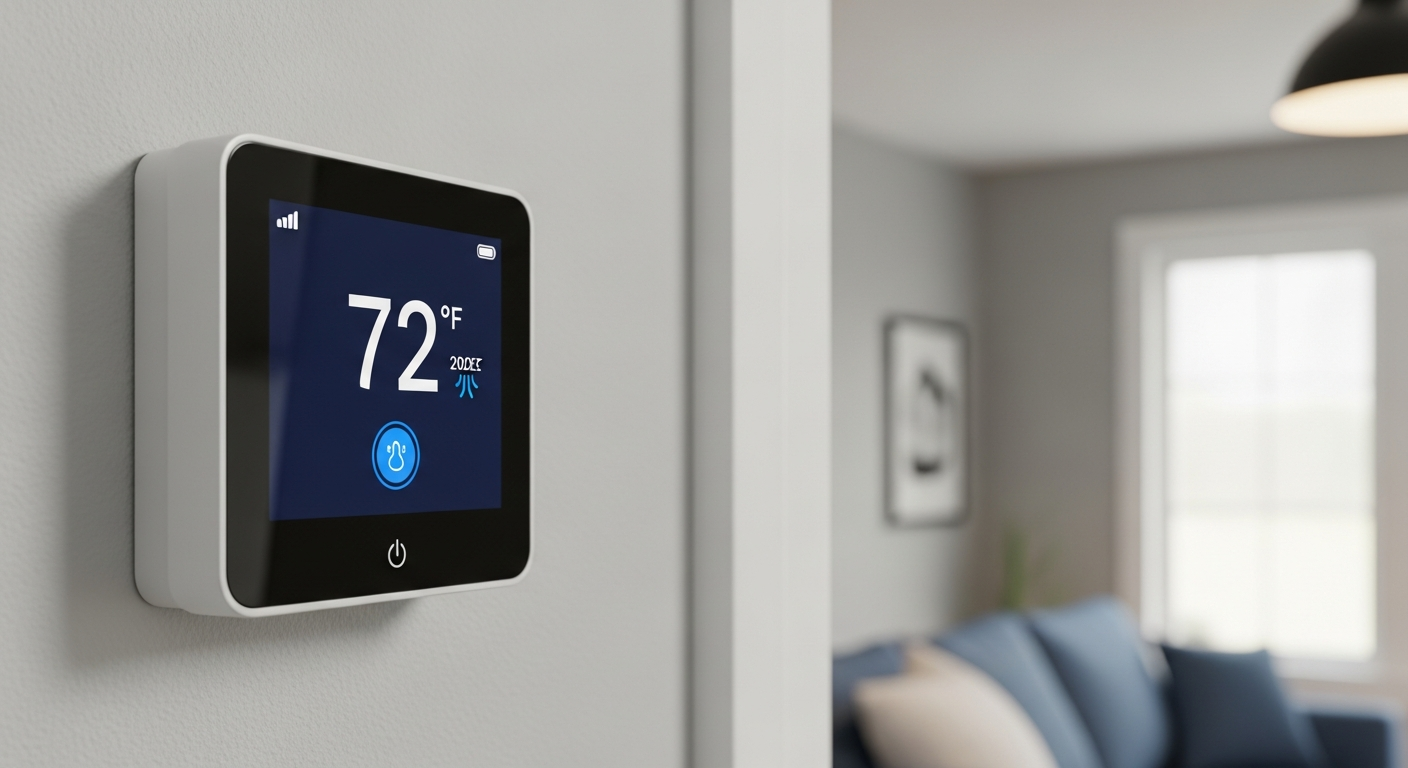
Thinking about a smart thermostat but wondering if it's worth it? You're in the right place! This guide will break down how these clever devices work and whether they can truly help you save money on your energy bills.
1. What is a smart thermostat and how does it differ from a regular one?
A smart thermostat is like a super-smart brain for your home's heating and cooling system. Unlike a basic thermostat that just turns on or off, a smart one connects to the internet and uses technology to learn, adapt, and be controlled remotely. It goes beyond simple temperature setting.
2. How does a smart thermostat learn my preferences?
Many smart thermostats learn your habits over time. When you adjust the temperature, it remembers your preferences for different times of day and days of the week. It can also use sensors to detect when you're home or away, adjusting the temperature automatically to save energy without you lifting a finger.
3. Can I control my smart thermostat from anywhere?
Yes, absolutely! This is one of the biggest benefits. Because smart thermostats connect to your home's Wi-Fi, you can control them using a smartphone app from anywhere with an internet connection. Forgot to turn down the heat before leaving for vacation? No problem, just open the app.
Regular Thermostat
- Manual adjustments only
- No remote control
- Doesn't learn habits
- Basic on/off function
Smart Thermostat
- Remote control via app
- Learns your schedule
- Energy usage reports
- Integrates with smart home
4. Does a smart thermostat actually save energy?
Yes, they absolutely can! By learning your schedule, using geofencing (knowing when you're home or away), and optimizing temperatures, smart thermostats prevent you from heating or cooling an empty house. This intelligent management reduces wasted energy, leading to lower utility bills over time.
5. What features should I look for in a smart thermostat?
Look for features like remote control via app, learning capabilities, energy usage reports, and compatibility with your home's heating and cooling system. Geofencing, voice control integration (e.g., with Alexa or Google Assistant), and multi-zone control for larger homes are also great additions.
6. Is installing a smart thermostat difficult?
For many, installing a smart thermostat is a DIY project, especially if you have a common 24V system. Most come with clear instructions and online videos. However, if your wiring is complex (like older systems or heat pumps), or if you're uncomfortable with electrical work, professional installation is recommended.
7. Can a smart thermostat integrate with other smart devices?
Many smart thermostats are designed to work seamlessly with other smart home devices. They can link up with smart speakers, smart lighting, and even smart door locks. This allows for advanced automation, like your thermostat adjusting when your smart lock detects you've left the house.
Smart Thermostat Workflow
1. User Input / Learning
You set temps, or thermostat learns habits.2. Data Collection
Sensors (occupancy, temp), weather, geofencing.3. Smart Decision
Thermostat calculates optimal temp for comfort & savings.4. System Control
Sends command to heating/cooling system.5. Energy Savings
Reduces waste, lowers bills.8. What's geofencing and how does it work with thermostats?
Geofencing creates a virtual boundary around your home using your smartphone's location. When you leave this boundary, your smart thermostat can automatically adjust to an energy-saving temperature. When you re-enter, it can start heating or cooling your home so it's comfortable upon your arrival. It's like your home knows when you're coming and going.
9. How much does a smart thermostat typically cost?
The price for a smart thermostat can vary, generally ranging from $100 to $300. More advanced models with additional features like room sensors or complex learning algorithms tend to be at the higher end. Remember, the initial cost is an investment that can pay off through energy savings.
10. Are there any rebates or incentives for smart thermostats?
Yes, often! Many utility companies and local governments offer rebates or incentives to encourage the adoption of energy-efficient devices like smart thermostats. Check your local energy provider's website or government energy programs for potential savings. These can significantly reduce the upfront cost.