
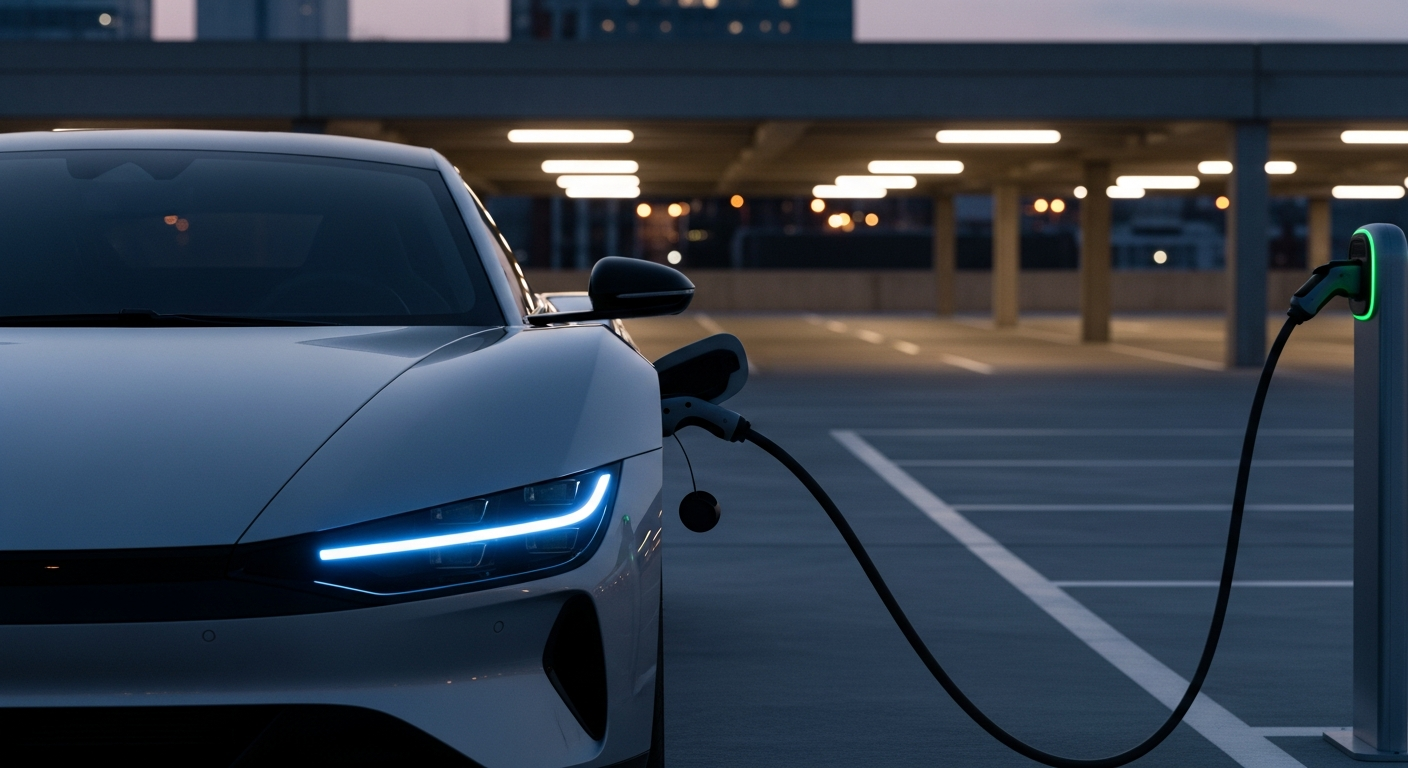
Thinking about buying an electric car but feeling a bit overwhelmed? You're not alone! This guide will help you understand if an electric vehicle (EV) fits your lifestyle in 2026.
1. What are the main benefits of owning an EV?
Electric cars are great for the environment because they produce zero tailpipe emissions, meaning no harmful gases come out of the car. They also offer a smoother, quieter ride than gasoline cars, and often have instant acceleration, making them feel zippy.
Another big perk is lower running costs. Electricity is generally cheaper than gasoline, and EVs have fewer moving parts, which can mean less maintenance over time. Plus, you might get special perks like HOV lane access in some areas.
2. What are the biggest drawbacks of electric cars?
The initial purchase price of an EV can sometimes be higher than a comparable gasoline car, though this gap is closing. Range anxiety, the fear of running out of battery, is a common concern, especially on longer trips.
Charging infrastructure, while growing rapidly, might still be less convenient than gas stations depending on where you live and travel. Charging times can also be longer than a quick gas fill-up, even with fast chargers.
3. How much range do I really need in an EV?
Most daily drivers only travel about 30-40 miles per day. A typical EV in 2026 offers 200-300 miles of range, which is more than enough for most people's weekly commutes and errands. Think about your longest regular trip.
If you often take longer trips or live in a rural area with fewer charging stations, you might prefer a car with 250+ miles of range. For city driving and short commutes, even 150 miles might be perfectly adequate.
Daily Commuter (Under 50 miles)
- Charges at home overnight
- Short errands, city driving
- Occasional longer trip
Frequent Traveler (Over 100 miles)
- Regular long-distance trips
- Less predictable charging access
- Needs quick charging options
4. Are electric cars more expensive to buy?
Historically, EVs have had a higher sticker price than comparable gasoline cars. However, battery technology is improving, and production costs are decreasing. Many mainstream EV models are now competitively priced with their gas counterparts.
Don't forget to factor in potential government incentives and long-term savings on fuel and maintenance, which can make the total cost of owning an EV much lower over its lifespan.
5. Can I save money on fuel with an EV?
Yes, absolutely! Electricity is almost always cheaper per mile than gasoline. The exact savings depend on your local electricity rates and gas prices, but most EV owners see significant reductions in their "fuel" costs.
Charging at home overnight when electricity rates are often lowest maximizes these savings. Public fast chargers can be more expensive, but still often cheaper than gas, especially if you subscribe to a charging network.
6. What about government incentives for EVs?
Many governments offer incentives to encourage EV adoption. These can include federal tax credits, state rebates, and local programs like reduced registration fees or free parking. These incentives can significantly lower the effective purchase price.
It's crucial to check what incentives are available in your specific region and for the particular EV model you're considering, as they can change frequently and have specific eligibility requirements.
7. Do electric cars perform well in cold weather?
Cold weather can affect an EV's range and charging speed. Batteries are less efficient in extreme cold, meaning you might get fewer miles per charge. Heating the cabin also uses battery power, further reducing range.
However, modern EVs are designed with features like battery preconditioning and heat pumps to mitigate these effects. While range might drop by 10-30% in very cold conditions, EVs are still perfectly functional in winter climates.
EV Cold Weather Impact
8. Is an EV suitable for long road trips?
Yes, EVs are increasingly suitable for road trips. The charging network, especially fast chargers, is expanding rapidly along major highways. Planning your route to include charging stops is key, similar to how you'd plan gas stops.
Many EVs now offer built-in navigation that plans charging stops for you. While stops might be slightly longer than a gas fill-up, they can be a good opportunity for a quick break, snack, or stretch.
9. What's the resale value of an electric car?
The resale value of EVs has been a topic of discussion, but current trends show strong demand for used electric cars. As battery technology improves and EV adoption grows, older models are holding their value well.
Factors like battery health, overall condition, and the car's original range will influence its resale value, just like with gasoline cars. A well-maintained EV with good range should have a competitive resale value.
10. How do I decide between an EV and a hybrid?
An EV (Electric Vehicle) runs solely on electricity and needs to be plugged in. A hybrid car combines a gasoline engine with an electric motor, offering better fuel efficiency than a gas car but still relying on gas.
If you have easy access to home charging, mostly drive shorter distances, and want the lowest running costs and zero emissions, an EV is a great choice. If you frequently take very long trips, have limited charging access, or are hesitant about full electric, a hybrid (especially a plug-in hybrid) can be a good stepping stone.