
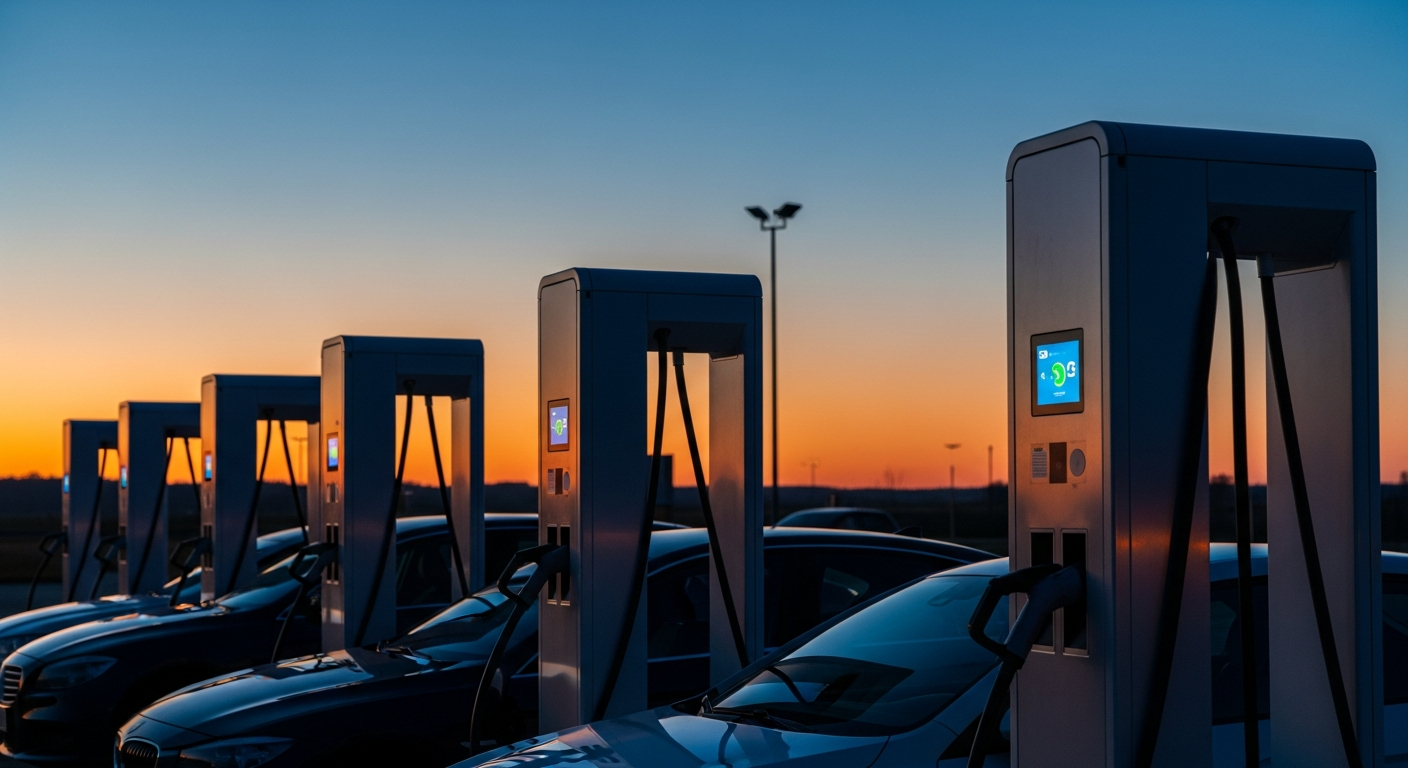
Confused by all the different "eco-friendly" car types? You're not alone! Let's break down hybrid, plug-in hybrid, and electric cars in simple terms so you can understand their differences.
1. What is a hybrid car?
A hybrid car uses two power sources: a regular gasoline engine and an electric motor. These cars automatically switch between using gasoline, electricity, or both together to save fuel. The car's battery recharges itself while you drive, especially when braking, so you never have to plug it in.
2. What is a plug-in hybrid electric vehicle (PHEV)?
A PHEV is like a regular hybrid, but with a bigger battery that you can plug into an outlet to charge. This allows it to drive a significant distance (like 20-50 miles) using only electricity before the gasoline engine even turns on. Once the electric range runs out, it operates like a standard hybrid.
3. How is a pure EV different from a PHEV?
A pure EV (Electric Vehicle) runs entirely on electricity and has no gasoline engine at all. It has a very large battery that must be plugged in to charge, and its range can be hundreds of miles. A PHEV, on the other hand, has both an electric motor and a gasoline engine, offering the flexibility to use either fuel.
PHEV
- Two Engines: Electric motor + Gas engine
- Fuel: Electricity (plug-in) & Gasoline
- Range: Limited electric-only, then gas takes over
- Charging: Required for electric range
Pure EV
- One Engine: Electric motor only
- Fuel: Electricity only
- Range: All-electric, typically longer
- Charging: Always required
4. Which type is better for short commutes?
For short commutes, a pure EV or a PHEV is generally best. A pure EV uses no gasoline, making it very cheap to run daily. A PHEV can often complete short commutes entirely on electricity if charged regularly, saving gasoline and reducing emissions for those trips.
5. Which is better for long trips?
For long trips, a hybrid or a PHEV offers the most flexibility. Hybrids simply use less gasoline than traditional cars. PHEVs can switch to their gasoline engine once their electric range is depleted, allowing you to refuel at any gas station without worrying about finding charging stations.
6. Do hybrids need to be plugged in?
No, standard hybrid cars do not need to be plugged in. Their electric battery recharges itself automatically through a process called regenerative braking (capturing energy when slowing down) and by the gasoline engine. You just drive them like a regular car and fill up with gas.
7. Can PHEVs run on electricity only?
Yes, PHEVs are designed to run on electricity only for a certain distance, typically between 20 to 50 miles, depending on the model and battery size. Once that electric range is used up, the gasoline engine kicks in, and the car operates like a regular hybrid, using both gas and electric power.
PHEV Power Flow
Start Drive
Uses Electricity Only
Electric Range Depletes
Battery runs low
Gas Engine Engages
Switches to Hybrid Mode
Recharge
Plug-in for next electric drive
8. What's the fuel efficiency of each type?
Fuel efficiency varies greatly. Pure EVs have no gasoline fuel efficiency, as they use only electricity. PHEVs offer excellent fuel economy, especially if you maximize their electric range. Standard hybrids are generally more fuel-efficient than traditional gasoline cars, but less so than PHEVs or EVs.
9. Do all use regenerative braking?
Yes, all three types – standard hybrids, plug-in hybrids (PHEVs), and pure electric vehicles (EVs) – utilize regenerative braking. This smart technology captures energy that would normally be lost as heat when you slow down or brake, converting it back into electricity to recharge the battery. It helps improve efficiency across the board.
10. Which type is the most environmentally friendly?
Generally, pure EVs are considered the most environmentally friendly because they produce zero tailpipe emissions. Their overall impact depends on how the electricity is generated. PHEVs are next, as they can drive on electricity for many daily trips. Standard hybrids are more eco-friendly than gasoline cars but less so than PHEVs or EVs.