
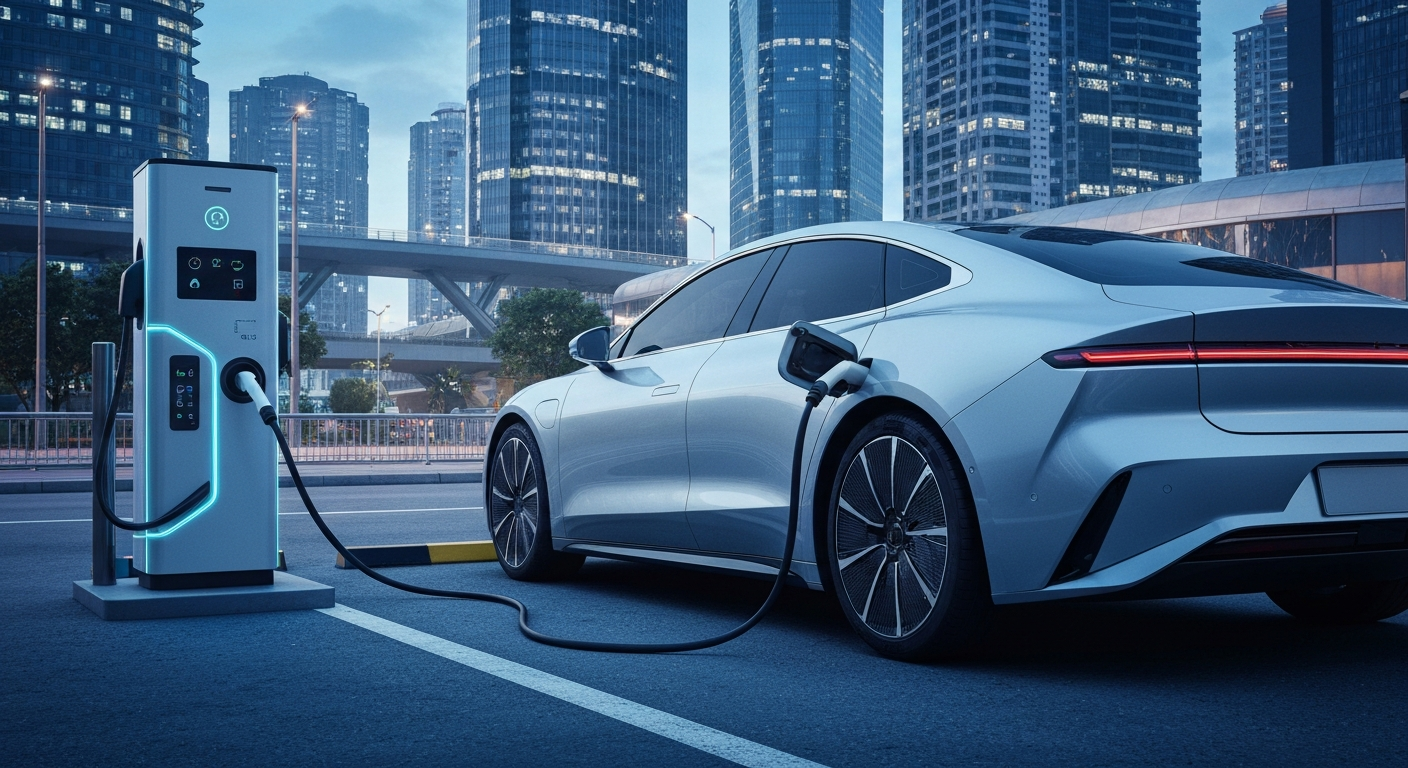
Thinking about getting an electric car but wondering how to keep it powered up? Charging an EV is simpler than you might think, and there are many convenient options available.
This guide will walk you through everything you need to know about charging your electric vehicle, from home setups to public stations.
1. What are the different types of EV chargers?
There are three main types of electric vehicle (EV) chargers, categorized by their charging speed. These are Level 1, Level 2, and DC Fast Chargers. Each type offers different power outputs and is suitable for various charging needs and locations.
Level 1 chargers are the slowest, using a standard home outlet. Level 2 chargers are faster and often installed at homes or public places. DC Fast Chargers are the quickest, typically found at dedicated public stations for rapid top-ups.
2. Can I charge an electric car at home?
Yes, absolutely! Most electric car owners do the majority of their charging right at home. It's like plugging in your smartphone overnight. You can use a standard wall outlet (Level 1) or install a dedicated charging unit (Level 2) for faster charging.
Home charging is incredibly convenient, allowing you to wake up each morning with a "full tank." It's often the most cost-effective way to charge your EV, especially if you have favorable electricity rates.
3. How long does it take to charge an EV?
The time it takes to charge an EV varies greatly depending on the charger type, your car's battery size, and how empty the battery is. Level 1 charging can take 24 hours or more for a full charge. Level 2 charging usually takes 4-10 hours.
DC Fast Charging is the quickest, often adding 80% charge in 20-60 minutes. Think of it like filling a gas tank: a bigger tank takes longer, and a faster pump fills it quicker.
Home Charging (Level 1 & 2)
- Convenience: Charge overnight while you sleep.
- Cost: Generally cheaper electricity rates.
- Speed: Slower (Level 1) to moderate (Level 2).
- Setup: Level 1 uses existing outlets; Level 2 needs installation.
Public Charging (Level 2 & DC Fast)
- Convenience: Available on-the-go, at stores, workplaces.
- Cost: Can be more expensive per kWh.
- Speed: Moderate (Level 2) to very fast (DC Fast).
- Setup: Just plug in and pay (often via app).
4. What is a Level 1 charger?
A Level 1 charger is the simplest and slowest way to charge an electric car. It uses a standard 120-volt wall outlet, the same type you use for household appliances. Your EV typically comes with a portable Level 1 charging cable.
It adds about 2-5 miles of range per hour of charging. While slow, it's perfect for overnight charging if you don't drive long distances daily, or as a backup option. No special installation is needed.
5. What is a Level 2 charger?
A Level 2 charger is a much faster home charging option and the most common type found in public places. It uses a 240-volt outlet, similar to what an electric clothes dryer or oven uses, and requires professional installation at home.
Level 2 chargers can add about 12-80 miles of range per hour, fully charging most EVs in 4-10 hours. This speed makes it ideal for daily use, ensuring your car is ready to go each morning.
6. What is DC fast charging?
DC Fast Charging (also called Level 3 or rapid charging) is the quickest way to charge an EV. It uses direct current (DC) power, which allows for much higher power delivery than Level 1 or Level 2 (which use alternating current, AC).
These chargers can add hundreds of miles of range in a short time, often getting your battery from 20% to 80% in 20-60 minutes. DC Fast Chargers are primarily found at public charging stations along highways and in urban areas, perfect for long trips or quick stops.
7. Where can I find public charging stations?
Public charging stations are becoming increasingly common. You can find them in many places like shopping centers, workplaces, parking garages, hotels, and along major highways. Many apps and in-car navigation systems can help you locate them.
Popular apps include PlugShare, ChargePoint, Electrify America, and EVgo. Your car's built-in navigation might also show available chargers. These tools often display charger types, availability, and pricing.
Finding & Using Public EV Chargers
Locate a Station
Use car's nav system or apps (PlugShare, ChargePoint) to find nearby chargers.
Check Availability & Type
Confirm the charger type (Level 2 or DC Fast) and if it's available.
Initiate Charge
Use network app, RFID card, or credit card to start the session.
Plug In
Connect the charging cable to your vehicle's charging port.
Monitor & Unplug
Check progress via app/car. Unplug when done or needed.
8. How much does it cost to charge an electric car?
The cost to charge an EV varies widely. Home charging is generally the cheapest, often costing $0.10-$0.30 per kilowatt-hour (kWh), depending on your electricity provider. This can translate to $5-$20 for a full charge, much less than gasoline.
Public Level 2 chargers might cost $0.20-$0.50 per kWh or have a flat session fee. DC Fast Chargers are usually the most expensive, ranging from $0.30-$0.60 per kWh or $10-$30+ per session, reflecting their speed and convenience. Some workplaces or businesses offer free charging.
9. Can I overcharge my EV battery?
No, you cannot overcharge your EV battery. Electric vehicles have sophisticated battery management systems (BMS) that protect the battery. Once the battery reaches its full capacity, the system automatically stops the charging process.
Leaving your car plugged in overnight or for extended periods is perfectly safe. The BMS also balances the battery cells and prevents damage from over-discharging or extreme temperatures, ensuring battery health and longevity.
10. What's the difference between kWh and miles range?
Kilowatt-hour (kWh) is a unit of energy, similar to how gallons measure gasoline. It tells you the size of your car's battery and how much electricity it can hold. For example, a car with a 60 kWh battery stores 60 units of electricity.
Miles range, on the other hand, is how far your car can travel on a full charge. Just like a car's miles per gallon (MPG), an EV's efficiency (miles per kWh) determines its range. A larger kWh battery generally means a longer range, but efficiency also plays a big role.