
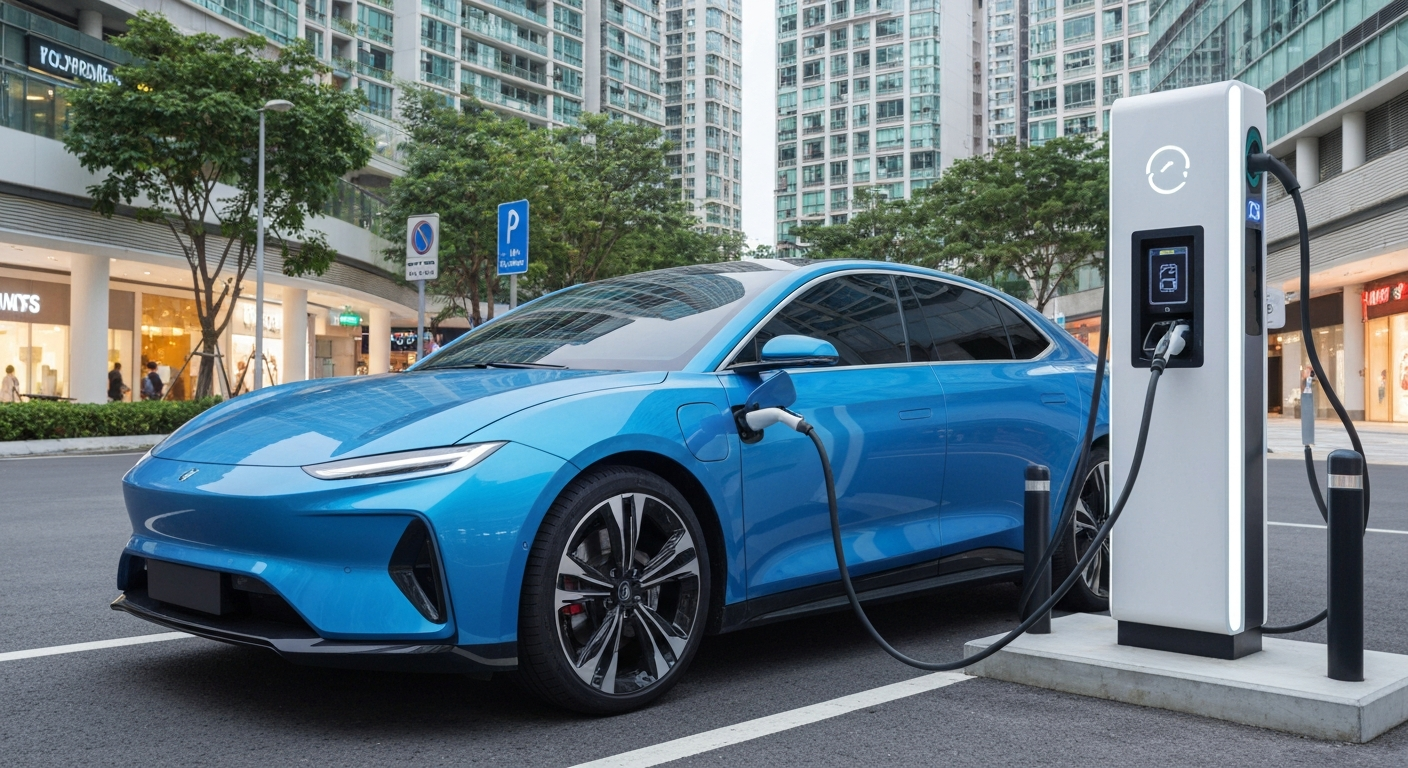
Thinking about getting an electric car but wondering how to keep it powered up? Charging an EV is simpler than you might think, whether you're at home or out exploring.
This guide will answer your biggest questions about charging your electric vehicle.
1. What are the different types of EV chargers?
There are three main types of electric vehicle (EV) chargers: Level 1, Level 2, and DC Fast Charging (also known as Level 3). They differ in how fast they can charge your car and the kind of power they use.
Level 1 is the slowest, using a regular wall outlet. Level 2 is faster and needs a special setup, like for a clothes dryer. DC Fast Charging is the quickest, found mostly at public stations for rapid top-ups.
2. How do I charge an electric car at home?
Most EV owners charge at home using either a Level 1 or Level 2 charger. Level 1 simply plugs into a standard 120-volt wall outlet, like any other appliance. It's the easiest to set up but also the slowest.
For faster home charging, you'll want a Level 2 charger. This requires a 240-volt outlet, similar to what a large appliance uses, and often needs professional installation by an electrician. Many EV owners install a Level 2 charger in their garage or driveway.
3. What is Level 1 charging?
Level 1 charging uses a standard 120-volt AC (alternating current) outlet, the same kind you use for lamps or toasters. Your EV comes with a charging cable that plugs into this outlet and then into your car. It's the slowest charging method, adding about 2-5 miles of range per hour.
This is great for overnight charging if you don't drive many miles daily, or as a backup. No special equipment or installation is needed beyond the cable provided with your car.
Level 1 Charging
- Power: Standard 120V outlet
- Speed: Slow (2-5 miles/hour)
- Setup: Plug-and-play
- Cost: Very low (just electricity)
Level 2 Charging
- Power: 240V outlet (like a dryer)
- Speed: Moderate (12-80 miles/hour)
- Setup: Professional installation often needed
- Cost: Moderate (equipment + installation)
4. What is Level 2 charging?
Level 2 charging uses a 240-volt AC outlet, providing much faster charging speeds than Level 1. It can add between 12 and 80 miles of range per hour, depending on your car and the charger's power. This is the most common type of home charging and is also widely available at public stations.
You'll need a dedicated Level 2 charging unit (often called an EVSE) installed by an electrician at home. This allows you to fully charge most EVs overnight or significantly top up during the day.
5. What is DC Fast Charging (Level 3)?
DC Fast Charging, or Level 3, is the quickest way to charge an EV. It uses direct current (DC) power to bypass your car's onboard charger, sending power directly to the battery. This allows for very rapid charging, often adding 100-200+ miles of range in just 20-60 minutes.
These powerful chargers are typically found at public stations along highways, at workplaces, or in city centers. They are ideal for road trips or when you need a quick charge away from home. Not all EVs can use DC Fast Charging, so check your car's specifications.
6. How long does it take to charge an EV?
Charging time varies greatly depending on the charger type, your car's battery size, and how empty the battery is. Level 1 charging can take 24-60 hours for a full charge. Level 2 charging typically takes 4-12 hours for a full charge at home.
DC Fast Charging is much quicker, usually getting your battery from 20% to 80% in 20-60 minutes. It's important to remember that charging slows down as the battery gets fuller, especially after 80%.
7. Where can I find public EV charging stations?
Public EV charging stations are becoming increasingly common. You can find them at workplaces, shopping centers, hotels, restaurants, parking garages, and along major highways. Many electric cars have built-in navigation that shows nearby chargers.
There are also many smartphone apps, like PlugShare, ChargePoint, and Electrify America, that help you locate available chargers, see their charging speeds, and sometimes even check their real-time availability. Planning your route with these tools is easy.
Finding Public EV Chargers
8. What is 'range anxiety' and how can I avoid it?
Range anxiety is the worry that your electric car will run out of power before you reach a charging station. It's a common concern for new EV owners, but it's often easily managed.
To avoid it, always start long trips with a full charge. Plan your route using charging apps to identify stations along the way. Understand your car's real-world range, which can be affected by weather and driving style. Most daily driving is well within an EV's range, and public charging infrastructure is growing rapidly.
9. Can I overcharge my electric car battery?
No, you cannot overcharge your electric car battery. Modern EVs have advanced battery management systems (BMS) that protect the battery. These systems automatically stop charging when the battery is full and monitor its health.
Leaving your car plugged in overnight or for extended periods will not harm the battery. The car will simply draw power as needed to maintain its charge, much like your smartphone. For optimal battery health, some manufacturers recommend charging to 80% for daily use and only to 100% for long trips.
10. How much does it cost to charge an electric car?
The cost to charge an EV varies significantly. At home, it depends on your electricity rates, which are typically much cheaper than gasoline. Charging overnight when rates are lower can further reduce costs. Many utility companies offer special EV charging plans.
Public charging costs can vary more. Level 2 public chargers might be free, pay-per-hour, or pay-per-kilowatt-hour (kWh). DC Fast Charging is generally the most expensive but still often cheaper than fueling a gasoline car for the same distance. Overall, EVs usually offer significant fuel savings.