
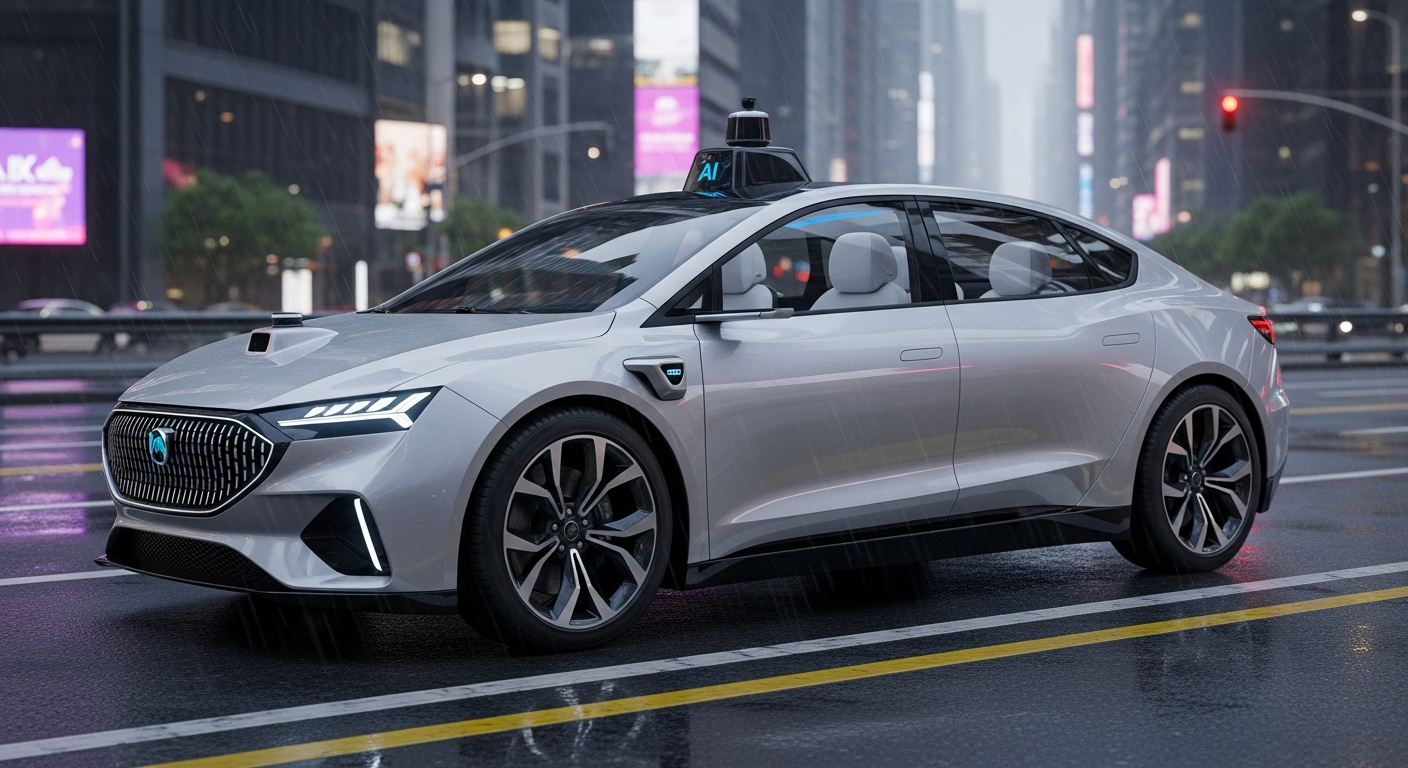
Self-driving cars, also known as autonomous vehicles, are revolutionizing how we travel. This guide will answer your questions about how these futuristic cars work and what we can expect from them in the years to come.
1. What are self-driving cars?
Self-driving cars are vehicles that can operate themselves without human input. They use a combination of sensors, cameras, radar, and computers to navigate, understand their surroundings, and make decisions on the road, much like a human driver would.
2. What are the different levels of autonomous driving?
There are six levels, from 0 to 5. Level 0 means no automation, while Level 5 is full automation, meaning the car can handle all driving tasks in all conditions without any human intervention. Most cars today are Level 1 or 2, offering features like adaptive cruise control or lane keeping assistance.
3. How do self-driving cars "see" their surroundings?
Self-driving cars use a suite of technologies to create a 360-degree view of the world. Cameras capture images, radar detects distances and speeds, and LiDAR (Light Detection and Ranging) uses lasers to build detailed 3D maps. This combined data helps the car understand everything around it.
Human Driver
- Eyesight
- Ears
- Brain (Decision-making)
- Experience
- Reaction Time
Self-Driving Car
- Cameras (Eyes)
- Radar/LiDAR (Ears/Range)
- AI Computer (Brain)
- Pre-programmed Rules
- Millisecond Reactions
4. What role does AI play in autonomous vehicles?
Artificial Intelligence (AI) is the "brain" of a self-driving car. It processes all the information from the sensors, recognizes objects like other cars, pedestrians, and traffic signs, and then makes real-time decisions about steering, acceleration, and braking. AI learns from vast amounts of data to improve its driving skills.
5. What are sensors used for in self-driving cars?
Sensors are the "eyes and ears" of the car. Cameras identify traffic lights and lane markings. Radar measures the distance and speed of other vehicles. LiDAR creates detailed 3D maps of the environment, detecting obstacles. Ultrasonic sensors help with parking and low-speed maneuvers.
6. Is it safe to ride in a self-driving car?
Safety is the top priority for developers. While fully autonomous cars (Level 5) are still in testing, cars with advanced driver-assistance systems (ADAS) are already making roads safer by reducing human error. As technology improves and testing continues, self-driving cars are expected to be significantly safer than human-driven vehicles.
7. What are the ethical considerations of autonomous vehicles?
One major ethical question is how the car should react in unavoidable accident scenarios. For example, should it prioritize the passenger's safety or a pedestrian's? Programmers must make difficult choices about these "trolley problem" situations, which are still being debated by experts and society.
Self-Driving Car Decision Flow
1. Sense Environment
Cameras, Radar, LiDAR gather data.
2. Process Data (AI)
Identify objects, predict movements.
3. Plan Path
Determine safe route and speed.
4. Execute Action
Steer, accelerate, brake accordingly.
8. When will fully self-driving cars be common?
While some cities have limited robotaxi services today, Level 5 self-driving cars for personal ownership are likely still several years away, perhaps by the early 2030s. Regulatory hurdles, public acceptance, and extreme weather conditions are significant challenges that need to be overcome before widespread adoption.
9. How will self-driving cars change transportation?
They could lead to fewer traffic accidents, reduced congestion, and more efficient use of road space. People who currently can't drive, like the elderly or disabled, will gain new independence. We might also see new business models, like subscription-based autonomous taxi services, becoming the norm.
10. What are the challenges in developing self-driving cars?
Key challenges include handling unpredictable human behavior and diverse weather conditions (snow, heavy rain). The technology also needs to be robust against cyberattacks. Legal frameworks and public trust are also crucial hurdles that need to be addressed for widespread acceptance and deployment.