
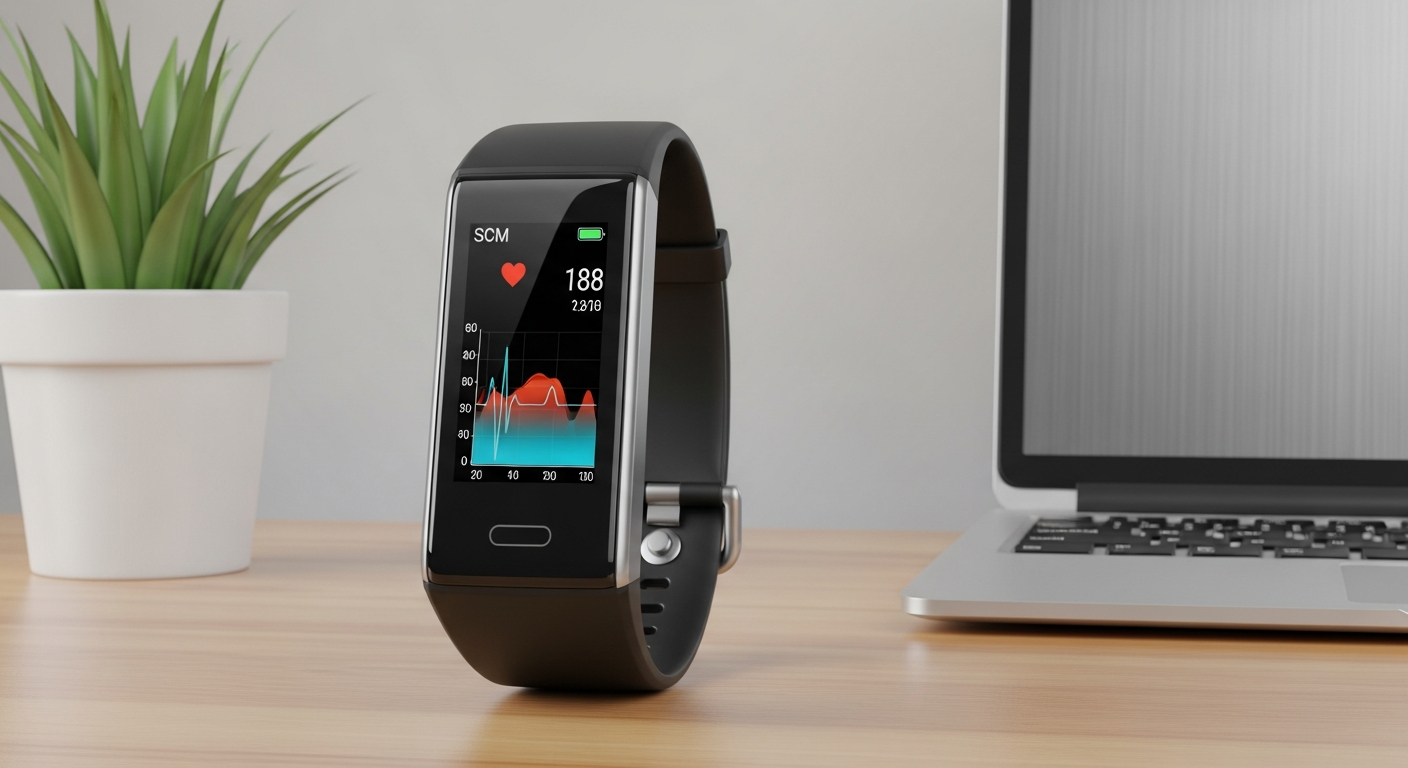
Ever wondered how that little device on your wrist knows so much about your day? Fitness trackers use clever technology to help you understand and improve your health.
1. What sensors are inside a typical fitness tracker?
Most fitness trackers contain a few key sensors. The main one is an accelerometer, which detects movement and changes in speed. Some also have a gyroscope to understand orientation and rotation. For heart rate, they use special optical sensors.
2. How does a fitness tracker count my steps accurately?
Your tracker uses its accelerometer to detect the distinct motion of your arm or wrist as you take a step. It's programmed to recognize this rhythmic pattern and filter out random movements like waving your hand. Advanced algorithms help it distinguish between walking, running, and other activities for better accuracy.
3. How does it measure my heart rate?
Fitness trackers measure heart rate using optical sensors, often with green LED lights. These lights shine into your skin, and a photodetector measures the light reflected back. Since blood absorbs green light, changes in blood flow (as your heart beats) cause changes in the reflected light, allowing the device to detect your pulse.
Wrist Sensor
- Convenient & comfortable
- Continuous, all-day tracking
- Good for general fitness
Chest Strap
- Highly accurate readings
- Ideal for intense exercise
- Less affected by movement
4. What is sleep tracking and how does it work?
Sleep tracking uses the accelerometer to monitor your movement during the night, detecting when you're restless or still. Some trackers also incorporate heart rate data. By analyzing these patterns, the device estimates your sleep stages, such as light, deep, and REM sleep, helping you understand your sleep quality.
5. How does my device estimate calories burned?
Your tracker estimates calories burned by combining several pieces of information. It uses your movement data (from the accelerometer), heart rate, and personal details you've entered like your age, weight, and height. It then applies complex formulas to calculate an estimated energy expenditure, considering your Basal Metabolic Rate (calories burned at rest) and activity levels.
6. What role does GPS play in activity tracking?
GPS, or Global Positioning System, uses signals from satellites to pinpoint your exact location on Earth. In fitness trackers, GPS is crucial for outdoor activities like running, cycling, or hiking. It accurately measures your distance traveled, current speed, and can even map out your route, giving you a detailed overview of your workout.
7. How accurate is the data collected by trackers?
Fitness trackers are generally quite accurate for tracking trends and motivating you to move more. Step counts are usually reliable. Heart rate can be very good, but might vary during very intense or irregular movements. Sleep stage detection is an estimate, not a medical diagnosis. They are great tools for general wellness, but not substitutes for professional medical advice.
Your Health Data Journey
Tracker Sensors
Collect raw data: movement, heart rate, location.
Device Processing
Converts raw signals into meaningful metrics.
Wireless Sync
Bluetooth sends processed data to your phone/computer.
Companion App
Displays data, adds context, trends, and insights.
8. How do I sync my tracker with my phone or computer?
Most modern fitness trackers use Bluetooth, a short-range wireless technology, to connect with your phone or computer. You'll typically download a companion app to your smartphone or software to your computer. Once paired, your tracker automatically or manually sends its collected data to the app, keeping your health information up-to-date.
9. What kind of data can I see in the companion app?
The companion app is where all your tracker's data comes to life! You can view detailed summaries of your daily steps, distance, active minutes, and estimated calories burned. It also shows your heart rate zones, sleep patterns, and workout specifics. Many apps offer historical data, trends over time, and allow you to set goals and participate in challenges.
10. Are there any limitations to what a tracker can measure?
Yes, while very helpful, fitness trackers have limitations. They are not medical devices and cannot diagnose health conditions. They typically don't measure things like blood pressure, blood sugar, or body temperature (beyond skin temperature). Accuracy can also be affected by how well the device fits, your skin tone, and the type of activity you're doing. Always consult a doctor for health concerns.