
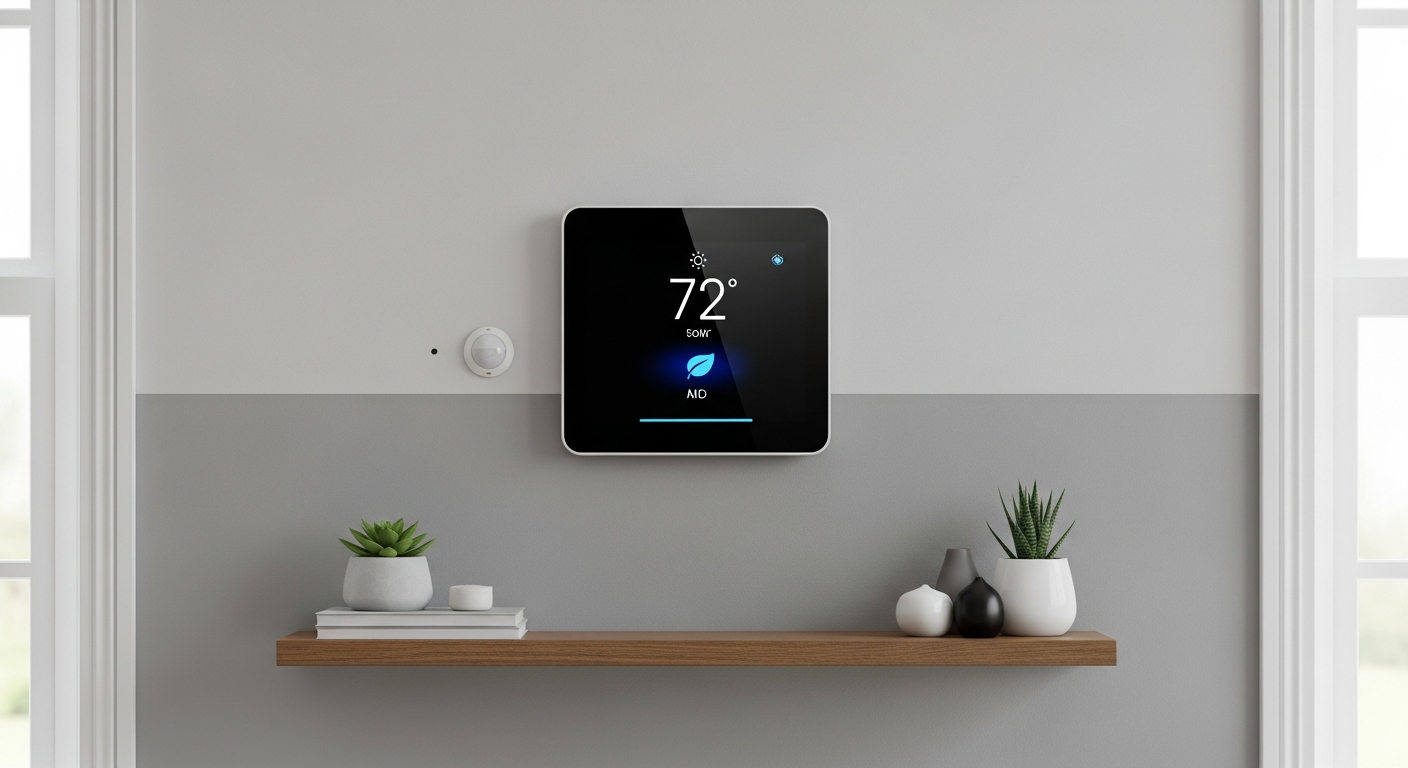
A smart thermostat is a modern home device that helps you control your heating and cooling system more efficiently. It connects to the internet, giving you new ways to manage your home's temperature.
1. What is a smart thermostat and what does it do?
A smart thermostat is like a regular thermostat but with added intelligence. It connects to your home's Wi-Fi, letting you control your heating, ventilation, and air conditioning (HVAC) system from anywhere using your smartphone or tablet. It can also learn your preferences and automate temperature changes.
2. How does a smart thermostat save energy?
Smart thermostats save energy by preventing unnecessary heating or cooling. You can set schedules, control it remotely when you're away, or use features like geofencing (it knows when you leave or arrive). This means your system only runs when needed, reducing wasted energy and lowering your utility bills.
3. Is it hard to install a smart thermostat myself?
For many people, installing a smart thermostat is a straightforward DIY task, similar to replacing a light switch. Most come with clear instructions and helpful apps that guide you step-by-step. However, it depends on your comfort with basic wiring and your home's existing setup.
DIY Installation
- Follow simple app instructions
- Basic tools needed (screwdriver)
- Good for standard wiring
Professional Installation
- No wiring knowledge needed
- Ensures correct setup
- Handles complex systems
4. Do I need a professional to install a smart thermostat?
You don't always need a professional, but it's recommended if you're unsure about wiring, or if your current system is older or has unusual wiring. Professionals ensure proper installation, prevent damage to your HVAC system, and can often help with initial setup and troubleshooting.
5. Can I control my smart thermostat from my phone?
Yes, absolutely! This is one of the biggest benefits. Smart thermostats connect to an app on your smartphone or tablet, allowing you to adjust the temperature, change schedules, and monitor energy usage from anywhere with an internet connection. You can even use voice commands with smart home assistants.
6. What features should I look for in a smart thermostat?
Look for remote control via an app, programmable scheduling, and energy usage reports. Other useful features include geofencing (adjusts temperature based on your location), learning capabilities (adapts to your routine), and compatibility with smart home systems like Amazon Alexa or Google Assistant for voice control.
7. Are smart thermostats compatible with all HVAC systems?
Most smart thermostats are compatible with common heating and cooling systems, including central air, furnaces, and heat pumps. However, some older or less common systems might not be compatible, especially if they lack specific wiring, like a "C-wire" for continuous power. Always check compatibility before buying.
Check HVAC Compatibility
- Identify Your Wires: Open your old thermostat and note the wire labels (e.g., R, G, Y, W, C).
- Check HVAC Type: Determine if your system is conventional (furnace/AC) or a heat pump.
- Consult Manufacturer: Use the smart thermostat's online compatibility checker or contact support.
8. What's the typical cost of a smart thermostat?
The cost of a smart thermostat can vary widely, generally ranging from $100 to $300 in 2026. Basic models with essential features are at the lower end, while advanced models with learning capabilities, touchscreens, and extensive smart home integration will be more expensive. Installation costs are separate if you hire a professional.
9. Can smart thermostats learn my habits?
Yes, many advanced smart thermostats have "learning" capabilities. They observe your temperature adjustments over time and automatically create an optimized schedule for you. This means they can learn when you're home, when you're away, and your preferred temperatures, adjusting automatically without you needing to program them.
10. Do smart thermostats require a C-wire?
Many smart thermostats, especially those with advanced features and Wi-Fi connectivity, require a "C-wire" (common wire). This wire provides continuous power to the thermostat, which is essential for its screen and internet functions. If your home doesn't have a C-wire, you might need an adapter or professional installation to add one.