
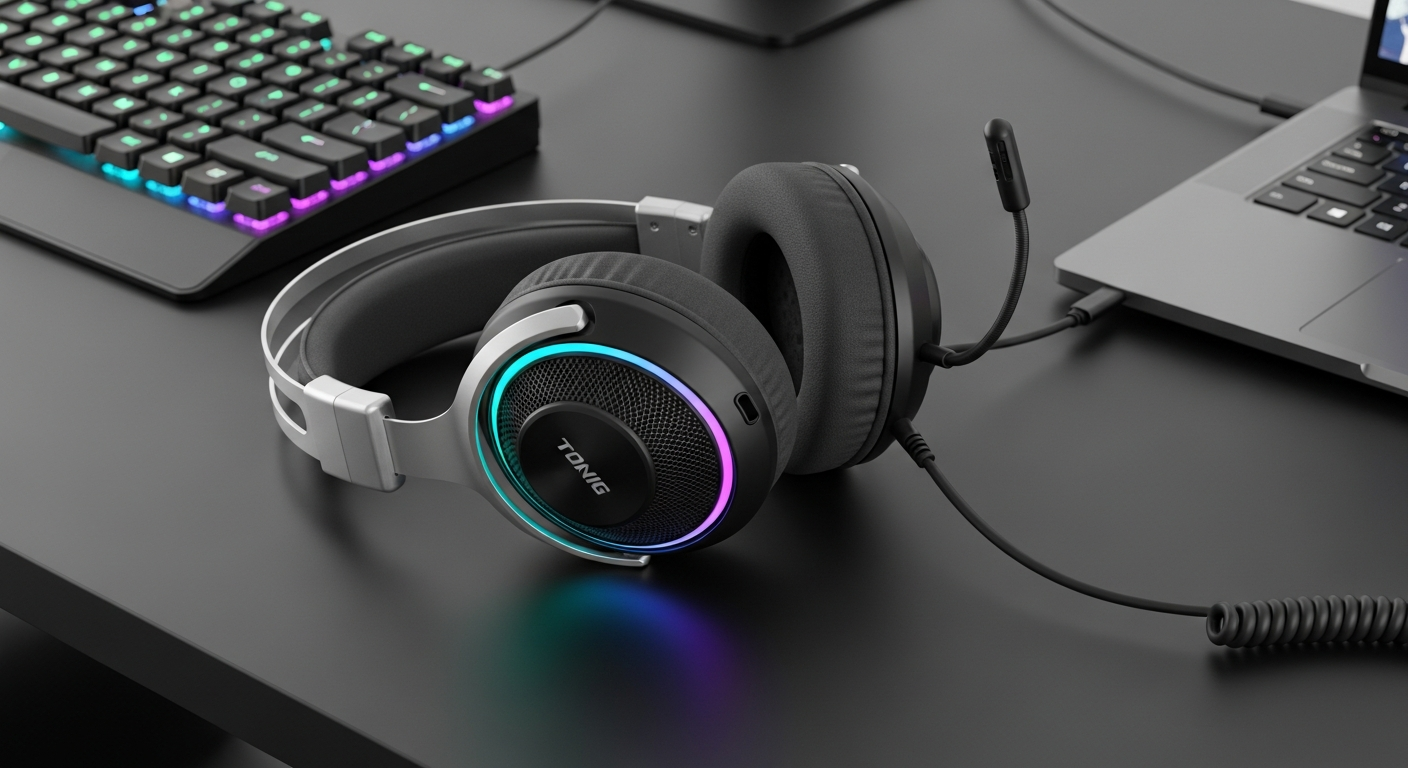
Stepping into the world of gaming can feel overwhelming, especially with all the gear available. A gaming headset is a key tool for many players, offering clear sound and communication.
This guide will answer common questions beginners have about gaming headsets, helping you understand what they are and if one is right for you.
1. Do I really need a gaming headset?
While not strictly required, a gaming headset greatly improves your experience. It provides clear game sounds, like footsteps or distant shots, helping you react faster. Crucially, it includes a microphone for easy communication with teammates.
This allows for better teamwork in online games and lets you chat with friends. Regular headphones and a separate mic can work, but a headset combines both for convenience and optimized performance.
2. Wireless or wired — which is better?
Both have pros and cons. Wired headsets connect directly with a cable, offering reliable sound without battery concerns or signal delays. They are generally more affordable and don't need charging.
Wireless headsets offer freedom of movement, letting you step away from your screen without missing audio. However, they need to be charged, can be more expensive, and might have a tiny delay in sound, though this is often unnoticeable with modern technology.
3. How much should I spend?
The cost varies widely. Entry-level headsets (around $30-$70) offer basic sound and a functional microphone, great for casual players. Mid-range options ($80-$150) provide better sound quality, comfort, and often more features like virtual surround sound.
High-end headsets ($160+) deliver premium audio, superior comfort, advanced features, and durable build quality. Your budget should align with how often you play and what features are most important to you.
Wireless vs. Wired Headsets
4. What is surround sound and does it matter?
Surround sound in gaming headsets creates the illusion that sounds are coming from different directions around you, not just left and right. This means you can hear if an enemy is approaching from behind or to your side.
It definitely matters for immersion and competitive play, as it helps you pinpoint the location of in-game events. Most gaming headsets use "virtual" surround sound, which uses software to create this effect, rather than having many tiny speakers.
5. Can I use regular headphones for gaming?
Yes, you can use regular headphones for gaming. However, you'll likely need a separate microphone for voice chat, which adds extra equipment. Regular headphones might also lack the specific sound tuning that gaming headsets offer, which is designed to highlight in-game audio cues.
Gaming headsets are built for convenience, combining good sound and a clear microphone into one device, often with features like comfort for long sessions and surround sound capabilities.
6. What is a good microphone on a headset?
A good headset microphone ensures your teammates hear you clearly without background noise. Look for features like "noise cancellation," which reduces unwanted sounds from your room. A "boom mic" (a mic on an adjustable arm) usually offers the best clarity.
Some mics are detachable or retractable, offering flexibility when you don't need them. Clear communication is vital in team-based games, so a quality microphone is a significant advantage.
7. Do gaming headsets work with every device?
Most gaming headsets are designed to be compatible with multiple devices, but it depends on their connection type. Many use a standard 3.5mm audio jack, which works with PCs, consoles, and mobile devices.
USB headsets are common for PCs and some consoles like PlayStation. Wireless headsets often use a USB dongle or Bluetooth for connectivity. Always check the headset's specifications to ensure it works with your specific gaming platform.
Common Headset Connection Types
3.5mm Audio Jack
Universal analog connection for most PCs, consoles, and mobile devices.
USB (Type-A/C)
Digital connection for PCs and some consoles, often enabling extra features.
Wireless (Dongle)
Uses a small USB dongle for low-delay wireless audio on PCs/consoles.
Bluetooth
Common wireless for mobile devices, sometimes with slightly more audio delay.
8. Are expensive headsets worth it?
For serious gamers, competitive players, or those who spend many hours gaming, expensive headsets can be worth the investment. They often provide superior sound quality, more comfortable materials, better build durability, and advanced features like active noise cancellation or customizable audio profiles.
However, for casual gamers, a mid-range headset might offer sufficient quality and comfort without the premium price tag. The "worth" depends on your personal needs, budget, and how much you value top-tier performance and comfort.
9. How do I avoid headset pain during long sessions?
Comfort is key for long gaming sessions. Look for headsets with soft, breathable ear cups (like memory foam or velour) that fully enclose your ears without pressing too hard. A padded, adjustable headband helps distribute weight evenly across your head.
Consider the overall weight of the headset; lighter models reduce strain. Taking short breaks every hour or so also helps prevent discomfort and gives your ears and head a rest.
10. What are the best gaming headset brands?
Several brands are highly regarded in the gaming community for their quality and innovation. Popular choices include HyperX, SteelSeries, Logitech, Razer, Astro, and Corsair. Each brand offers a range of headsets at different price points and with various features.
The "best" brand often comes down to personal preference for sound, comfort, and specific features. It's always a good idea to read reviews and, if possible, try on different models to find what suits you best.