
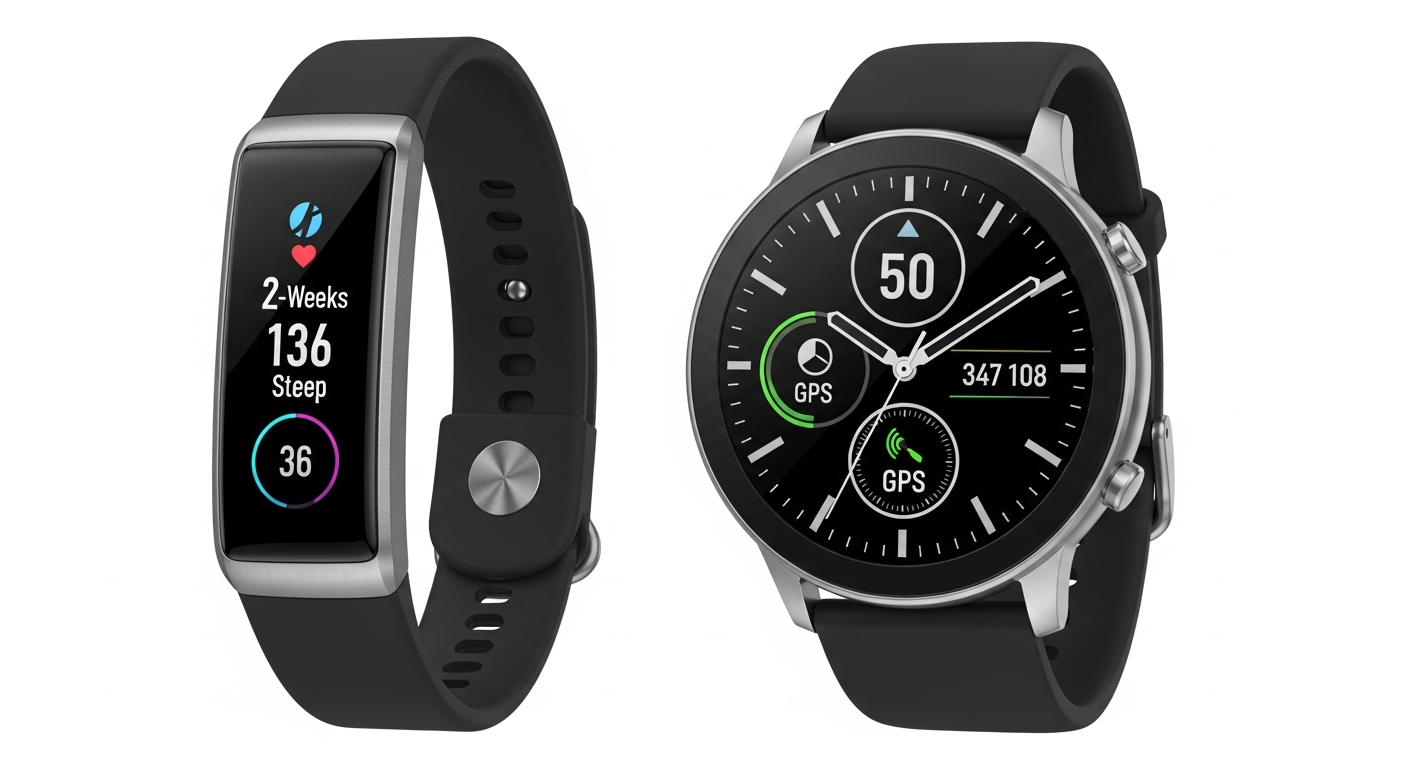
Deciding between a fitness tracker and a smartwatch can be tricky, as they both sit on your wrist and offer cool features. Let's break down the real differences so you can pick the perfect device for you.
1. What is the main purpose of a fitness tracker?
A fitness tracker is built specifically to monitor your health and activity levels. It focuses on collecting data like your steps taken, distance walked, calories burned, and sleep patterns. Think of it as your personal health coach on your wrist, encouraging you to move more and understand your body better.
2. What is the main purpose of a smartwatch?
A smartwatch is like a mini-smartphone for your wrist. While it can track some fitness, its main job is to extend your phone's capabilities. It lets you receive notifications, make calls, send messages, and use various apps directly from your wrist, making it a convenient tech companion.
3. Which one is generally more expensive?
Smartwatches are typically more expensive than fitness trackers. This is because smartwatches pack in more advanced technology, a wider range of features, a more powerful processor, and often a more sophisticated screen. Fitness trackers, being more specialized, usually have simpler components.
Fitness Tracker
- Focus: Health & Activity
- Price: Lower
- Battery: Longer
- Features: Basic notifications, core fitness
- Complexity: Simpler to use
Smartwatch
- Focus: Phone extension & Versatility
- Price: Higher
- Battery: Shorter
- Features: Calls, apps, advanced notifications
- Complexity: More features to learn
4. Do both track steps and heart rate?
Yes, almost all modern fitness trackers and smartwatches track steps and heart rate. These are fundamental health metrics. Many also track sleep patterns and distance. Higher-end models of both might add features like blood oxygen levels or ECG (electrocardiogram) readings.
5. Which device offers more apps?
Smartwatches offer a significantly wider range of apps. Because they are designed to be an extension of your smartphone, they support many third-party applications for navigation, music streaming, payments, and more. Fitness trackers usually have a limited set of built-in functions and very few, if any, additional apps.
6. Can I make calls with a fitness tracker?
Generally, no. Most fitness trackers do not have the hardware (like a speaker and microphone) or the cellular connectivity to make calls independently. Some might allow you to see incoming call notifications or reject a call, but making a call directly from the device is almost exclusively a smartwatch feature.
7. Which one has better battery life usually?
Fitness trackers almost always have significantly better battery life. Their simpler screens and fewer complex features mean they consume much less power. Many fitness trackers can last for several days, or even over a week, on a single charge. Smartwatches, with their powerful processors and vibrant displays, often need charging daily or every couple of days.
Choosing Your Wrist Companion
What's your main goal?
Health tracking vs. Phone extension.
Consider your budget.
Fitness trackers are usually more affordable.
Think about battery needs.
Smartwatches need more frequent charging.
Do you need phone features?
Calls, texts, apps from your wrist? Smartwatch.
Pick the best fit for your lifestyle!
Simple health or full tech convenience.
8. Is one easier to use than the other?
Fitness trackers are generally easier to use. They have fewer features and simpler interfaces, making them straightforward to navigate and understand. Smartwatches, with their many apps and settings, can have a steeper learning curve, similar to learning a new smartphone.
9. Which is better for serious athletes?
For serious athletes, the choice depends on specific needs. High-end fitness trackers and sports watches (a specialized type of fitness tracker) often offer very precise tracking for specific activities like running, swimming, or cycling, with advanced metrics. However, some premium smartwatches now include equally robust fitness features, sometimes even more advanced GPS or recovery insights.
If an athlete primarily needs detailed workout data and long battery life for extended training, a dedicated fitness tracker or sports watch might be superior. If they also want to stay connected, control music, and use advanced mapping features during their activity, a high-end smartwatch could be a better all-in-one solution.
10. Which one should a beginner buy first?
For a beginner just starting to monitor their health or get more active, a fitness tracker is usually the best choice. It's more affordable, simpler to use, and has excellent battery life. It provides all the essential health data without overwhelming you with extra features, making it a great entry point into wearable tech.