
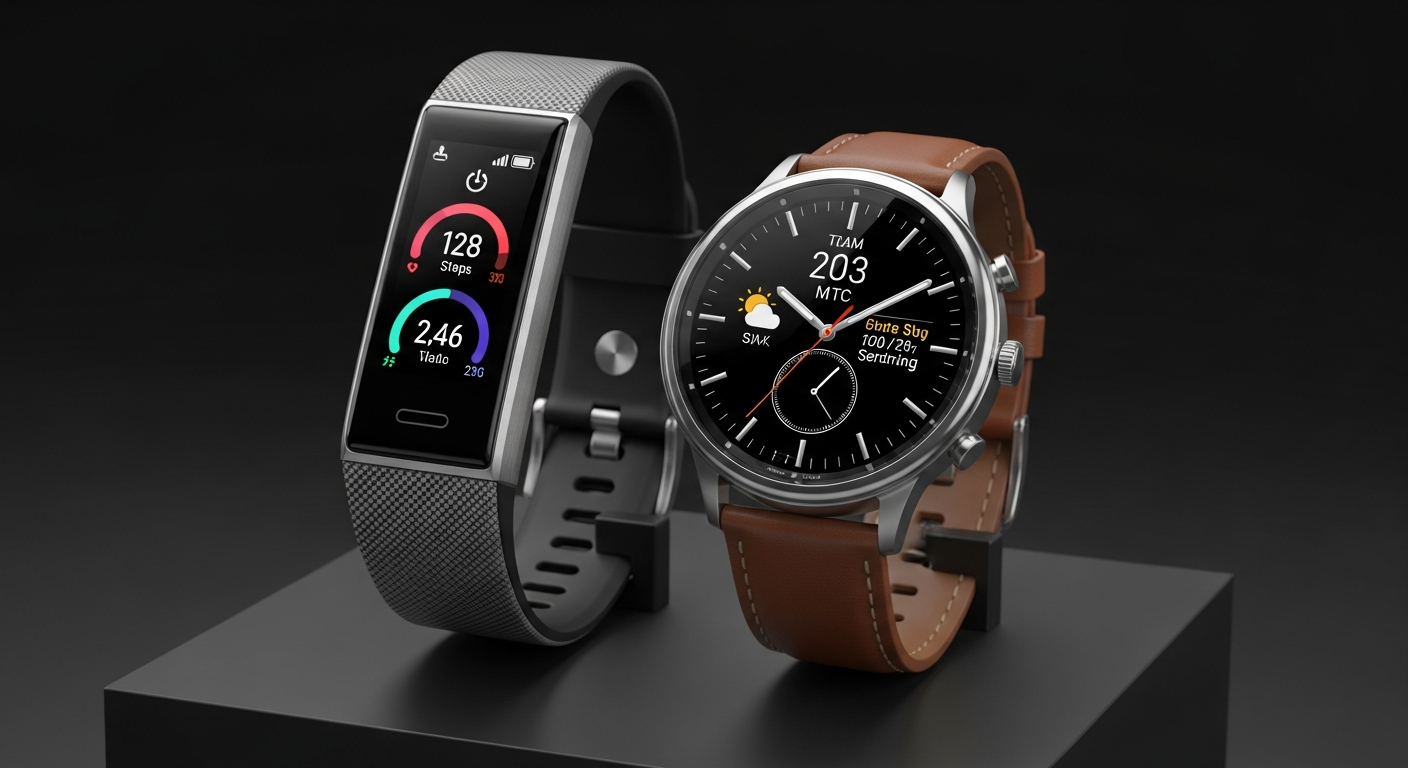
Thinking about getting a wearable device to help with your health or daily life? It can be tricky to pick between a fitness tracker and a smartwatch, especially if you're new to them.
1. What is the main difference between a fitness tracker and a smartwatch?
A fitness tracker is like a dedicated health coach on your wrist. It's built primarily to monitor your physical activity, sleep, and basic health metrics. A smartwatch, on the other hand, is more like a mini-smartphone for your wrist, offering a wider range of features beyond just fitness.
2. Which one is better for tracking exercise?
Both can track exercise, but fitness trackers are often more focused and sometimes more accurate for basic activity like steps, distance, and heart rate during workouts. They excel at giving you a clear picture of your daily movement and exercise goals without distractions.
3. Which one has more smart features?
Smartwatches definitely win here. They can do things like make calls, send texts, run apps, play music, and even make payments directly from your wrist. Fitness trackers usually offer very limited "smart" features, mostly focused on showing notifications.
Fitness Tracker
- Primary Goal: Health & Fitness Tracking
- Screen: Often smaller, simpler
- Apps: Limited, mostly health-related
- Battery: Days to weeks
- Price: Generally lower
Smartwatch
- Primary Goal: All-in-one wrist computer
- Screen: Larger, full-color, interactive
- Apps: Many, like phone apps
- Battery: 1-3 days
- Price: Generally higher
4. What's the typical price difference?
Fitness trackers are usually much more affordable, often ranging from $30 to $150. Smartwatches are a bigger investment, typically starting around $150 and going up to $500 or more, depending on the brand and features.
5. Do both need a smartphone?
Most fitness trackers and smartwatches need a smartphone to set them up, sync data, and manage settings through an app. While some smartwatches can operate independently for calls or internet if they have their own cellular connection, they still usually pair with a phone for the best experience.
6. Which one has a longer battery life?
Fitness trackers generally have much longer battery lives, often lasting several days to a week or even more on a single charge. Smartwatches, with their more powerful processors and vibrant screens, usually need charging every 1-3 days.
7. Which one is easier to use for beginners?
Fitness trackers are typically simpler to use. They often have fewer buttons or a simpler touchscreen interface, focusing on displaying your health data clearly. Smartwatches can have more menus, apps, and settings, which might feel a bit overwhelming for someone new to wearables.
Choosing Your First Wearable
Goal: Health & Activity Tracking?
Priority: Simplicity & Long Battery?
Choose: Fitness Tracker
Choose: Smartwatch
Goal: Calls, Apps & Notifications?
Priority: Advanced Tech & Convenience?
8. Can fitness trackers receive notifications?
Yes, most modern fitness trackers can receive basic notifications from your smartphone, like incoming calls, text messages, and app alerts. However, you usually can't reply to them directly from the tracker, only view them.
9. Can smartwatches track fitness well?
Absolutely! Smartwatches have become very capable fitness trackers. They often include advanced sensors for heart rate, blood oxygen, GPS, and even ECG. Many offer detailed workout tracking and health insights, making them a great all-in-one device for fitness enthusiasts.
10. What should I consider before buying either?
Think about your main goal: Is it purely health and fitness tracking, or do you want a device that also handles calls, messages, and apps? Consider your budget, how often you want to charge it, and how comfortable you are with technology. For beginners focused on health, a fitness tracker is often a great starting point.