
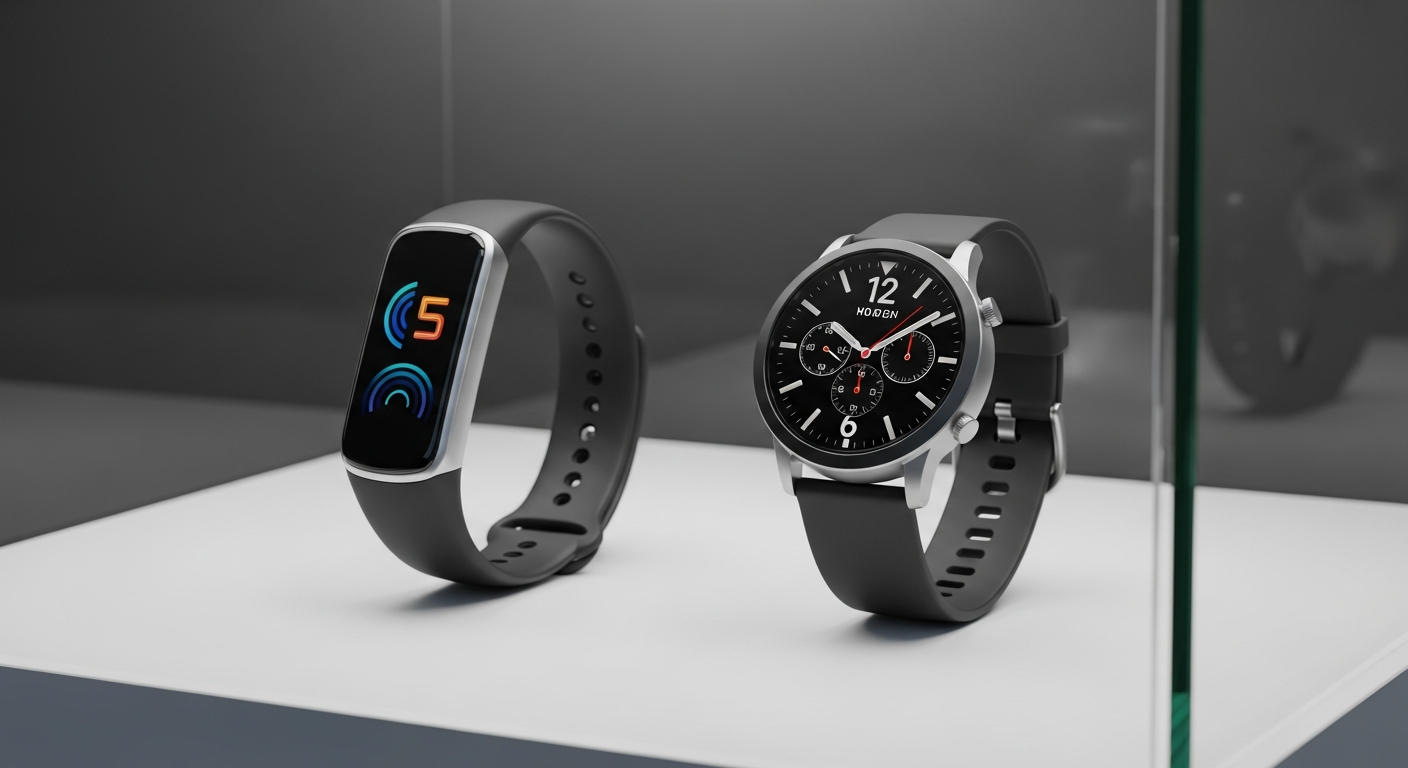
Deciding between a fitness tracker and a smartwatch can be tricky, as both wear on your wrist and offer helpful features. Let's break down the key differences to help you choose the right device for your needs.
1. What is the primary purpose of a fitness tracker?
A fitness tracker is mainly designed to monitor your health and daily activities. It counts your steps, tracks distances walked, monitors your heart rate, and analyzes your sleep patterns. Its goal is to help you stay active and understand your body's health metrics.
2. What is the primary purpose of a smartwatch?
A smartwatch acts like a mini-smartphone on your wrist. Its main job is to extend your phone's capabilities, letting you receive calls, texts, and app notifications directly. It also runs various apps, plays music, and often includes fitness tracking features as a bonus.
3. Which one is generally more affordable?
Fitness trackers are typically more budget-friendly. Because they focus on core health tracking features and have simpler designs, they usually come with a lower price tag. Smartwatches, with their advanced technology and broader capabilities, tend to be more expensive.
Fitness Tracker
- Lower starting price
- Fewer advanced features
- Basic screen, longer battery
Smartwatch
- Higher starting price
- Many advanced features
- Color screen, shorter battery
4. Which one has more advanced notification features?
Smartwatches offer far more advanced notification features. They can display full messages, allow you to respond to texts or calls directly, and show alerts from almost any app on your phone. Fitness trackers usually show basic alerts like incoming calls or simple message previews.
5. Does one have better battery life than the other?
Yes, fitness trackers generally boast much longer battery life. Many can last for several days, or even weeks, on a single charge. Smartwatches, with their powerful screens and many features, often need to be charged daily or every couple of days.
6. Which is better for detailed sports tracking?
For very detailed sports tracking, smartwatches often have the edge. They frequently include built-in GPS for accurate route mapping, more specific workout modes for different sports, and better integration with advanced third-party fitness apps. Some high-end fitness trackers also offer great sports tracking.
7. Can smartwatches do everything a fitness tracker can?
Generally, yes. Most modern smartwatches include all the core features of a fitness tracker, such as step counting, heart rate monitoring, and sleep tracking. They combine these health functions with their broader capabilities as a phone extension, offering a more comprehensive device.
Fitness Tracker
- Focus: Health & Activity
- Simple data display
- Long battery life
Smartwatch
- Focus: Phone Extension & Apps
- Rich interactive display
- Daily/bi-daily charging
8. Is one more stylish or customizable?
Smartwatches typically offer more in terms of style and customization. They often have larger, full-color screens, a wider variety of interchangeable straps, and countless digital watch faces to match your mood or outfit. Fitness trackers usually have a more utilitarian, sporty design with fewer customization options.
9. Which is easier for a beginner to use?
Fitness trackers are generally easier for beginners. Their simpler design and limited features mean fewer menus to navigate and less to learn. You just put it on, and it starts tracking. Smartwatches, with their many apps and settings, can have a steeper learning curve.
10. Can I get a hybrid device that does both?
Absolutely! The lines between fitness trackers and smartwatches are often blurred. Many devices today are "hybrid" or "fitness smartwatches" that offer a strong blend of both. They provide advanced fitness tracking alongside smart features like notifications, making them a great all-in-one choice.