
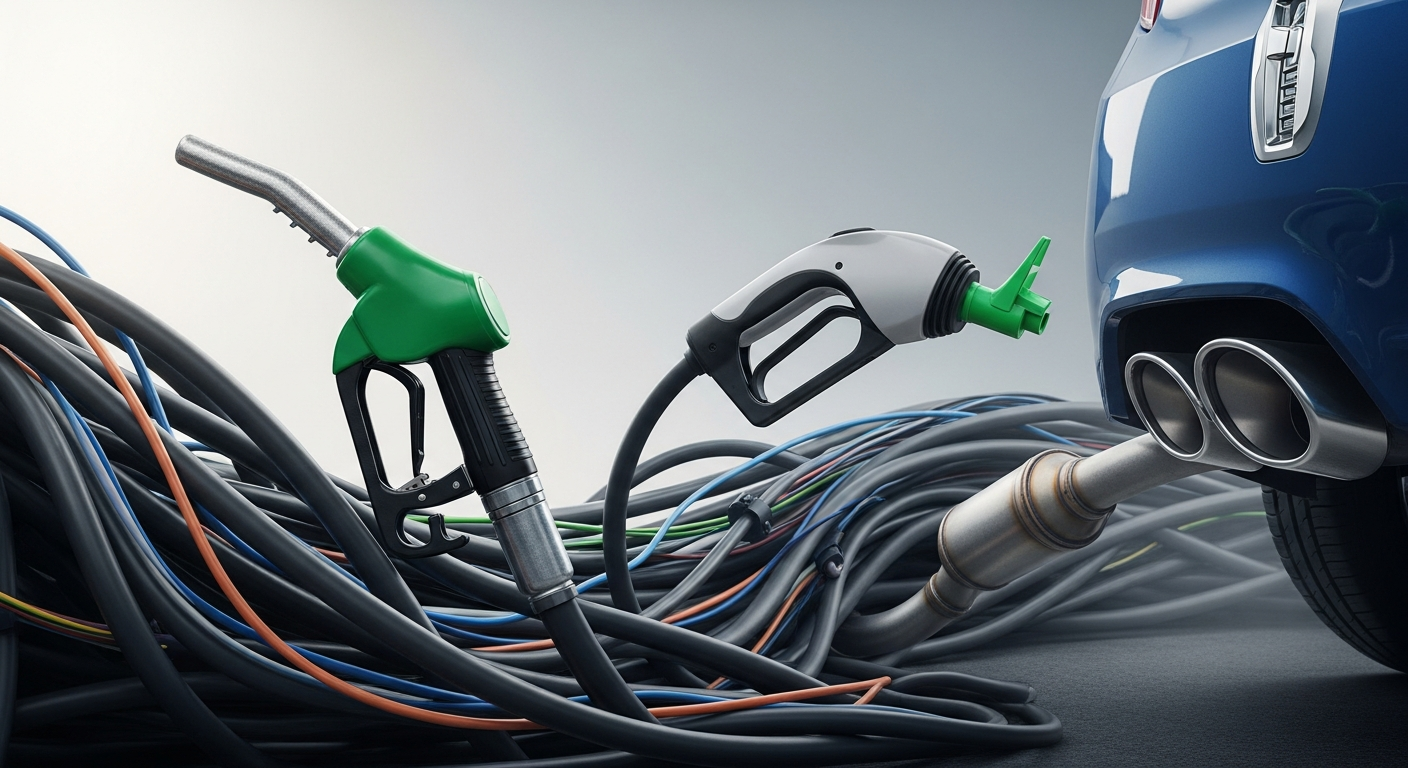
Confused about all the different types of cars on the road today? You're not alone! This guide will break down the differences between gas, hybrid, and electric vehicles in simple terms.
By the end, you'll understand how each works and which might be the best fit for you.
1. What is a conventional gas car?
A conventional gas car, also known as an internal combustion engine (ICE) vehicle, runs solely on gasoline. It has an engine that burns fuel to create power, which then turns the wheels. These cars have been around for over a century and are what most people are familiar with.
2. How does a hybrid car work?
A hybrid car combines a gasoline engine with an electric motor and a small battery. It automatically switches between using electric power, gas power, or both, depending on driving conditions. This allows it to save fuel, especially in stop-and-go traffic, by using electricity at lower speeds.
3. What is a plug-in hybrid electric vehicle (PHEV)?
A PHEV is like a regular hybrid but with a larger battery that you can plug in to charge. This means it can drive on electricity alone for a significant distance (often 20-50 miles) before the gas engine even turns on. Once the electric range is used up, it operates like a regular hybrid.
Hybrid Car
- Small battery, self-charges
- No plugging in needed
- Short electric bursts
- Always uses some gas
Plug-in Hybrid (PHEV)
- Larger battery, plug-in charged
- Can drive on electric only for miles
- Gas engine kicks in after battery runs low
- Uses less gas if charged regularly
4. How is an EV different from a PHEV?
An EV, or Electric Vehicle, runs purely on electricity and has no gasoline engine at all. It uses a large battery and electric motors to power the car and must be plugged in to charge. Unlike a PHEV, an EV produces zero tailpipe emissions, as it doesn't use any gasoline.
5. Which type of car is most fuel-efficient?
Generally, pure Electric Vehicles (EVs) are the most energy-efficient, as they convert a very high percentage of electricity into movement. PHEVs are next, especially if charged regularly, as they can complete many trips on electricity alone. Regular hybrids are more efficient than gas cars, particularly in city driving.
6. What are the environmental impacts of each?
Gas cars produce tailpipe emissions like carbon dioxide, contributing to air pollution and climate change. Hybrids reduce these emissions by using less gas. PHEVs reduce them even more, especially when driven on electric power. EVs produce zero tailpipe emissions, making them the cleanest option for local air quality.
7. What are the maintenance differences?
Gas cars require regular oil changes, spark plug replacements, and other engine-related maintenance. Hybrids and PHEVs still need some of this, but less frequently. EVs have fewer moving parts and no oil changes, leading to significantly lower maintenance needs. Their brakes also last longer due to regenerative braking.
Car Maintenance Overview
- Oil changes (frequent)
- Spark plugs
- Engine filters
- Transmission fluid
- Oil changes (less frequent)
- Some engine checks
- Electric motor checks
- Battery health monitoring
- Tire rotations
- Brake fluid checks
- Cabin air filter
- Battery health monitoring
8. How do driving experiences differ?
Gas cars offer a familiar driving feel with engine noise and gear shifts. Hybrids and PHEVs often switch smoothly between gas and electric, sometimes feeling quieter at low speeds. EVs provide instant torque, meaning they accelerate very quickly and smoothly, with almost silent operation and no gear changes, offering a very quiet and refined ride.
9. Which is cheaper to own long-term?
While EVs often have a higher upfront cost, they can be cheaper long-term due to lower fuel costs (electricity is usually cheaper than gas) and significantly reduced maintenance. PHEVs also offer fuel savings. Gas cars typically have lower upfront costs but higher ongoing fuel and maintenance expenses.
10. Can I convert my gas car to electric?
Yes, it is technically possible to convert a gas car to electric, but it's a complex and expensive process. It involves removing the entire gasoline powertrain and installing an electric motor, battery pack, and charging system. This is usually done by specialized shops or hobbyists and is not a common or cost-effective option for most drivers.