
How Much Does It Cost to Charge an Electric Car?
Thinking about making the switch to an electric car? That's exciting! One of the first questions many people ask is, "How much will it really cost to keep it charged up?" It's a great question, and the answer isn't always a simple number, but we're here to break it down for you in plain language. Forget complicated tech talk – we'll explain everything you need to know about the costs of fueling your electric vehicle (EV) in 2026, from charging at home to public stations and everything in between.
1. How much does a full charge cost at home?
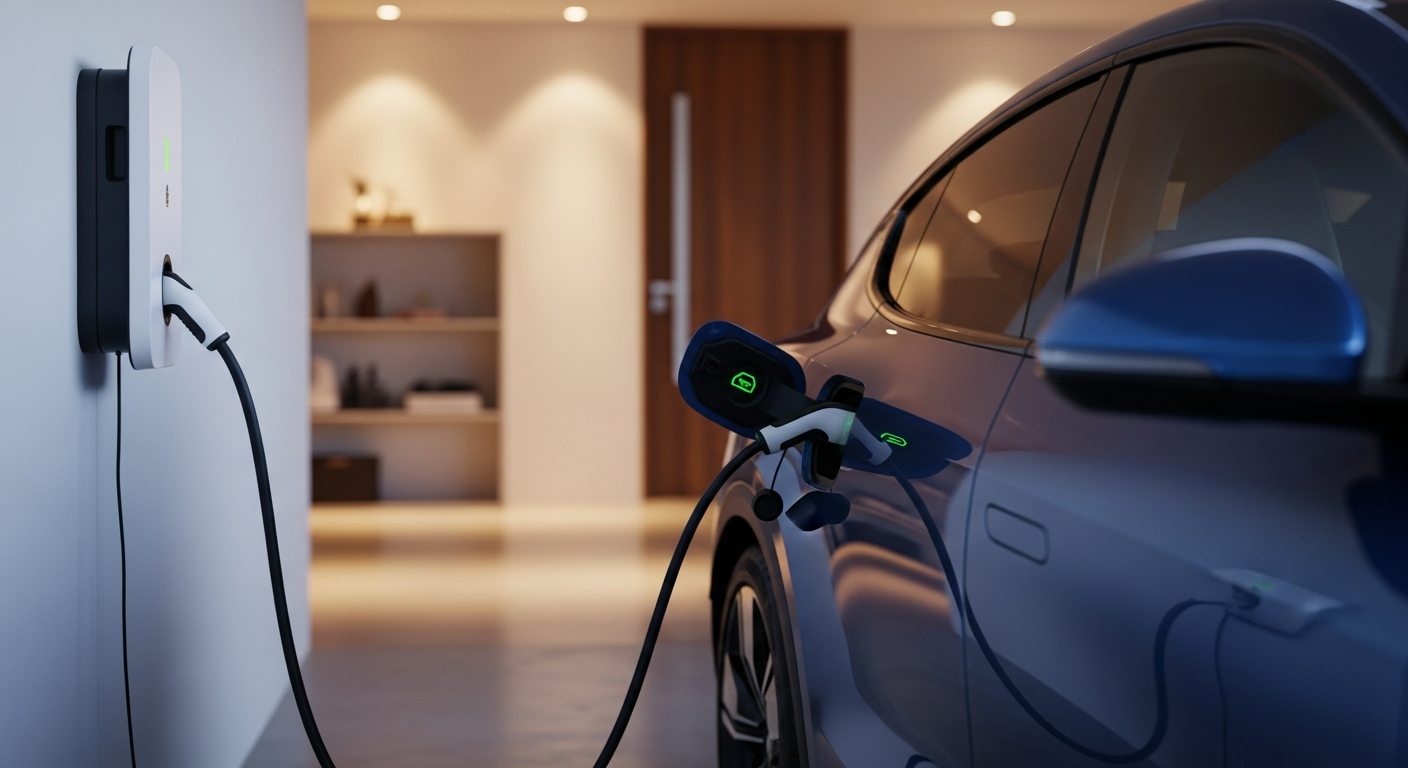
Charging your electric car at home is usually the most convenient and often the cheapest option. The exact cost depends on two main things: how big your car's battery is and how much your electricity company charges per unit of electricity (called a kilowatt-hour, or kWh). Most electric cars have batteries ranging from about 40 kWh to 100 kWh. Let's say your car has a 60 kWh battery.
In 2026, the average residential electricity rate in the United States is around $0.17 per kWh. So, to fully charge a 60 kWh battery from empty to full, it would cost roughly: 60 kWh * $0.17/kWh = $10.20. Keep in mind, you rarely charge from completely empty, so your daily top-ups will be much less.
2. Is charging cheaper than gas?
For most drivers, yes, charging an electric car is significantly cheaper than filling up a gas car, especially when you charge at home. Let's do a quick comparison. If a gas car gets 30 miles per gallon and gas costs $3.50 per gallon, driving 100 miles would cost about $11.67 ($3.50 / 30 miles * 100 miles).
An electric car, on the other hand, might use about 30 kWh to travel 100 miles. At our average home electricity rate of $0.17/kWh, that 100 miles would cost about $5.10 (30 kWh * $0.17/kWh). As you can see, the savings can add up quickly, making EVs a more budget-friendly choice for daily driving.
3. How much does public charging cost?
Public charging stations offer convenience when you're away from home, but they generally cost more than home charging. There are a few types:
- Level 2 Chargers: These are common at workplaces, shopping centers, and hotels. They charge faster than a regular wall outlet but slower than fast chargers. Costs can range from free (often at hotels or stores to attract customers) to $0.20 - $0.40 per kWh, or sometimes a flat hourly rate like $1-$3 per hour.
- DC Fast Chargers (Level 3): These are the fastest chargers, perfect for long road trips when you need to top up quickly. They are also the most expensive. Prices typically range from $0.30 - $0.60 per kWh, or sometimes a per-minute fee (e.g., $0.20-$0.50 per minute), which can add up if your car charges slowly.
Many public charging networks require you to sign up for an account or use their app. Some offer membership plans that can reduce per-kWh costs.
Home vs. Public Charging Costs (Estimated Average)
4. Do I need a special charger at home?
While you can use a regular wall outlet (see Q6), for most EV owners, installing a dedicated home charger, often called a Level 2 charger or EVSE (Electric Vehicle Supply Equipment), is highly recommended. These chargers plug into a 240-volt outlet (like the one for your electric dryer) and can charge your car much faster – typically adding 20-30 miles of range per hour. This means you can fully charge your car overnight, even if you drive a lot during the day.
5. How much does a home charger cost to install?
The cost of installing a Level 2 home charger can vary quite a bit. The charger unit itself usually costs between $300 and $800. The installation by a licensed electrician is the main variable. If your electrical panel is close to where you want the charger and has enough spare capacity, installation might be $500 to $1,000. However, if your panel needs an upgrade or the wiring run is long and complex, it could go up to $2,000 or more.
It's worth checking for local or federal incentives, as many governments and utility companies offer rebates or tax credits to help offset the cost of buying and installing an EV charger.
6. Can I charge with a normal power outlet?
Yes, you absolutely can! Every electric car comes with a charging cable that plugs into a standard 120-volt wall outlet (the kind you use for lamps and TVs). This is called Level 1 charging. It's the slowest way to charge, typically adding only 2-5 miles of range per hour. For someone who drives very little, or as a backup option, Level 1 charging can be perfectly adequate. Most people find it too slow for daily use, especially if they have a longer commute, but it's a great option to keep your battery topped up slowly overnight.
7. Is charging free anywhere?
Yes, free charging does exist! While it's not as widespread as paid options, you can often find free Level 2 charging at:
- Workplaces: Many forward-thinking companies offer free charging as an employee perk.
- Retail Stores and Shopping Malls: Some stores use free charging to attract customers, hoping you'll spend money while your car charges.
- Hotels: A growing number of hotels provide free charging for guests, especially those catering to travelers with EVs.
- Public Destinations: Parks, libraries, and some municipal parking lots might offer free charging, sometimes for a limited time.
These free options are fantastic for saving money, but they are usually Level 2 chargers, meaning they take a few hours to add a significant amount of range. Always check apps like PlugShare or the car's navigation system to find free charging spots near you.
Factors Influencing Your EV Charging Costs
8. How does electricity pricing affect costs?
Electricity pricing can significantly impact your charging costs. Most homes have a flat rate, meaning you pay the same per kWh no matter when you use electricity. However, some utility companies offer "Time-of-Use" (TOU) plans. With TOU plans, electricity is cheaper during "off-peak" hours (usually late at night and early morning) and more expensive during "peak" hours (often late afternoon/early evening when everyone is using power).
If you have a TOU plan, charging your EV overnight during off-peak hours can dramatically reduce your costs, sometimes by 50% or more compared to peak rates. It's definitely worth checking with your electricity provider to see if such plans are available in your area.
9. What about charging at work?
Charging at work can be a fantastic perk. If your employer offers free Level 2 charging, it can significantly reduce your home charging needs and overall monthly costs. Even if there's a small fee, it's often cheaper than public fast chargers and incredibly convenient, allowing you to top up while you're busy with your job. If you're considering an EV and your workplace has chargers, ask about their policies and costs – it could be a major factor in your savings.
10. What is the real monthly cost of driving an EV?
When you combine all the factors, the real monthly cost of driving an EV is generally lower than a comparable gas car. Let's assume you drive an average of 1,000 miles per month. Using our earlier estimates:
- Gas Car: 1,000 miles / 30 MPG * $3.50/gallon = $116.67 per month.
- EV (mostly home charging): 1,000 miles / 3.3 miles/kWh (average efficiency) * $0.17/kWh = $51.52 per month.
This is a saving of over $65 per month just on "fuel"! This doesn't even include the typically lower maintenance costs of EVs (no oil changes, fewer moving parts). While there's an initial investment for a home charger, the ongoing savings on fuel and maintenance make electric cars a very cost-effective choice in the long run.
So, while the upfront cost of an EV might be higher for some models, the daily "fueling" costs are almost always lower, making them a smart financial move for many drivers in 2026.