
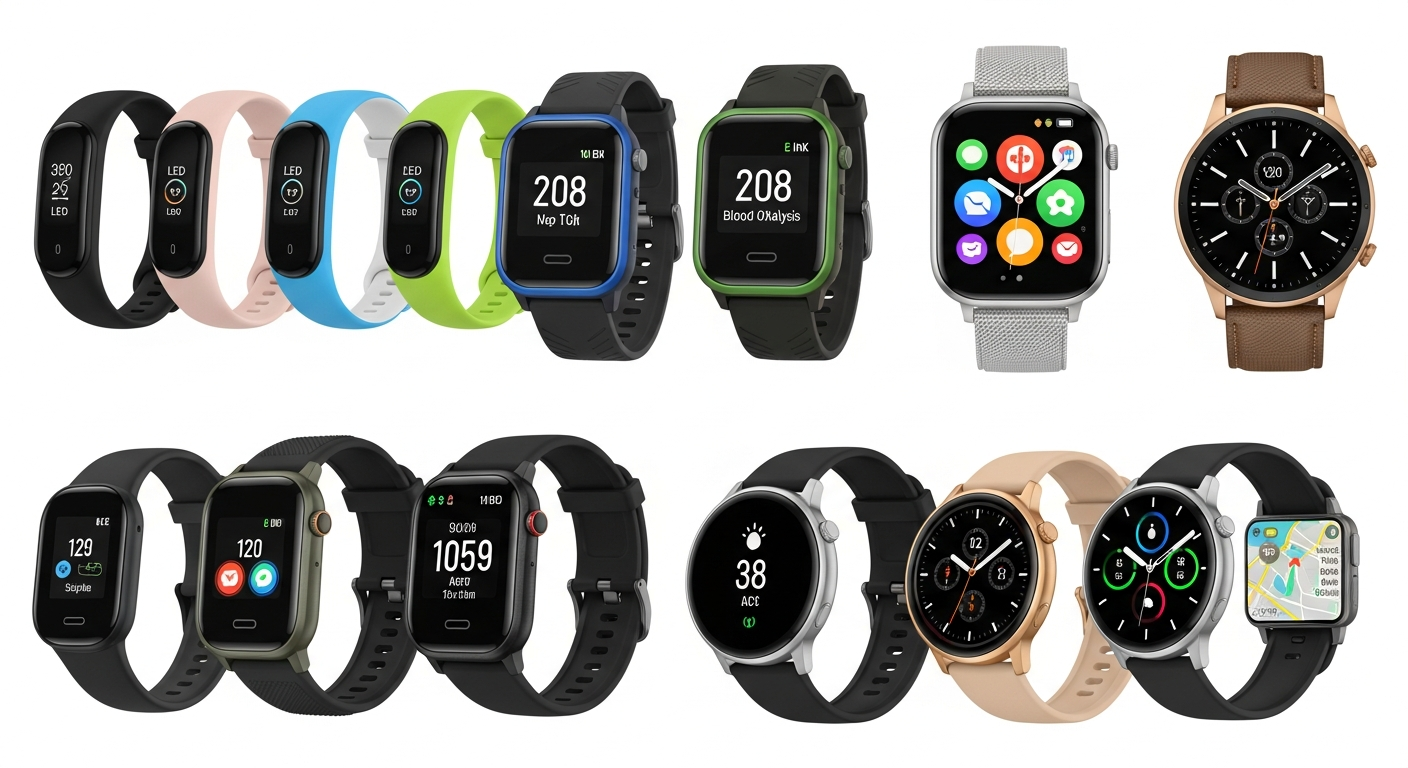
Thinking about getting a fitness tracker or smartwatch? It can feel overwhelming with so many choices out there! This guide will help you understand what to look for so you can pick the perfect device for your lifestyle.
1. What should I consider when buying my first device?
First, think about what you want to track. Are you just curious about your steps, or do you want to monitor sleep and workouts? Also, consider your budget and how often you'll wear it. Some devices are better for everyday wear, while others are built for intense exercise.
2. What's the difference between a fitness tracker and a smartwatch?
A fitness tracker is usually smaller and focuses on health data like steps, heart rate, and sleep. A smartwatch does all that plus more, like showing phone notifications, making calls, and running apps directly from your wrist. Think of a tracker as a specialized health gadget and a smartwatch as a mini-phone for your wrist.
Fitness Tracker
- Focuses on health & activity
- Tracks steps, sleep, heart rate
- Often smaller, lighter
- Longer battery life
- Generally more affordable
Smartwatch
- Health tracking + phone features
- Notifications, calls, apps
- Larger screen, more powerful
- Shorter battery life
- Generally more expensive
3. How much should I expect to pay for a good beginner device?
For a reliable beginner fitness tracker, you can expect to pay between $50 and $150. Smartwatches typically start around $150 and can go much higher. Prices vary based on features, brand, and build quality. Remember, more expensive doesn't always mean better for your specific needs.
4. Which brands are good for beginners?
For fitness trackers, Fitbit and Xiaomi (with their Mi Band series) are popular choices, known for user-friendly apps and good value. For smartwatches, Apple Watch (if you have an iPhone) and Samsung Galaxy Watch (for Android users) are top contenders, offering a wide range of features and seamless phone integration.
5. Do I need GPS tracking?
GPS tracking is important if you plan to walk, run, or cycle outdoors and want to accurately map your route and distance without carrying your phone. If you mostly exercise indoors or don't need detailed route maps, a device without built-in GPS can save you money and battery life. Many trackers can use your phone's GPS instead.
6. What about heart rate monitoring?
Heart rate monitoring is a very common feature and useful for understanding your fitness levels and calorie burn. It helps you see if you're exercising effectively and can even track your resting heart rate, which is a good indicator of overall health. Most modern fitness trackers and smartwatches include this feature.
7. Should I pick one with a screen or without?
A screen lets you see your stats, time, and notifications directly on your wrist. Devices without screens are usually smaller, more discreet, and have longer battery life, but you'll need to check your phone app to see your data. For most beginners, a small screen is helpful for quick glances and interaction.
Choosing Your Device Screen
8. How important is battery life?
Battery life is very important for convenience. Fitness trackers often last several days to over a week on a single charge. Smartwatches typically need charging every 1-2 days, especially with heavy use. If you dislike frequent charging, prioritize devices with longer battery life. Consider how often you're willing to take it off to charge.
9. Can it connect with my existing phone?
Yes, almost all fitness trackers and smartwatches connect wirelessly to your smartphone using Bluetooth. They usually have a companion app that you download to your phone to set up the device, view your data, and manage settings. Make sure the device you pick is compatible with your phone's operating system (iOS for iPhones, Android for Android phones).
10. Where is the best place to buy one?
You can buy fitness trackers and smartwatches at major electronics stores, department stores, and online retailers like Amazon or the official brand websites. Buying from a reputable seller ensures you get a genuine product, warranty, and good customer support. Comparing prices online and in-store can help you find the best deal.