
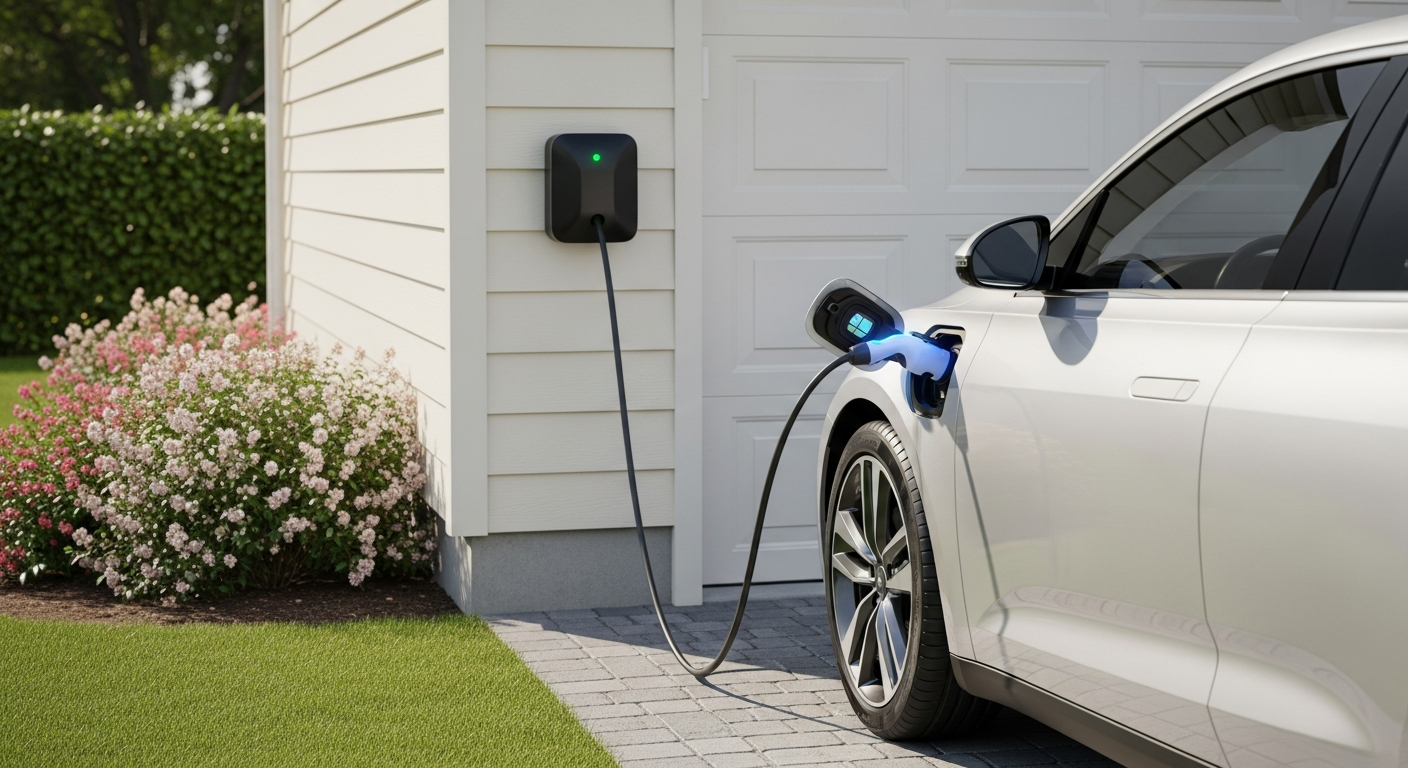
Thinking about getting an electric car (EV) or already have one? Charging your EV is simpler than you might think, whether you're at home or out and about.
This guide will answer your most common questions about keeping your EV powered up.
1. What types of EV chargers are there?
There are three main types of EV chargers, often called "levels." Level 1 uses a standard home outlet, Level 2 uses a more powerful 240-volt outlet (like for a dryer), and Level 3, also known as DC Fast Charging, is found at public stations and charges much quicker.
2. Can I charge an EV with a regular outlet?
Yes, you absolutely can! This is called Level 1 charging. You just plug your car into a standard 120-volt wall outlet, just like you would a lamp. It's the slowest way to charge, but it's perfect for topping up overnight or if you don't drive many miles daily.
3. What is Level 2 charging?
Level 2 charging is the most common way people charge their EVs at home. It uses a 240-volt outlet, similar to what a large appliance like a clothes dryer or electric stove uses. This type of charger provides much faster charging than a regular wall outlet, often fully charging a car overnight.
Level 1 Charging
- Power Source: Standard 120V Home Outlet
- Charging Speed: Very Slow (2-5 miles of range per hour)
- Installation: Plug-and-play, no installation needed
- Cost: Lowest (uses existing outlet)
- Best For: Overnight top-ups, low daily mileage, occasional use
Level 2 Charging
- Power Source: 240V Outlet (like for a dryer)
- Charging Speed: Moderate (15-30 miles of range per hour)
- Installation: Professional installation often required
- Cost: Moderate (charger unit + installation)
- Best For: Daily charging, faster home charging, most EV owners
4. How long does it take to charge an EV?
Charging time varies a lot depending on your car's battery size, how empty it is, and the charger type. Level 1 can take 24-48 hours for a full charge. Level 2 usually takes 4-10 hours. DC Fast Chargers can get you to 80% in just 20-60 minutes, perfect for road trips.
5. Where can I find public charging stations?
Public charging stations are becoming very common! You can find them at workplaces, shopping centers, hotels, rest stops, and dedicated charging hubs. Many apps like PlugShare, ChargePoint, or your car's navigation system can help you locate available chargers nearby.
6. Is fast charging bad for the battery?
Using DC Fast Charging occasionally is generally fine and won't significantly harm your battery. Modern EVs have advanced battery management systems that protect them. However, relying on fast charging exclusively for every charge might cause slightly more wear over many years compared to slower charging. It's best used for convenience on longer trips.
7. How much does it cost to charge an EV?
The cost depends on where you charge and electricity prices. Charging at home is usually cheapest, often costing less than half the price of gasoline per mile. Public Level 2 chargers might be free, pay-per-hour, or pay-per-kilowatt-hour. DC Fast Charging is typically the most expensive but still often cheaper than filling up a gas car.
EV Charging Process (Home Level 2)
8. What is a charging adapter?
A charging adapter allows your EV to connect to different types of charging stations. For example, some EVs use a specific plug type (like Tesla's connector), but with an adapter, they can use the more common J1772 public chargers. It's like having a universal plug for your phone charger.
9. Can I charge my EV in the rain?
Absolutely! EV charging systems are designed to be completely safe in all weather conditions, including rain, snow, and even light hail. The charging ports and cables are sealed and insulated to prevent any electrical hazards. Just make sure the charger and cable aren't damaged before use.
10. What is smart charging?
Smart charging lets your EV or charger communicate with the electricity grid. It can automatically adjust when and how fast your car charges. This often means charging when electricity is cheapest (like overnight) or when demand on the grid is low. It helps save money and supports a more stable power grid.