
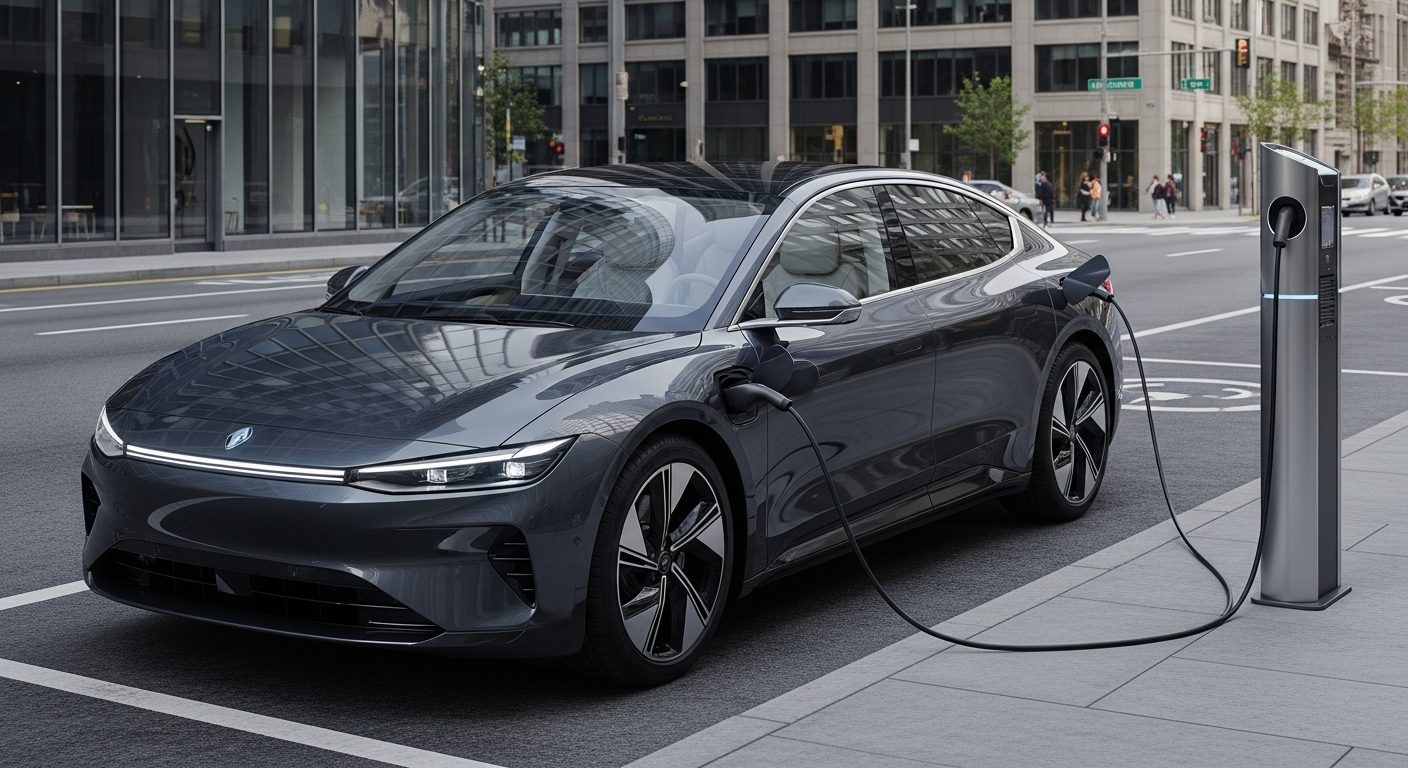
Thinking about buying your first electric car? It's an exciting step towards a greener future, but it can also feel a bit overwhelming with all the new terms and options.
This guide will help beginners understand the basics of owning an electric vehicle (EV) so you can make a confident choice.
1. What are the key things to consider before buying an electric car?
Before diving in, think about your daily driving habits. How far do you typically drive each day? Do you have a garage or driveway where you can install a charger? Consider your budget, including the car's price, potential charging costs, and insurance. Also, research available government incentives in your area.
2. Should I buy a new or used electric car?
New EVs often come with the latest technology, full warranties, and eligibility for all incentives. Used EVs can be significantly cheaper and still offer great savings on fuel. However, check the battery health and remaining warranty on used models, as battery degradation can affect range over time.
3. What is the difference between a BEV, PHEV, and Hybrid?
A BEV (Battery Electric Vehicle) runs purely on electricity and has no gas engine. A PHEV (Plug-in Hybrid Electric Vehicle) has both an electric motor and a gas engine, can run on electricity for a certain range, and can be plugged in to charge. A Hybrid (HEV) also has both, but cannot be plugged in; its battery recharges from the gas engine and braking.
BEV (Battery Electric Vehicle)
- Fuel: 100% Electric
- Charging: Plug-in only
- Range: Varies greatly (100-400+ miles)
- Emissions: Zero tailpipe emissions
PHEV (Plug-in Hybrid Electric Vehicle)
- Fuel: Electric & Gasoline
- Charging: Plug-in for electric range, gas tank for backup
- Range: Electric range (20-50 miles), then gas
- Emissions: Zero on electric, low on gas
4. How important is range when choosing an EV?
Range, or how far an EV can travel on a single charge, is important but often overemphasized for beginners. Most daily commutes are well within the range of even entry-level EVs. If you plan frequent long-distance trips without easy charging access, a higher range might be beneficial. Otherwise, focus on your typical driving needs.
5. What charging options do I need to think about for my home?
There are two main home charging levels. Level 1 uses a standard 120V outlet, providing a slow charge (about 2-5 miles of range per hour). Level 2 uses a 240V outlet, like for a clothes dryer, and charges much faster (about 20-30 miles of range per hour). Most EV owners install a Level 2 charger for convenience, but Level 1 is fine for many if you drive less.
6. Are there specific EV models recommended for beginners?
Many reliable and user-friendly EVs are great for beginners. Models like the Tesla Model 3, Hyundai Kona Electric, Kia EV6, and Chevrolet Bolt EV are popular choices. They offer good range, accessible technology, and a growing support network. Test driving different models will help you find what feels right for you.
7. What questions should I ask a dealership about an EV?
Ask about the total cost of ownership, including charging installation estimates. Inquire about battery warranty, which is typically 8 years/100,000 miles. Understand available charging networks and maintenance schedules. Also, ask about any specific EV incentives or rebates the dealership can help you apply for.
Key Questions for Your EV Dealership
What is the battery warranty (years/miles)?
What are home charging installation costs?
What public charging networks are compatible?
What are the routine maintenance needs?
Are there any local or federal EV incentives?
8. How do I test drive an electric car differently?
During your EV test drive, pay attention to the instant acceleration and quiet ride. Practice using regenerative braking, which helps recharge the battery by slowing the car. Test out any driver-assist features. Also, ask the dealer to show you how to plug in and unplug the car, and how to use the infotainment system to find charging stations.
9. What are common myths about electric cars I should ignore?
Many myths persist. EVs are not always more expensive than gas cars when incentives and fuel savings are considered. Range anxiety is often overblown; most drivers charge at home and rarely use public chargers. Batteries do not die quickly; they are designed to last for many years. Also, EVs are generally safer in crashes due to their lower center of gravity.
10. What financial incentives are available for EV buyers?
In 2026, various incentives are still available. These can include federal tax credits, state rebates, and local programs. Some incentives apply to the purchase of the car, while others might cover the cost of home charger installation. Research what's available in your specific area, as these can significantly reduce your overall cost.