
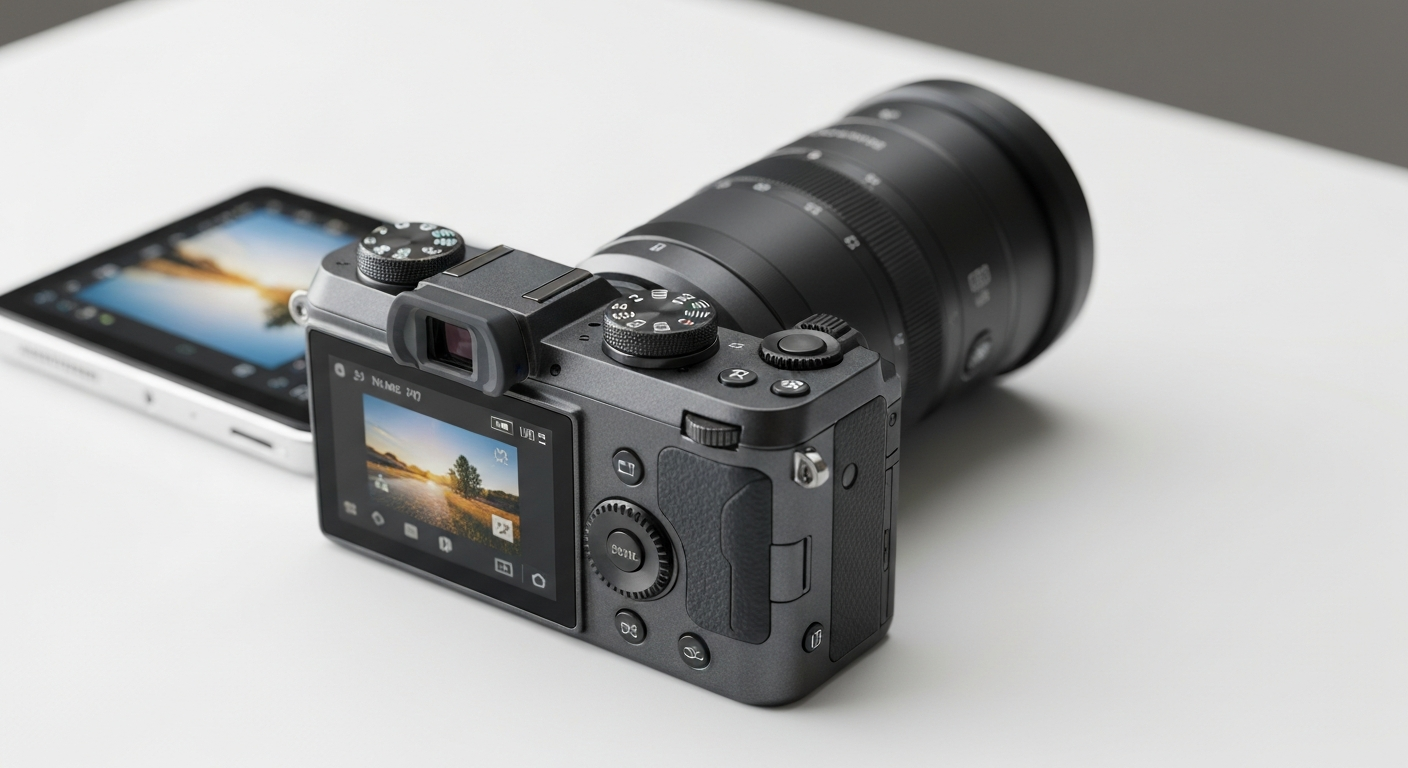
How Can I Shoot Better Videos Using My Phone or Basic Camera?
Want to make your home videos look more professional, even with just your phone or a simple camera? This guide will help you understand the basics of shooting great videos.
You don't need fancy equipment to capture amazing moments; just a few simple tricks can make a huge difference!
1. What's the best way to hold my phone for stable video?
Hold your phone with both hands, close to your body. Imagine your elbows are glued to your sides. This creates a human tripod, making your footage much steadier than holding it with one hand. If you have a small tripod or a selfie stick, use it!
2. Should I shoot video horizontally or vertically?
Always shoot horizontally (landscape mode) for most videos. This is how TVs and computer screens display video, so your footage will fill the screen nicely. Vertical videos (portrait mode) are mainly for social media apps like TikTok or Instagram Stories, but for general viewing, horizontal is best.
3. How do I get good audio when recording video?
Good audio is crucial! Get as close to your subject as possible so your phone's microphone picks up their voice clearly. Avoid noisy places like busy streets or windy areas. If you have an external microphone, even a basic clip-on one, it will drastically improve sound quality.
Horizontal Video (Landscape)
- Fills TVs and computer screens
- Looks professional for most uses
- Better for capturing wide scenes
Vertical Video (Portrait)
- Best for TikTok, Instagram Stories
- Often leaves black bars on TVs
- Good for single person close-ups
4. What does 'framing' mean in video?
Framing means deciding what appears within the edges of your video screen. Think of your screen as a window. You want to compose your shot so the main subject is clear and there isn't too much empty space or distracting background elements. Try to place your subject slightly off-center for a more interesting look.
5. How can I avoid shaky footage?
Beyond holding your phone with both hands, try to lean against a wall or sit down if possible. Small, affordable tripods or gimbals (devices that keep your camera steady) are great investments. Even resting your phone on a stable surface can make a big difference.
6. What's the ideal lighting for shooting video?
Soft, natural light is usually best. Shoot outdoors on a cloudy day, or indoors near a window without direct sunlight. Avoid harsh overhead lights or shooting directly into a bright light source, which can make your subject look dark. The light should ideally be in front of your subject, not behind them.
7. How long should my video clips be?
Keep individual video clips short, usually between 5 to 15 seconds. This makes your final video more dynamic and easier to watch. Long, continuous shots can get boring. You can always combine many short clips later when editing to tell a complete story.
Simple Video Workflow
What do you want to record? Who is your subject?
Find good light, hold phone steady, check audio.
Capture 5-15 second clips from different angles.
Watch clips, delete bad ones, save good ones.
8. What's the difference between a shot and a scene?
A "shot" is one continuous recording from when you press record until you stop. A "scene" is a series of shots that all take place in the same location and time, telling a small part of your story. For example, a scene might be a birthday party, made up of many different shots of people, cake, and gifts.
9. How do I focus properly when recording?
On most phones, you can tap the screen where your main subject is to set the focus. This tells your camera to make that specific area sharp and clear. If your subject moves, you might need to tap again to refocus. Basic cameras usually have an autofocus feature that does this automatically.
10. Where should I store my video files?
Videos take up a lot of space! It's best to back them up to a cloud service like Google Photos, iCloud, or Dropbox. You can also transfer them to an external hard drive or your computer. Always have at least two copies of important videos in different places to prevent losing them.