
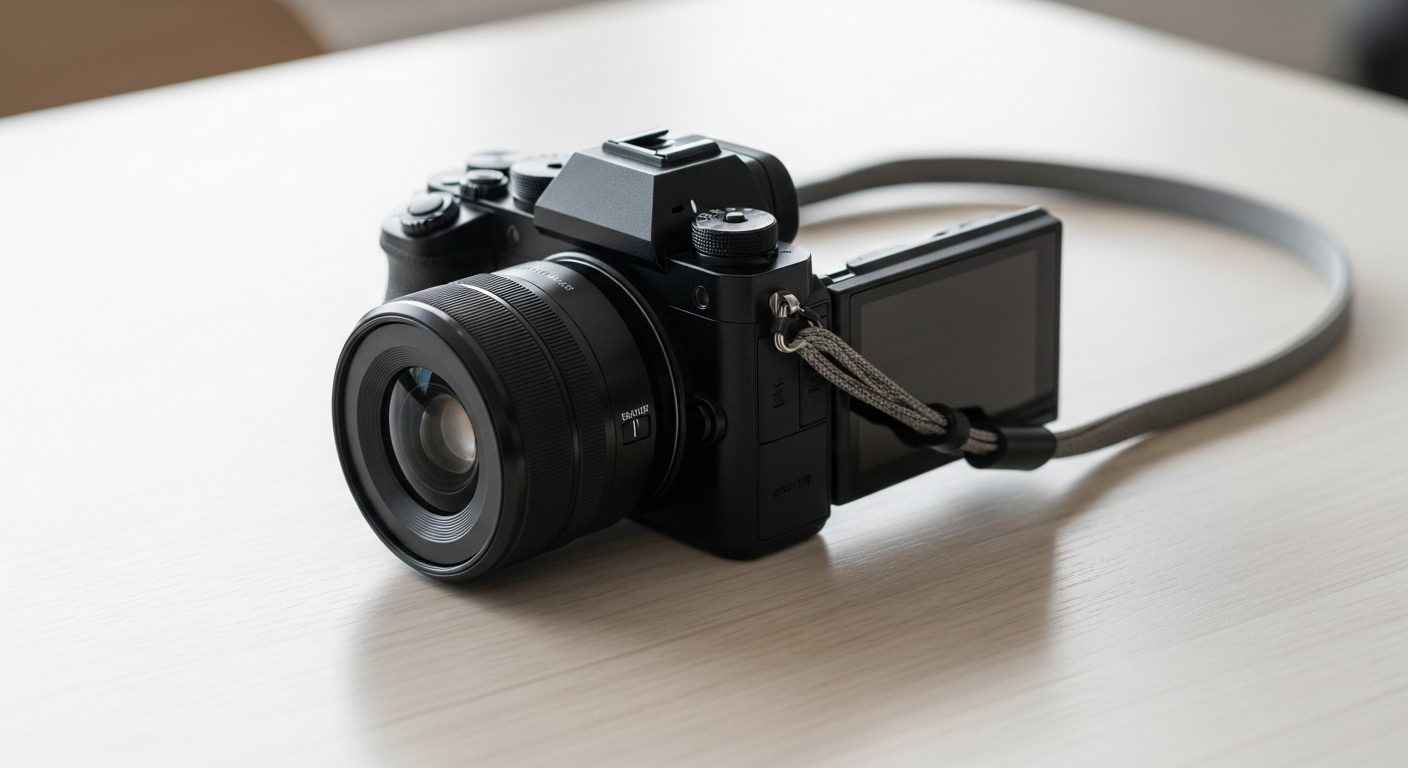
1. What is photography?
Photography is simply the art of "drawing with light." It's about capturing a moment in time using a device, like a camera, to record light reflections from a scene onto a sensor or film. The result is an image, a still picture that you can look at later.2. What kind of camera do I need to start?
You already have one! Your smartphone is an excellent camera for beginners. It's always with you, easy to use, and takes great pictures. If you want more control later, you can consider a dedicated camera, but it's not necessary to begin your photography journey.3. What are megapixels?
Megapixels are like tiny building blocks that make up your photo. A "megapixel" means one million pixels. More megapixels generally mean your photo has more detail and can be printed larger without looking blurry. However, for most everyday photos and sharing online, even a few megapixels are perfectly fine.Smartphone Camera
- Always with you
- Easy to share photos
- Great for everyday snaps
- Automatic settings
Dedicated Camera
- Better image quality
- More control over settings
- Interchangeable lenses
- Ideal for serious hobbyists
Best for Convenience & Sharing
Best for Quality & Control
4. How do I hold a camera steady?
Hold your camera with both hands, one around the grip and the other supporting the lens from underneath. Keep your elbows tucked close to your body for extra stability. You can also lean against a wall or brace your arms on a table to reduce camera shake, especially in dim light.5. What is the best light for photos?
Soft, even light is usually best for beginners. Think of a cloudy day or a shaded area, which avoids harsh shadows and bright spots. The "golden hour" – shortly after sunrise or before sunset – also provides beautiful, warm light that makes subjects look great.6. How do I focus a camera?
Focusing makes your main subject sharp and clear. With most cameras, you simply point at what you want to be sharp. If you have a shutter button, press it halfway down; you'll often see a box or hear a beep indicating it has focused. Then, press it all the way to take the picture.7. What's the difference between a photo and a video?
A photo captures a single, frozen moment in time, like a snapshot. A video, on the other hand, is a series of many photos played back very quickly, creating the illusion of movement. Both use your camera, but one records a still image and the other records a moving sequence.Basic Photo Taking Steps
1
Find Your Subject
2
Check the Light
3
Frame Your Shot
4
Focus on Subject
5
Press Shutter